


A Skills-Based Approach to Career Transitions: Identifying Pathways for Workers and Communities Facing Economic Disruption
Matthias Oschinski and Steven Tobin




For decades, Fort McMurray has been synonymous with one thing: the oil sands, a vast deposit of viscous, heavy oil mixed with fine sand that accounts for the fourth-largest proven oil reserves in the world.
But to the more than 82,000 residents of this northern Alberta community, it is so much more. It is a place of stunning nature, located at the intersection of four rivers where the forest stretches as far as the eye can see and where the northern lights dance across the night skies. It is a place of recreation, where passion for the outdoors is combined with a love of adventure.
And, perhaps most of all, it is a place where people look out for one another.
When a wildfire known as the Beast destroyed a significant portion of the town in May 2016, the community came together in shared trauma and grief to build back what was lost. Then, just after the start of the COVID-19 pandemic in 2020, a major flood hit and the community was forced to rally once again.
Fort McMurray also lives with the ups and downs of oil prices, and with the jobs and housing costs that rise and fall in tandem.
Then there is the extreme weather that frequently leads to treacherous driving conditions.
Shared adversity has fostered a culture of neighbours helping neighbours when the need arises because, as everyone knows, it could be them next. It is this culture that has created a strong community that residents are proud to call home. People visit for a few days or a couple of weeks and end up staying for decades.
“It’s a special place,” said Sandy Bowman, Mayor, Regional Municipality of Wood Buffalo. “Everybody comes here on a two- or a five-year plan, and they’re still here. I’m that person, and so many of us are. It’s the community and the people. It’s not just about [the oil sands] industry. There’s a different feel in Fort McMurray, and people are proud to be here.”
Yet the community also faces an underlying susceptibility to global forces because of the high concentration of employment in a single, export-oriented industry: oil production. Whether it is the global energy transition, U.S. threats of trade disruption or the trend toward cost-cutting automation, change and uncertainty are expected to loom large over the community in the coming decades. The spike in oil prices due to the Iran war is boosting company profits but is unlikely to translate into new investment without clear longer-term signals on oil prices, global demand and pipeline infrastructure.
An agreement between the federal and Alberta governments, and a partnership on a new West Coast pipeline, offer the potential for a more collaborative approach to oil production than in the past. But residents are also looking for more government support to navigate workforce disruption, investments in training and recognition of some of the unique social challenges their community faces.
The First Nations in the Fort McMurray area were early users of the oil sands. They boiled the tar-like substance to extract bitumen and used it to waterproof their canoes.
The first commercial use of the oil sands came in 1929 with a facility that produced asphalt for roofing and road paving. The first major attempt at oil production occurred in 1967 when Great Canadian Oil Sands, formed by Sunoco in 1952 and now known as Suncor Energy, developed a large-scale oil sands mine and bitumen upgrader. The Syncrude consortium, headed by Suncor, began the second commercial oil sands mine and upgrader in 1978, about 30 minutes north of Fort McMurray, with funding from the Alberta, Ontario and federal governments.
But the oil sands didn’t really take off until a combination of high oil prices and the more efficient Steam Assisted Gravity Drainage (SAGD) extraction methods of the late 1990s and early 2000s. Production grew from about 500,000 barrels per day in the mid-1990s to more than 3.7 million barrels per day in 2026.
The population of Fort McMurray grew along with oil sands production, from just 2,614 people in 1966 to over 82,000 in 2025.
The development of the oil sands — which lie beneath 142,200 square kilometres of land — is arguably one of Canada’s most significant engineering achievements. It has led to the design of new extraction methods, massive mining equipment and processing plants, and the construction of large industrial facilities operating year-round in northern Alberta’s extreme climate.
The high concentration of employment in the oil sands industry and the companies that support it means that the fortunes of Fort McMurray and its residents rise and fall with oil prices.
Luisa Da Silva, executive director of Iron & Earth, got to know the community during two stints as a geoscientist in the Athabasca oilfields. She recalled Fort McMurray as a great place for people to raise families, with lots of opportunities for work — and not just in the oil sector.
“There’s such a drive for workers in the energy sector that other sectors had to step up their game,” she said. “When I was there, people working at Tim Horton’s made $24 or $30 an hour, which [was] so much higher than anywhere else in the country because those were the wages that had to be paid to attract and retain workers.”

But the boom-bust economy carries risks too, particularly for people on the periphery of the oil sands industry who are self-employed or doing contract work.
It’s hard to think of another industry where fluctuating commodity prices have such a profound impact on job numbers, Da Silva added.
“When you talk to people, the highs and lows are quite hard,” she said. “When oil is high, you might pay thousands of dollars to rent a room and live in the community. When it’s low, it doesn’t make a huge dent because so many people are working in the higher-end, more profitable energy sector.” She said housing shortages during booms can also drive up costs.
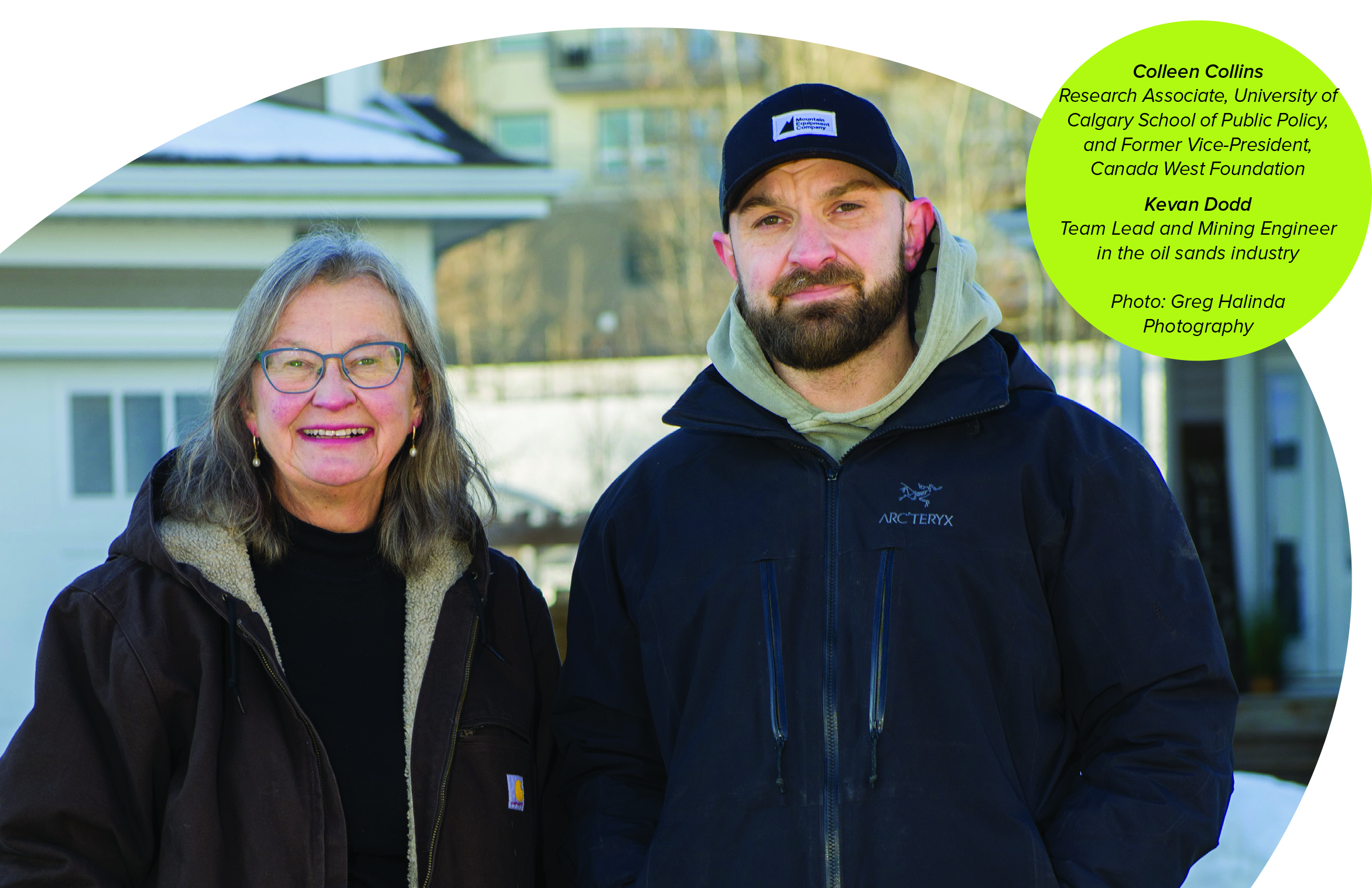
Kevan Dodd, a team leader at one of the large oil sands mining operations, said workers in large companies with unions, pensions and job security often work alongside contract workers with lower pay and greater vulnerability to downturns.
It’s a highly diverse, multicultural community and workforce. “On my team we have people from Athabasca Chipewyan First Nation, Newfoundland, Africa and the Philippines,” Dodd said. “We also have a mix of permanent employees and contract workers.”
On a tour of the city, Dodd pointed to a stalled housing development with roads and streetlights already in place. “The housing development was started during the boom, but the developers couldn’t make it work once oil prices came down,” he said.
Gil McGowan, president of the Alberta Federation of Labour, said Fort McMurray has seen major changes since its boom years ended in 2014. “The pace of work is very different,” he said. “There’s still a lot of economic activity, but instead of the big megaprojects, it’s incremental expansion or just ongoing operations and maintenance of the existing projects. It’s not the madhouse that it was, and that means wages have not been going up the way people became accustomed to.”
Colleen Collins, who recently moved to Fort McMurray from Calgary to be near her grandchildren, said, “There is a mix of housing, ranging from trailers to large and luxury homes. Most housing falls in the middle, with smaller lots.” Many of the homes are relatively new, rebuilt after the 2016 wildfire.
One former Fort McMurray resident, who declined to be identified, said “everyone jokes about the golden handcuffs” that keep people tied to a wonderful locale where it’s tough to make ends meet. “I had to take about a $20,000 pay cut when I moved to Edmonton,” they recalled, “but once you leave, you realize how expensive everything had been.”
The recent spike in oil prices linked to the Iran war is filling the coffers of oil producers, but it may be short-term if the Strait of Hormuz is opened again. There is also potential for the crisis to lead some countries to accelerate the transition away from oil and toward electric vehicles.
Many of the people interviewed acknowledged that global demand for oil could one day decline to the point where investment slows and local operations dwindle. Some think it could be just a couple of decades away while others think it will be much further into the future. The challenge, according to Adam Hardiman, senior strategic adviser to the mayor, is to “preserve what’s great” about an “exemplary community” and create a future for Fort McMurray that benefits the whole country.
Bowman, the mayor, pointed to the sheer scale of the oil sands industry and the size of the bitumen reserves as one of Fort McMurray’s enduring strengths, “fuelling the country not just for fuel, but for the economy.”
Others pointed out that, while new oil sands projects may be a higher-cost option for investors, existing oil sands projects are resilient to drops in oil prices. With oil sands capital expenditures of more than $14 billion in 2025, there is still plenty of ongoing economic activity.
Calls to “shut down the oil sands” from outsiders anger many in the community. “This happens all the time,” added Hardiman. “People come in as a journalist or a researcher or to produce a documentary. They write some things, and they don’t like the industry. Then they come here, see the place, meet the people and walk among us, and then they put their head down and say, ‘We can’t shut this community down.’ There’s a moment of realization that this is not as simple as we thought. There’s a real-life story here and it’s mostly good. So, yeah, it’s about how we reduce emissions, but not about dismissing Fort McMurray or its people.”
“We have the industry and the community working to meet these goals, and we will get emissions down,” Bowman added. “People here are working hard to produce for the country, for the economy, for their families,” and they would still be doing that if Fort McMurray’s output gradually shifted.
But Bowman and Hardiman agreed that the federal and provincial governments need to lay out a clear pathway or timeline that shows what that transition looks like or how the community gets from here to there.
The memorandum of understanding signed by the federal and Alberta governments in 2025, the subsequent implementation agreement, and the partnership on a new pipeline to the West Coast, could be the start of that planning. The agreements outline a shared commitment to work toward achieving net-zero emissions by 2050 and establish and enable Canada as a global energy leader. The governments plan to achieve these goals by constructing the proposed new pipeline to the West Coast to reach Asian markets and a massive carbon capture and storage project. The federal government referred Alberta’s pipeline proposal, which will follow a southern route similar to the existing TMX pipeline, to the Major Projects Office on July 2, 2026. The two governments will share an equal partnership in the project, with a meaningful equity stake for Indigenous Peoples.
In exchange for rolling back the proposed oil and gas emissions cap and pursuing an equivalency agreement for federal clean electricity regulations, both introduced under the previous Liberal government of Justin Trudeau, the Alberta government committed to ramping up the headline carbon price of its industrial regulatory system to $130 per tonne by 2035 and to reducing methane emissions by 75 per cent below 2014 levels by 2035. There is also a co-operation agreement to accelerate impact assessments for major projects.

Alberta Energy Minister Brian Jean, who is also the MLA for Fort McMurray-Lac La Biche, called the memorandum of understanding the most significant economic breakthrough the province has seen in decades, particularly for northern communities that depend on the oil sands, according to a media report.
Dianna De Sousa, CEO of the Fort McMurray Chamber of Commerce, said weak investment in the oil sands is driven by regulatory uncertainty and stressed the importance of the Pathways carbon capture and storage project. “The federal government needs to take the handcuffs off industry, remove hurdles for new investment and commit to carbon capture,” she said.
While carbon capture can help to reduce the carbon intensity of oil sands production, it will not help the sector if global oil demand or prices decline.
Talk of Alberta separating from Canada is widespread in Fort McMurray, often tied to the view that the federal government has constrained oil investment with regulations and carbon taxes over the past decade. De Sousa says the Chamber of Commerce does not support separation because it could lead to stranded assets for businesses. Local First Nations communities have also come out strongly against separation, arguing that allowing a separatist petition to proceed is a direct violation of both treaty agreements and the Canadian Constitution. People with strong ties to other Canadian provinces are also less likely to support separation.

With shifts in the local economy and automation, some interviewees said jobs in Fort McMurray have become more precarious. McGowan of the AFL argued that key labour force and production decisions for major oil sands companies are made “in the boardrooms in Calgary, not on shop floors in Fort McMurray,” leaving the community with “effectively no control” over its future. According to him, the ultimate authority rests with shareholders who mostly live outside Alberta, and with corporate leadership who haven’t been in the province for very long.
“It started with the big, heavy trucks at the oil sands mines, but automation has gone well beyond the big trucks,” McGowan added. “There are significantly fewer people working at big employers like Suncor today than there were a decade ago, even though Suncor and all the other big companies are producing more and more oil. They’re producing more with fewer people. Everyone knows that. So that weighs on people’s minds.”
Paddy Dunphy, vice president and northern district supervisor of the International Union of Operating Engineers Local 955, sees the impact that automation is having on workers. “Automation is hitting haul truck drivers first, but we also see drone use increasing for surveying,” he said. “We are encouraging workers to develop a broader skill set so that they can run multiple pieces of equipment.”
While job losses are anticipated, the shift toward automation has also increased demand for technical skill sets, such as drone operators or maintaining robotic welders.
Dunphy noted that workers have come to expect booms and busts in the sector. “We advise workers to prepare for a rainy day. Contract workers are the most vulnerable, since they are the first to lose work in a downturn,” he said.

Employment data show that jobs in oil and gas extraction have remained relatively consistent since 2010, while jobs in support activities, such as contractors, have fluctuated (figure 1).

Industry leader Suncor Energy said in 2023 that it planned to lay off 1,500 workers, a move that was expected to save $450 million per year. And Imperial Oil announced in 2025 it planned to lay off 20 per cent of its workforce by 2027. The companies have said that, with pipelines at capacity, there is unlikely to be significant investment until details on the new pipeline to the West Coast are finalized.
Iron & Earth’s Da Silva said she saw the increase in precarity between her two tours in Fort McMurray — one before, the other after, the global financial crisis of 2008. The second time around, in 2009, she said the industry was already changing and cutting back from its peak.
“The culture was very different,” she recalled. “It didn’t feel like a place where anything was possible anymore. There were fewer drill rigs operating and fewer geologists; we didn’t even have a supervisor to schedule us into different rotations. So, I had to stay as long as the rig was operating, which meant the longest shift I worked was 27 hours.”
The potential for trade disruption with the United States also looms large. Over 90 per cent of Canada’s crude oil production is exported, with the vast majority headed south of the border. If the exemption for CUSMA-compliant goods holds, oil exports to the United States are unlikely to be affected. However, it is difficult to predict what the U.S. president will do as negotiations on the CUSMA review intensify. The TMX pipeline, which started operations in 2024, has also allowed for increased exports to Asia. While the proposed pipeline to the B.C. coast will help to further diversify export markets, it will take years to move through approvals and construction.
The 2016 wildfire was the costliest natural disaster in the country’s history, according to the Insurance Bureau of Canada. Some 90,000 people had to evacuate within a few hours. They returned to a community where more than 2,500 homes and other buildings had been destroyed. Three years later, a University of Alberta study found 37 per cent of Fort McMurray high schoolers showed signs of post-traumatic stress.
Then, in 2020, the COVID-19 pandemic hit and a major flood forced residents of Fort McMurray to flee once again.
“Some people lost their homes twice,” said Dunphy of the International Union of Operating Engineers Local 955. “A lot of people didn’t come back after being evacuated. It was too much for them to bear.”
Winter weather and road conditions also bring challenges. Winter temperature lows that average -20 C, days when there are less than seven hours of sunlight, and an abundance of snowstorms have made those who live and work in the area a hardy bunch.
Maike Schmieding, the Research Chair in Northern Community Sustainability at Keyano College, noted that winter can be very dangerous on the roads. “Northern winters can present significant road safety risks, particularly along remote routes with limited connectivity,” she said. “In many situations, people rely on one another for support, and it’s common to see travellers stop to help someone who has become stranded.”

Oil sands workers work long, hard shifts. Some workers have lengthy daily commutes that start with a bus ride to the site, and continue with a second bus to individual work sites. And those who work at sites, such as Kearl Lake, that are too far for a daily commute, live in work camps.
The work can be quite physical and carries a risk of injury. Camp work is tough, said Dunphy: “There is not a lot of freedom, and it wears on mental health.” Because the work is difficult, it is done on rotation. Some workers might work 10 days, and then take four days off, while others work seven days and then take seven off. The choice depends on worker preferences and the schedule of the site. Turnaround times, when equipment is taken offline for maintenance, often involve longer hours and a larger number of contract workers.


Rates of mental illness and addiction are high in Fort McMurray, according to reports, although there have been some signs of improvement in recent years.
Accessing health care can also be a challenge in the city. According to Schmieding, people often have to travel to Edmonton — close to a five-hour drive — for basic health services such as a mammogram or to see an orthodontist.
While Fort McMurray has its share of challenges, Schmieding avoids describing residents simply as resilient. “That term can sometimes overlook the real pressures northern communities face,” she said. “Like many northern regions, we continue to experience gaps in funding and services, and this framing can miss the broader structural realities affecting northern communities in Canada.”
Despite the hardships that come with living in a northern community, many interviewees spoke about their love for Fort McMurray, a key asset that helps retain skilled workers.
According to Bowman, locals have strong personal resilience and community-minded generosity, in large part due to Fort McMurray’s geographic isolation. People are necessarily self-sufficient, though invariably prepared to look out for their neighbours, he said.
Schmieding noted that there is an innovative culture that flourishes in the community. “There is a remarkable ability here to adapt and problem-solve, often in the face of limited resources,” she said. “People in Fort McMurray are highly capable and committed, and there is a strong sense of responsibility to one another and a shared commitment to getting things done.”
De Sousa of the Chamber of Commerce described Fort McMurray as a “place of great opportunity.” She also highlighted the significant investments that oil sands companies have made in the community, which have made a major contribution to residents’ quality of life.
One example is the Suncor Community Leisure Centre, known as Mac Island locally, a large multi-use recreation complex featuring an aquatic centre, fitness facilities, an indoor climbing wall, indoor playground, dance academy, public library, two field houses, two ice arenas, a curling rink, racquetball and squash courts, and an indoor running track. While the majority of the facility was funded through municipal and government investment, major corporate sponsorships from companies such as Suncor and Shell helped support the broader development and expansion of MacDonald Island Park.
Colleen Collins, who often brings her grandkids, describes it as a place that “has everything for kids and adults.” She said Fort McMurray is a very fit city where people work hard but make the most of their leisure time. “People often go to the gym, and they love outdoor recreational activities like snowmobiling, off-road four-by-fours and boating,” she said.
Dunphy, who came to Fort McMurray from Newfoundland and Labrador 21 years ago, said that the city has been good to him. “People don’t realize that Fort McMurray is good for families, has great hiking trails, fishing and golf courses. A lot of people stay because they like living here. People should come see it before they judge it,” he said.


Bowman said people in Fort McMurray are well aware that a global energy transition is underway, but still proud that the job they do is “crucial to the running of the province and the country.” He cited uranium mining, technologies to separate natural gas liquids and capture carbon dioxide, and a shift to solvent-based steam-assisted gravity drainage as key areas where the community could align with global efforts to reduce greenhouse gas (GHG) emissions.
He said people almost always come to Fort McMurray in search of opportunity. “Most of the community is willing to take a chance and bet on Canadian oil,” he said. “We’ll take a chance that we have a better, cleaner product in our country instead of taking it from another country [where it’s] not being made cleanly or ethically.”
Hardiman said Fort McMurray distinguishes itself from some other communities by focusing on how to build an economically sound future with oil, rather than why it should do so. “Ten years from now, we’ll be so much further ahead as a country,” he said, thanks to “exponential” improvement in technologies and the ability of Fort McMurray’s workforce to move in new directions.
The outbreak of war in the Middle East and the closure of the Strait of Hormuz have underscored the stability and security of Canadian oil and natural gas relative to other sources, according to Alberta Premier Danielle Smith. In a March 2026 Financial Post article, she called for Canada to capitalize on its reputation and “build new pipelines west, east, north and south — without delay and without hesitation — to supply Asian, European and American markets with safe, reliable and responsibly produced energy products.” She also called for a doubling of oil and gas production by 2035. On July 6, Premier Smith and Ontario Premier Doug Ford announced a feasibility study to explore the potential for a pipeline from Alberta to Ontario.
The AFL’s McGowan, on the other hand, cited the union’s Diversify Alberta initiative to argue that the province should be looking beyond oil to the products that will be in growing global demand in the coming decades. The report evoked the philosophy of an Alberta hockey legend with the title of its industrial development blueprint, Skate to Where the Puck Is Going.
“It’s imperative for federal and provincial governments to get our provincial economy ready for a low-carbon future, while at the same time trying to preserve as many oil and gas jobs as possible for as long as possible,” McGowan said. To build a more orderly transition with careful attention to future labour markets, the union’s vision “starts with government-led industrial policy, as opposed to just leaving it up to the incumbent companies,” led mostly by faraway investors who “have no interest in making sure the local economy remains strong,” he said.
To maximize employment in oil and gas, he said the AFL is calling for emission reductions to keep the sector carbon competitive, and for using fossil fuels as a precursor for materials rather than transportation fuels likely to see declines in demand over the coming decades. The union also sees green power production as “table stakes for attracting other kinds of investment in areas like manufacturing.”
Without policy shifts in that direction, McGowan warned, “existing oil and gas companies will ride the price curve down to the bottom, extract as much profit as they can, then leave the province as a sort of a northern rust belt. And that’s what we want to avoid.”
Diversification is hard in Fort McMurray, according to De Sousa. “Commercial rent is high. Small businesses tend to start and then fold. There are a number of entrepreneurs, but there is a lack of shovel-ready land for new businesses.”
Dunphy noted that there are potential opportunities to create more jobs through local investment in hydrogen, chemical or plastic production, but it is hard to attract investors.
Alex Nilson, a senior quality assurance engineer at ENMAX, who grew up in Fort McMurray and worked in the oil sands, says governments should do more to develop new industries. “It isn’t just about the workers there today,” he said. “What about the children and grandchildren of people in the community? Governments should take a long-term view.”
Fort McMurray benefits from having a highly skilled workforce. But a central question for the community as it adjusts to automation, the energy transition and other factors, is whether its workforce will retain its adaptability and resilience in the face of these challenges.


Bowman said Fort McMurray’s labour force is made up of “people who want to work and moved here for that reason. They didn’t move here for the weather or scenery. They moved here to work.”
Fort McMurray has tended to attract the type of person who can adapt to any economy, added Hardiman. “Quantitatively, you have the skills and training and educated workforce to do so.”
McGowan summed up what he has heard from AFL members this way: “Our members don’t want to retrain for whole new careers and whole new jobs. They would much prefer to stay in their current jobs, or in jobs with their current employers, because it provides security.”
When the jobs workers want are no longer available, their next best choice is something similar to what they’re already doing, he added.
“If they’re going into a transition, they would much prefer to transition to careers that are adjacent to their existing ones so that they’re not starting from scratch. And we’re quite confident that a lot of the more skilled trades folks, especially, can do that quite easily,” he said.
“We have members who are operating engineers, or crane and heavy-equipment operators, and they always say they don’t care what they’re lifting or what they’re building — they just want to be able to use their skills.”
The implication for transition policy is that “we should not be looking at retraining, but rather at refocusing,” he added. “That needs to be the first priority. Because if you’re mid-career, 35 or 40 or 45 years old with a family and a mortgage, the last thing you want is to go back to school for four years.”
An advantage of a government-led industrial policy, McGowan added, is the opportunity it creates to develop skills inventories for future employment, based on a clear idea of where the economy is going.
Dunphy said union members often struggle to pursue training after losing a job. “The cost of living is so high that it is hard to afford to go to school. Governments provide some funding, but it isn’t enough, particularly if they have to leave the city,” he said.
De Sousa of the Fort McMurray Chamber of Commerce said the proposed carbon capture and storage project could be a major job creator. “It could generate three years of jobs in construction,” she said.
Keyano College offers training through apprenticeship and industry trades programs, and partners with the University of Alberta to help students complete collaborative degrees, but budgetary constraints resulting from the federal cap on international students have led to cutbacks to programs and employee layoffs.
Chantal Beaver, associate vice president of public engagement at Keyano College, said, “The recent federal investment in skilled trades training is a positive and timely step for communities like Fort McMurray. In a region where demand for skilled trades remains strong, these supports have real potential to strengthen the talent pipeline, improve retention and encourage more people to pursue trades careers locally. The key will be ensuring that both learners and employers are aware of and able to access these supports effectively.”
When it comes to more specialized training for technologies being adopted in the oil sands, such as AI or drone use, companies tend to develop their own internal training programs. Suncor, for example, offers a six-day drone pilot training course. Sometimes it partners with Keyano College and other organizations.
Nistawâyâw, the Cree name for Fort McMurray, was historically a gathering place for Cree, Dene and Métis Peoples. The community includes six First Nations communities — the Mikisew Cree, Athabasca Chipewyan, Fort McKay, Fort McMurray No. 468, Smith’s Landing and the Chipewyan Prairie — as well as six Métis communities.
While Fort McMurray is the main urban area, it is governed by the Regional Municipality of Wood Buffalo, which covers over 66,000 square kilometres of northeastern Alberta. Indigenous communities are at the heart of the Wood Buffalo economy, some of them with business relationships that date back decades.
Hardiman said the value of those partnerships is often underestimated, but they’re only getting stronger as younger generations enter the decision-making process. “I can’t stress enough what a big part of the community and region that is,” he said. “They must be partners.”
Fort McKay First Nation has been one of the most successful in developing businesses to capture opportunities from the oil sands industry. It started with a janitorial services company in the 1980s and then expanded to a range of businesses that serve the oil sands, pipeline, forestry and public sectors. Fort McKay First Nation has also established numerous joint venture companies to advance the interests of its approximately 900 members. In the 2023-24 fiscal year, it reported almost $55 million in revenue from business income.
Fort McKay was one of 23 Indigenous communities that signed an agreement with Enbridge to collectively take an 11.57 per cent equity stake in seven Enbridge-operated pipelines in the Athabasca region of northern Alberta for $1.12 billion. The Alberta Indigenous Opportunities Corporation facilitated the transaction with bond financing and loan guarantees.
Anthony Chen, portfolio manager at Fort McKay Landing, the First Nation’s investment arm, said the deal provided an opportunity to generate stable cash flow for all participating communities, while taking a disciplined approach to risk.
Chen said Fort McKay is fortunate to have built internal capacity and access to resources that many Indigenous communities are still working to develop. For many First Nations, financing mid-market transactions in the $5-million to $50-million range through commercial banks can be very challenging. Commercial lenders may require a First Nation guarantee, which can put community finances at risk, while Indigenous investors are often competing against institutional investors and strategic buyers with easier access to capital. He suggested that governments could do more to support mid-market Indigenous equity opportunities. The First Nations Bank of Canada, for example, now offers some commercial financing options to First Nations and their economic development corporations.
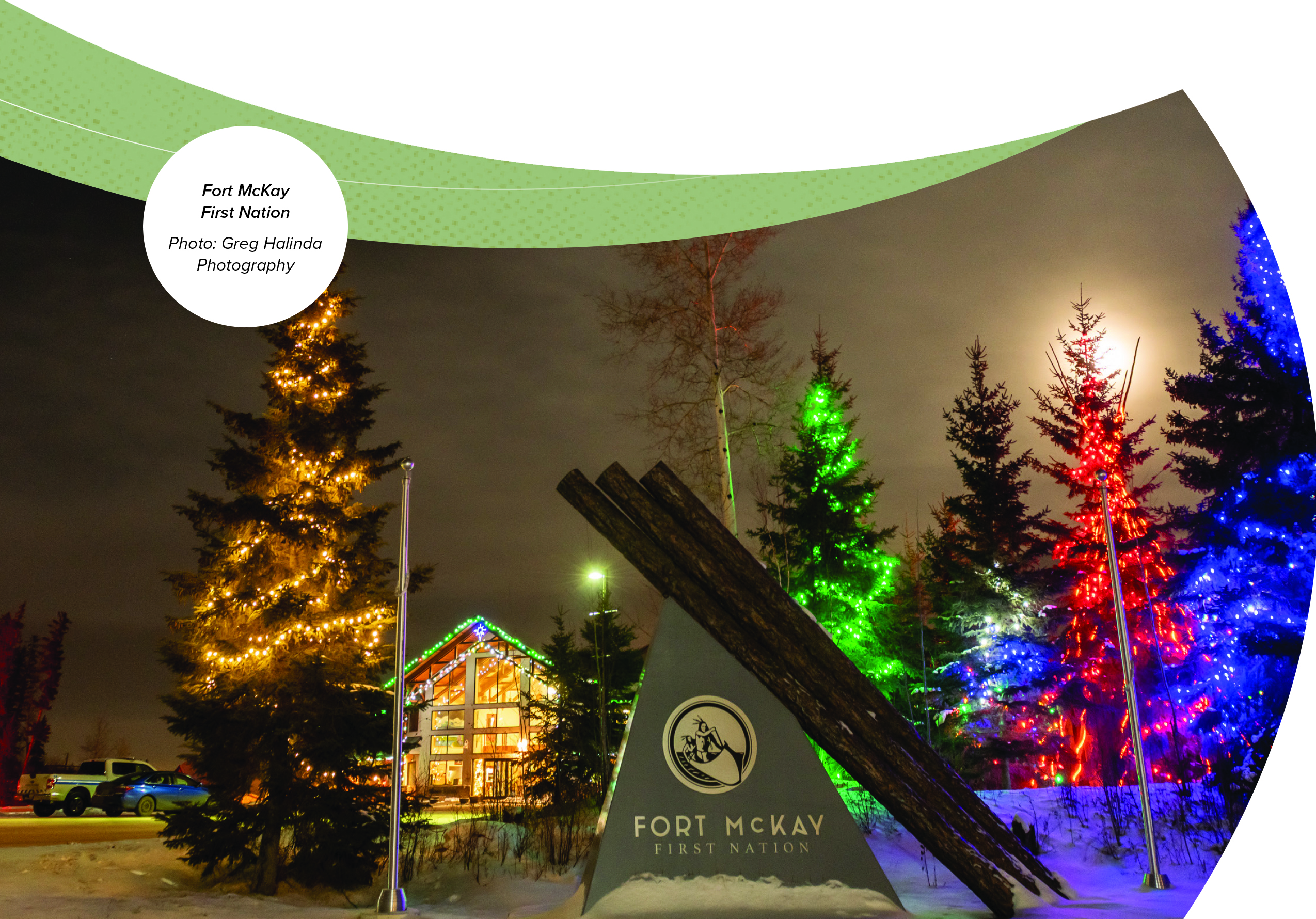
Bori Arrobo, Director of Sustainability at Fort McKay First Nation, is overseeing the environmental aspects of a proposed oil sands mine planned for development on Fort McKay Reserve lands. Under the proposed development, the Nation would receive royalties from bitumen extraction. Fort McKay First Nation is continuing discussions with potential industry partners regarding the project, while feasibility studies are underway to better understand the quality and quantity of the resource. The proposed mine is currently anticipated to begin operations around 2040.
In a press release, Chief Raymond Powder said, “This is the true meaning of reconciliation. It puts in our hands the tools we need to bring prosperity and a sustainable future for our people.”
Bowman said the region can take pride in the “huge economic reconciliation” that the oil sands have brought to local Indigenous communities, adding that the communities also play an important oversight role with respect to industry operations. “If there’s a spill or any emissions, they’re on top of it,” he said. “They want the facts and statistics, and to be involved.”
While there are benefits from development, Indigenous communities have also raised concerns about the environmental, health and cultural harms of oil sands projects, which have affected air quality, water quality and traditional food sources. For example, the Athabasca Chipewyan First Nation sued the Alberta Energy Regulator in 2024 over a tailings spill at the Kearl oil sands processing plant and mine that led to more than five million litres of wastewater flowing into ACFN traditional territory. It argued that the spill breached the First Nation’s constitutionally protected rights to its traditional territory and traditional way of life, which includes hunting, fishing, trapping and gathering on the land, as well as access to freshwater resources. The Mikisew Cree First Nation in northern Alberta says that data show cancer rates are higher in their community than the rest of Alberta. In 2026, the First Nation filed a lawsuit against the federal and provincial governments alleging that local land and water have been impacted by the cumulative effects of industrial developments.
A consistent theme across many of the interviews was the need to turn down the heat — between the federal and provincial governments, and between Fort McMurray and the industry’s opponents — and begin rebuilding trust.
“Our province and the federal government always seem to be in a battle, and some days it’s just politics,” said Bowman.

“It would be beneficial for what the government is trying to do and the country is trying to do for the people here to feel like true partners in the process,” Hardiman added.
“In any situation that is perceived to be adversarial, the most powerful side needs to be the first one to extend the olive branch,” he said. “You can’t have success in anything without a good working relationship, because it’s about people.”
Conversations will get off to a better start if they are “less about the path to a greener future and more about the relationship with the people who live here — the workers, the small business owners, the young people,” Hardiman said. “It’s not about the political stripe of the government. It’s the approach and the attitude,” whether there’s a willingness to “come up and stand by the community.”
That, in itself, would “defuse a lot of the rhetoric,” he added.
“If pressed, most people will acknowledge that a transition will happen. But in general, most of them think it will be a slow transition rather than a fast one,” McGowan said. “Among our members, both in the oil sands and outside, there’s an anxiety that the change is likely to come, but most people are putting it to the back of their minds. If they’re concerned about anything, it’s the more immediate workplace changes that may or may not be connected to the transition.” These concerns are in the context of automation eliminating jobs and funds shifting from operations and production to shareholder dividends and share buybacks, in contrast to the period from 2004 to 2014 when companies invested most of their profit to expand their operations, he said.
“It’s clear that the transition is already underway, even if people on the ground don’t recognize it as such,” he continued. “They are experiencing job loss, wage stagnation, displacement and anxiety related to changes in the industry, but most people haven’t connected it in their minds to an energy transition.”
But the companies “have decided the energy transition is real” and have shifted out of a growth mindset, he said. “They’re paying down debt. They’re consolidating their positions. They’re engaged in a big round of mergers and acquisitions … all of this is consistent with an industry that understands that the music is going to stop soon, and they’re trying to take out as much as they can.”
The industry routinely projects continuing growth in global oil demand, and Suncor Energy is one of many major producers cutting back on energy transition investments to focus on short-term growth. But McGowan saw no inconsistency.
“It’s what they’re doing, not what they’re saying,” he said. “They’re saying publicly that the industry is as strong as ever and the transition is going to take decades. But that’s for public consumption. When they talk to investors on stockholder calls where they have a legal obligation not to be misleading, they know the transition is coming and they’ve had to reassure investors” by showing them that short-term profits will be protected.
Ironically, the spike in oil prices linked to conflict in the Middle East might accelerate transition as people shift to electric vehicles and other alternatives to avoid higher costs. With vehicle fuels accounting for the lion’s share of global oil demand, and electrification rapidly cutting into that demand, the need for alternatives “is going to happen faster than they want it to,” added Chris Bataille, Global Fellow at the Columbia University Centre on Global Energy Policy. “That’s the fundamental reality.”
The proposed oil pipeline from Alberta to the West Coast, as well as early discussions on a possible pipeline from Alberta to Ontario, offer hope that another oil sands investment boom may come to Fort McMurray. The outcome will depend on the willingness of companies to invest in new projects based on their expectations for oil prices, demand, costs and climate policies over the coming decades.
As Canada’s stated desire to be an energy superpower faces the realities of a global energy transition — occurring at a hard-to-predict pace — communities like Fort McMurray find themselves at a crossroads. This tension, coupled with automation, global markets, geopolitical volatility and federal-provincial politics, can make for an uncertain future.
In response, Fort McMurray is betting on the skills of its people and the strengths of the community to forge a way forward. Here’s what local leaders and residents say needs to happen next:
The Institute for Research on Public Policy (IRPP) has developed a methodology for measuring community susceptibility to workforce disruption as global efforts to address climate change expand. Using three indicators, the methodology scores and ranks census divisions across the country. Based on their ranking, each census division is assigned to one of six groups, ranging from “not susceptible” to “most susceptible.”
The three indicators include Facility Susceptibility (emissions from large facilities relative to the size of the community), Intensity Susceptibility (proportion of employment in emissions-intensive sectors), and Market Susceptibility (proportion of employment in globally traded sectors expected to undergo market transformations).
The analysis is available in an interactive map, developed in collaboration with the Community Data Program of the Community Economic Development Network, on the IRPP’s website (irpp.org/community-transformations/map). A detailed description of the methodology used is also available on the website.
To complement the mapping exercise, the IRPP selected 10 communities across the country to profile through a series of interviews with people that live and work in the community. Most of the communities selected are located within the most susceptible census divisions, but others were chosen because of anticipated development or previous experiences. The profiles are meant to cover a diversity of regions of the country and types of economic activity. These snapshots are meant to provide additional insight into the challenges and opportunities the communities face and to reflect the perspectives of residents.
Fort McMurray, Alberta, is one of the communities selected for a profile. It was chosen because the census division in which it is located — Division No. 16, Alberta — was among the highest scoring in susceptibility to global low carbon transition scenarios. While disruption may still be decades away, highlighting susceptibility now can lay the groundwork for proactive measures to improve resilience in the community. More immediate disruptions, such as automation, might also justify early intervention.
The Energy Mix conducted interviews with community members in Fort McMurray and elsewhere in Alberta, and the IRPP’s vice-president of research, Rachel Samson, met with the Fort McKay First Nation and visited Fort McMurray.
Below, we present a breakdown of the susceptibility analysis for the census division of Division No. 16, Alberta. Additional information not used in the analysis, such as population change, the unemployment rate and demographic characteristics of workers, is derived from the 2021 census. The number of facilities comes from Statistics Canada’s Business Register from June 2020.
If you have questions about the profile or the analysis, please contact us at
communitytransformations@nullirpp.org.


This Community Profile was published as part of the IRPP’s Community Transformations Project. It was authored by The Energy Mix and the IRPP. The manuscript was copy-edited by Rosanna Tamburri with assistance from Abigail Jackson. Ricardo Chejfec was responsible for the data analysis. Proofreading was by Zofia Laubitz, editorial co-ordination was by Étienne Tremblay, production was by Chantal Létourneau, publication management was by Prasanthi Vasanthakumar and art direction was by Anne Tremblay. Photos are by Greg Halinda Photography and Rachel Samson.
The Community Transformations Project was funded in part by The McConnell Foundation
and Vancity. Research independence is one of the IRPP’s core values, and the IRPP maintains
editorial control over all publications.
A French translation of this text is available under the title Fort McMurray : Au cœur des sables bitumineux de l’Alberta, la force d’une communauté dans un monde en constante évolution.
To cite this document:
Institute for Research on Public Policy. (2026). Fort McMurray: The heart of the Alberta oil sands finds its strength in a world of change. https://doi.org/10.26070/xyjt-4570
On the cover: A haul truck (left), Sandy Bowman, Mayor, Regional Municipality of Wood Buffalo (top right), and sunset at the confluence of the Clearwater and Athabasca rivers in Fort McMurray (bottom right). Photo credit: Greg Halinda Photography.
We’re grateful to these local contacts for sharing their ideas, experience and time with us.