

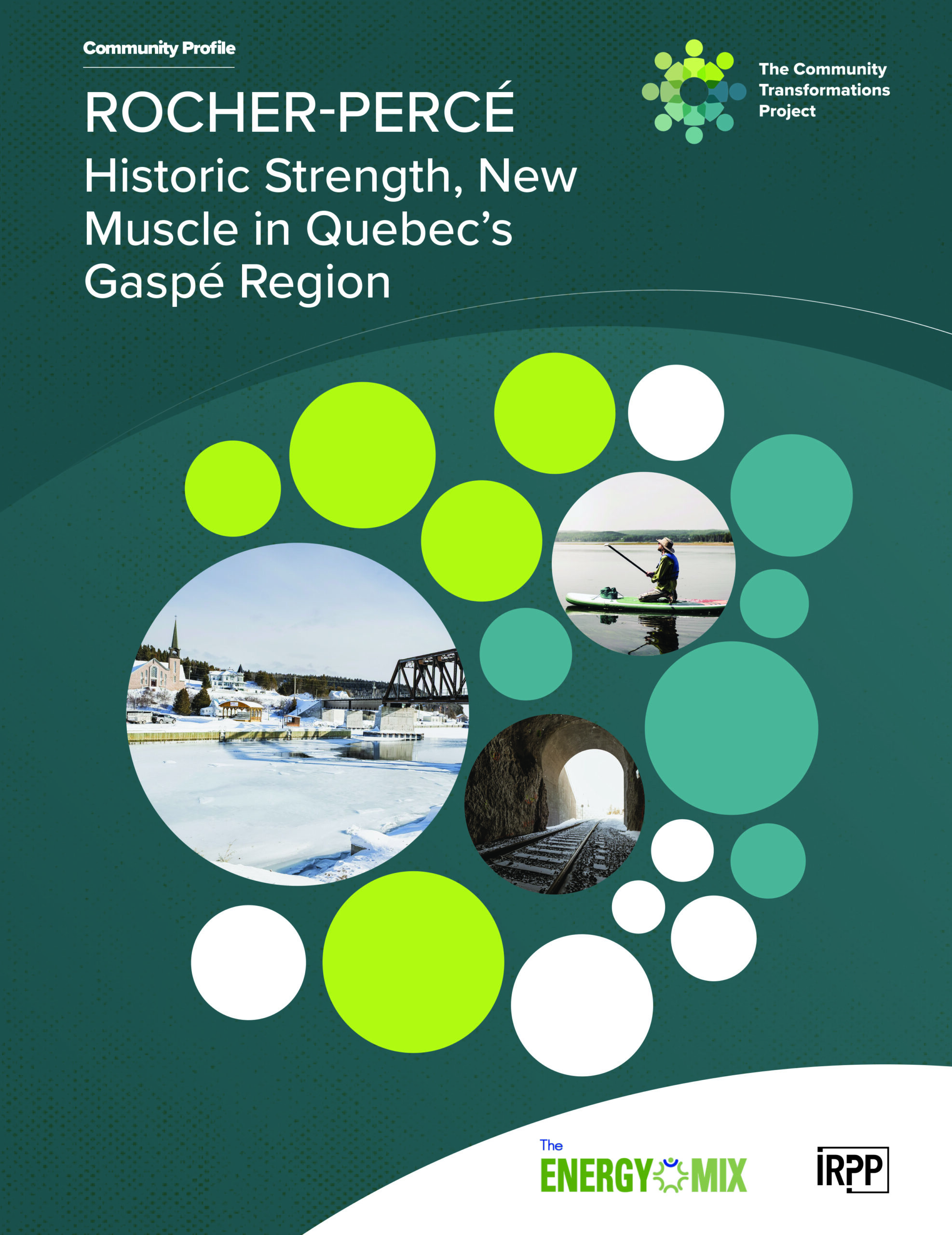





When you travel along Highway 132 in Quebec’s scenic Gaspé Peninsula, rose-hued Percé Rock appears dramatically just offshore. The iconic wall of stone, rising 80 metres from the water and running 400 metres long, seems constant but has been evolving along with the dynamic region around it.
When French mariner Jacques Cartier arrived in the region in 1534 during his first year searching for a route to Asia, there was at least one other sea arch in the rock — now long collapsed. Atop the cliffs overlooking the Gulf of St. Lawrence, Cartier encountered skilled Mi’kmaq fishers and hunters. The area — known as Gespe’gewa’gi — would become one of the first nodes of seafood trade between waves of French and British settlers in the region and Europe.
Residents of the regional county municipality of Rocher-Percé, located along the rugged southwest shores of the peninsula, see the potential for a new wave of economic opportunities: expanded tourism, more seafood exports, a promising copper mine, wind energy development and the modernization of one of North America’s biggest cement factories.
But there are clouds on the horizon as well, including the threat of tariffs, worker shortages and climate change.
The ability of businesses and workers to navigate these headwinds hinges on sustaining the attention of well-meaning but distant policymakers in Quebec City and Ottawa — while ensuring economic development decisions are anchored in local knowledge and ambition.
The fishing industry in Quebec’s Gaspé region stretches back centuries to the days when early European explorers were attracted to the area by the bountiful supplies of cod. Today, snow crab, lobster and shrimp account for the vast majority of catches. In 2018, these three species accounted for nearly 92 per cent of the market value of Quebec’s commercial fish landings.
Snow crab and lobster were the most landed species in Rocher-Percé in 2015. On the north shore of the peninsula, in Côte-de-Gaspé, shrimp and groundfish accounted for nearly 90 per cent of landings. Of the 323 active fishing businesses in the whole Gaspé region, 171 were located in Rocher-Percé in 2015, 105 of which were lobster businesses. The reopening of the redfish fishery in 2024, following a moratorium in place since 1995, is also creating new opportunities.
The region is also home to a seafood processing industry, which handles mainly snow crab and lobster. Crustacés G. Roussy, a decades-old seafood distributor located near Port-Daniel-Gascons, has become an important buyer of lobster from local fishers. The distributor, which sells catches to local processing plants in the area, was purchased in 2017 by Unipêche MDM, a division of Quebec’s Groupe MDMP.
Groupe MDMP owns five seafood processing plants on the Gaspé Peninsula and two in the Côte-Nord region. In 2025, the company received more than $9 million from Investissement Québec to implement measures to increase its processing of lobster and snow crab.
In 2020, 82 per cent of Quebec’s seafood exports were sent to the United States, with crab and lobster accounting for a combined 94 per cent of the value of these exports.
In March 2025, the United States imposed tariffs of 25 per cent on some Canadian goods, later revised to 35 per cent. However, harvested fish and seafood were exempt from the levies under the Canada-United States-Mexico Agreement (CUSMA), as they were from the global tariffs that President Donald Trump announced in early 2026 in the wake of a U.S. Supreme Court ruling that struck down the previous duties.
Still, Canada’s future trade with the United States is anything but certain as CUSMA is set to undergo a planned joint review in 2026, and some members of the U.S. administration have openly speculated that the U.S. may pursue separate agreements with Canada and Mexico.
In a separate trade dispute, China, Canada’s second-largest export market for seafood, imposed a 25 per cent tariff on Canadian seafood including crab, shrimp, lobster and sea cucumber in March 2025. China accounted for four per cent of Quebec’s seafood exports in 2020. An agreement between Canada and China reached in early 2026, which led to the removal of tariffs on crab and lobster by March, was welcome news for the industry.
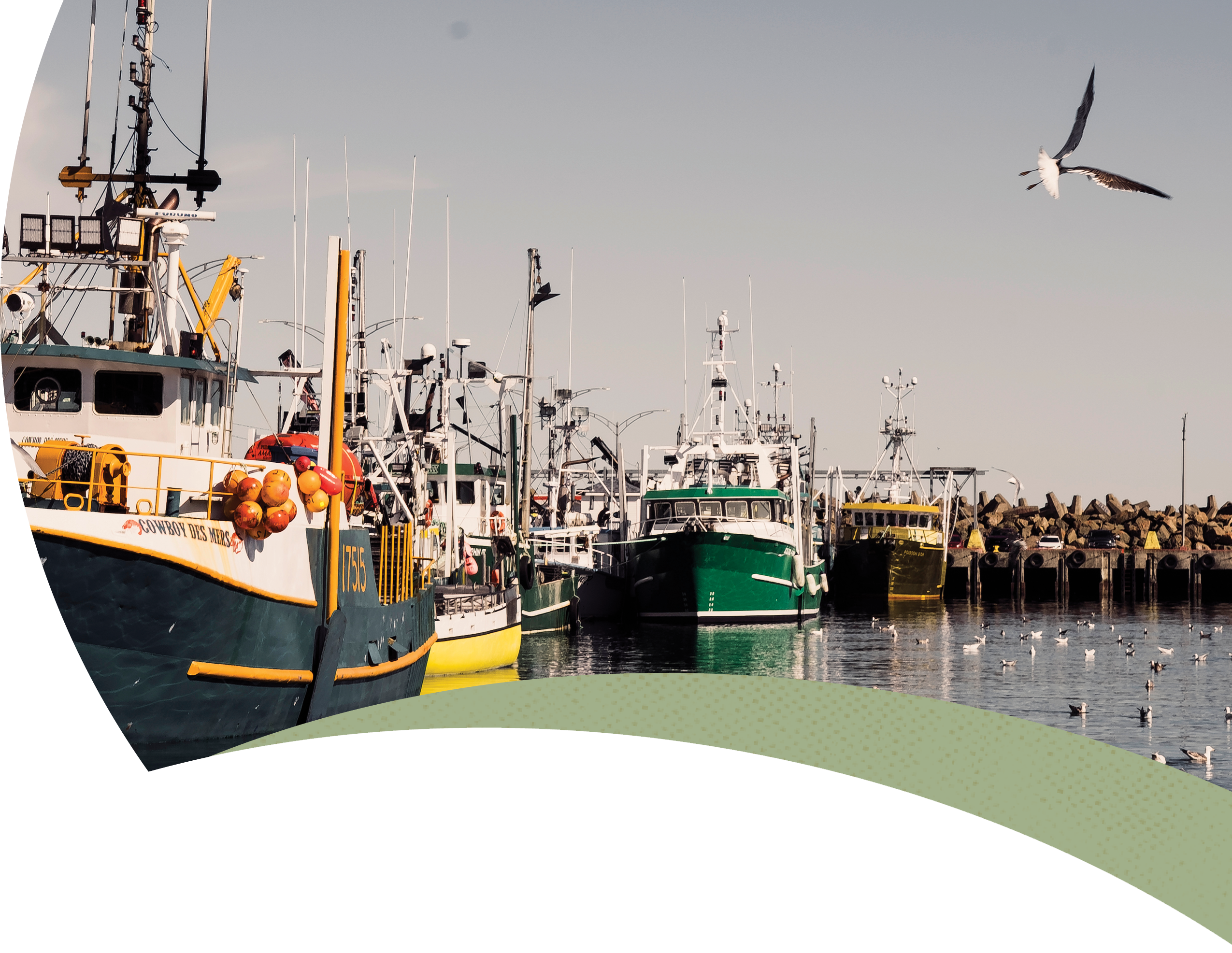
On top of the tariff uncertainty, Quebec’s fishing industry is facing other challenges including a significant decrease in the population of certain species due to warming water temperatures linked to climate change.
“Fishing is going through a difficult period at the moment, with declining stocks and quotas,” said Pascal Noël, project and business development manager at ÉvoluPêches. “The only fishery that is doing well is lobster. All other species are struggling.”
The depletion of marine resources affects not only fishermen, but also workers in processing plants and equipment suppliers. “When fishing is doing badly, many people are not doing well,” said Charles-Olivier Lévesque, director of the Société de développement économique de Percé.
As climate policy and the global energy transition evolve, the emissions-intensive fishing industry could also face higher costs.
“The boats still run on fuel,” explained Noël. “Experiments are underway to switch to batteries and greener fishing practices,” he added.
Freezing, refrigeration and shipping also add to the carbon footprint of the sector. Initiatives such as the federal Fisheries and Aquaculture Clean Technology Adoption Program are helping to accelerate change across the industry.
The local industry is also undergoing an evolution linked to federal approaches to Indigenous reconciliation and efforts to uphold treaty rights. The process followed by Fisheries and Oceans Canada (DFO) and the funding of Indigenous fisheries have raised concerns among members of the Regroupement des pêcheurs professionnels du sud de la Gaspésie (RPPSG), who argue that DFO never consulted individual fishers and local municipalities on the impacts that reconciliation within the fisheries might have on the economy, fair and equitable access to the resource, and arrangements for managing the fisheries.
While seafood has been at the heart of the local economy for centuries, other major industrial players have come in and out of the picture.
The massive McInnis Cement plant looms along the coastline in Port-Daniel-Gascons. The plant faced considerable public scrutiny and criticism while it was being constructed a decade ago, with questions about the viability of the business and its impact on greenhouse-gas emissions.
The project moved forward in 2014 after it received a $250-million guaranteed loan from the Quebec government and a $100-million investment from Investissement Québec. Quebec’s Caisse de dépôt et placement (now known as La Caisse), the agency that manages the province’s public pensions, invested another $100 million. Cost overruns led to additional investments from the Caisse. The project was also permitted to sidestep certain environmental regulations.
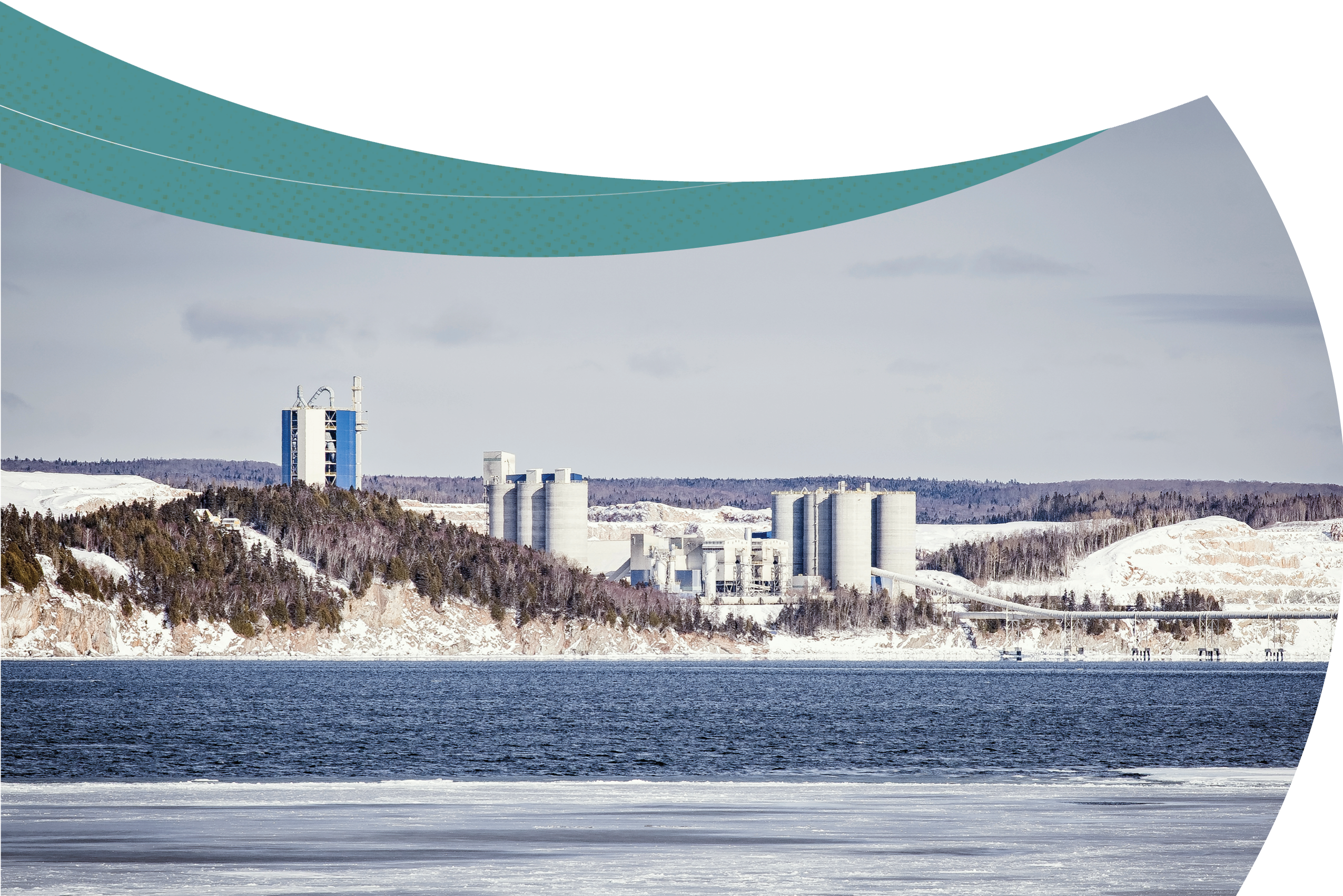
In the Quebec government’s 2020 fall economic statement, the province wrote off $378 million in losses at the McInnis plant.
That same year, the company merged with St. Marys Cement, a subsidiary of Brazil’s Votorantim Cimentos, a major global manufacturer and distributor of cement. At the time, the plant had an annual capacity of 2.2 million tonnes to serve markets in eastern Canada, the Great Lakes region of the United States and Canada, and the northeastern U.S. The McInnis operations also included a deep-water marine terminal, several marine vessels and a distribution network.
The plant reported employing the equivalent of 151 full-time employees in 2024, noting that same year that it provided work for an additional 1,000 contractors. It has been a boon to the local economy and community. The firm recently invested $400,000 in the local sports arena.
“It’s an exceptional opportunity to have a company of this size on our territory because of its remarkable contribution to the vitality of our municipality,” said Henri Grenier, mayor of Port-Daniel-Gascons, in a press release. “In addition to its significant economic impact, we must also recognize its contribution to our community and sporting facilities, as well as to our region’s reputation.”

Still, trade uncertainty and the threat of U.S. tariffs have raised concerns among local economic development leaders. In remote and rural parts of Canada with little economic diversity, the loss of major businesses can have widespread consequences.
Locals still recall the impact of the closure of the former Noranda copper mine and smelter in nearby Murdochville more than 20 years ago. A letter written by the town’s mayor at the time described the extensive financial impact of the closures, including a suggestion to close the sports centre and library, suspend services such as pest control and some snow removal, and reduce the municipal workforce.
Job losses and economic decline have also been felt in Chandler, where consecutive layoffs following the closure of the Gaspésia pulp and paper mill in the early 2000s were still being felt more than 10 years later.
The closure of the paper mill led to serious problems of social isolation, violence, substance abuse and numerous suicides, according to media reports. Even today, Rocher-Percé remains one of the most economically vulnerable regional county municipalities in Quebec.
Stéphanie Roy, program officer for Place aux Jeunes at CJE Option Emploi in Rocher-Percé, noted that the closure of a major employer like the McInnis plant would have an impact that extends beyond people directly employed at the plant to family members who also have jobs and contribute to the vitality of the region.
While the plant could be affected in the coming decades by growing efforts to reduce greenhouse-gas emissions, given that it is the largest emitter in Quebec and one of the largest emitters in Canada, there is no suggestion of a closure.
The cement plant outlined in 2015 plans to study the potential for replacing the emissions-intensive petroleum coke used in its cement kilns with alternatives such as forest biomass, but the plan has not materialized. The company has, however, made statements about its commitment to emission reductions.
“Reinvestments continue to be made on a regular basis to achieve our environmental and operational objectives, and we are very proud of this,” said Jorge Wagner, the CEO of St. Marys Cement. “Ciment St. Marys’ vision is to achieve carbon neutrality in concrete by 2050.”
Tourism is another pillar of the regional economy. From April 2024 to March 2025, the Gaspé Peninsula welcomed 898,800 visitors, which generated an estimated $565 million in economic spinoffs, representing increases of 4 per cent and 7 per cent respectively compared to 2024.
Many come to see Percé Rock, the region’s major tourist attraction. The meandering boardwalk and park space along the waterfront in Percé, where tourists can catch views of the dramatic offshore rock formation, was completed in 2018. In the lead-up to the project, the town had faced debilitating storm surges that severely damaged some of the buildings that face the St. Lawrence.
Despite these positive spinoffs, the seasonality of tourism accentuates the region’s economic precarity.
While tourism peaks in the summer, there are still some visitors in the winter. Virgile Deroche, a project manager at CIRADD, a local sustainable development research centre, points out that milder winters are affecting the winter tourism industry, particularly for skiing and snowmobiling.
“Milder winters and variations in precipitation (rain, snow and freezing rain) are impacting activities. Ski resorts may close or see fewer visitors due to conditions and the state of the slopes,” he stated. “The Gaspé Peninsula has a great reputation for winter sports, but now, with less cold winters, many in the region are suffering.”
He added that “in addition to the recurring challenges faced by businesses in the region, climate change adds another layer of complexity.”
Beyond the impact on recreation and tourism, climate change is also having visible effects on coastal erosion, land submersion and annual flooding. “These are visible impacts experienced by the people of the region,” said Deroche.

Signs for train stations still appear along Highway 132, which runs along the shore of the St. Lawrence and around the peninsula, although the rail service is long gone. Via Rail stopped serving the Gaspé Peninsula in 2013, but there is grassroots and local political pressure to bring the service back. In late 2025, the Quebec government completed the restoration of part of a rail line that connects Port-Daniel-Gascons to Matapédia on the New Brunswick border, helping the McInnis Cement plant with its distribution.
Car dependency is a major issue in Rocher-Percé, where public transportation is both limited and inflexible. Public transportation currently consists of two buses that run round trips only in the morning and at the end of the day, mainly to meet the needs of workers and students. At all other times of the day, residents have no choice but to travel by car.
“Outside of office hours, it’s not easy. There is no public transportation on weekends or in the evenings,” said Stéphanie Roy. The lack of service complicates mobility for seniors, young people and low-income individuals, limiting their access to essential services and social activities.
More bus transportation would still experience the same construction and seasonal slowdowns as motorists. However, adding a rail component could reduce road traffic by providing a separate route. According to Charles-Olivier Lévesque, while this type of system could create a balance between rail and carpooling, the low population density remains a major obstacle and complicates the viability of such a service.
The tourist season intensifies the challenge of transportation and associated emissions. With few sustainable transportation options available to visitors, the majority arrive by car or plane, increasing traffic and the region’s carbon footprint. The development of shared mobility solutions, tourist shuttles or carpooling initiatives could help reduce this impact while making it easier for residents to get around.

Like many Canadian communities, Rocher-Percé is grappling with an aging population, leading, in turn, to worker shortages, which act as a drag on potential new economic growth; a growing workforce is required to support new projects, the fishing industry and the services that local residents require. Some local restaurants have struggled to keep open because of a lack of workers.
In 2025, over 35 per cent of Rocher-Percé’s population was 65 years old or older. For every 10 people who retire, only four young people enter the labour market, an imbalance particularly noticeable in the health and education sectors.
The arrival of new immigrants has helped to address some of the workforce shortages, particularly in health care and the service industry.
Although the region has experienced positive net migration over the past seven years, the demographic challenge remains. “It was the same 12 years ago, but with negative net migration,” pointed out Stéphanie Roy.
“In general, people who return to the region or immigrate there want to settle to live and work,” explained Roy.
However, several factors, such as housing shortages or better job opportunities elsewhere, sometimes force people to leave the region reluctantly. Immigrant workers, often here on temporary permits, face uncertainty about career opportunities, which hinders their prospects for long-term settlement. Those who choose to stay must overcome obstacles related to housing and child care, making their situation precarious.
Rocher-Percé is facing unprecedented housing challenges, exacerbated by the conversion of many apartments into short-term rentals available on platforms like Airbnb. This situation limits residents’ access to affordable and stable housing, directly affecting workforce retention.
Roy recalled the difficult journey of one newcomer who came for a dream job in Rocher-Percé. She initially found temporary residence in the home of people who were away for six months. Afterwards, she had to live with roommates, a common situation for newcomers without a local network.
The housing crisis and lack of child care places also affect young families. Virgile Deroche, a young parent, said this situation is a major obstacle to retaining workers. “There is a severe shortage of daycare places,” he said. “It’s difficult to retain skilled workers. I was forced to work only two days a week to take care of my child.”
This problem results from the lack of child care spaces and the challenges of recruiting workers to provide child care services.
Rocher-Percé’s 2023-2027 strategic plan notes several opportunities for enhanced transportation infrastructure to boost economic development in the area. Proposed improvements to the airport, along rail lines and at boathouses along the coast’s fishing harbours would allow for more passenger transport, a broader customer base and better intermodal transport.
The return of rail service and enhanced air connections are some of the ideas that have gained traction. Both could bring more tourists to the area, and enhanced cargo capacity could open up new markets for seafood producers.
The small airport, on the south shore of the peninsula, recently underwent upgrades but is used principally by medical and private aircraft. The regional municipality launched a consultation in November 2025 to find out what local entrepreneurs want and need in terms of air service.
“What we want is to come out on top,” Samuel Parisé, prefect of Rocher-Percé, told Le Soir newspaper. “The goal is to have a service that meets a need, either by extending the tourist season or becoming a year-round tourist destination.”

The former Noranda copper mine and smelter at Murdochville have been gone for decades, victims of low copper prices. But the green energy transition means copper, now considered a critical mineral, is again in high demand and prices are on the upswing.
The Canadian mining company Osisko Metals is looking to revive the site. In 2023, Osisko purchased the site from Glencore Canada and is updating its estimate of the size of the deposit before completing an initial economic study to be followed by a proposed feasibility study in 2027. According to the company, the mine could start production in 2031, subject to necessary approvals.
In early 2025, the government of Quebec committed to forming a committee that will aim to optimize the socio-economic benefits of the project on a regional scale and increase the participation of local and Indigenous organizations.
“We’re hoping to get on [Prime Minister] Mark Carney’s Building Canada Act to fast-track the process, and we’re already in discussions with the federal government on that,” Robert Wares, CEO of Osisko Metals, told The Northern Miner in October 2025.
The economic region that includes both the Gaspé Peninsula and the Îles-de-la-Madeleine has long been noted by the government of Quebec as one of the most favourable areas in the province for wind development.
There are 45 wind farms operating in Quebec with a capacity to generate approximately 4,000 megawatts of power. As Hydro-Québec augments its clean energy supply, it plans to add 10,000 megawatts of new wind capacity by 2035, enough electricity to supply more than two million households. In 2024, the province launched a Wind Development Strategy, with a focus on developing large-scale projects over 1,000 megawatts in designated strategic zones.
The region surrounding Rocher-Percé is ripe with potential, and parts of the wind-turbine supply chain already exist there. In 2021, LM Wind Power, a Danish subsidiary of General Electric, received government support to expand its wind-turbine blade-manufacturing facility in the city of Gaspé. The producer makes some of the world’s largest blades for markets in the United States and Europe. It employed more than 300 people locally in 2021.
KUMA Brakes, also based in the city of Gaspé, manufactures brake pads for high-power wind turbines.
A partnership announced in August 2025 between the Mi’kmaq of Gespe’gewa’gi, Hydro-Québec, Mi’gmawei Mawiomi Business Corporation shareholders and the Alliance de l’énergie de l’Est seeks to position the region as a renewable energy hub, developing up to 6,000 megawatts of wind power over the next few years in the Gaspé Peninsula and eastern Bas-Saint-Laurent regions. Up to $18 billion in investments is expected for the proposed project, with additional investments needed to extend the transmission system in the region.

Around every turn of Highway 132 are a series of breathtaking vistas — the St. Lawrence on the one side opening to the Atlantic Ocean, and hilly wilderness on the other, including the edge of the Appalachian range. Hunting, fishing, hiking, whale watching and other outdoor activities lure tourists here, despite the long distances — it’s more than a 10-hour drive from Montreal to Percé, six from Moncton.
The Percéides International Film and Art Festival brings cinema lovers in mid-August.
Rocher-Percé is recognized as an international tourist destination, not least because visitors come from all over the world to see the famous Percé Rock and the surrounding UNESCO Global Geopark.
Several tourism projects are being discussed for the region, including the redevelopment of a major piece of land for a new hotel complex. A Montreal entrepreneur purchased the site of the former Auberge Gargantua in Percé, a familiar institution that burned down in 2022.
Expanded opportunities for mountain biking and a potential ferry service to the Îles-de-la-Madeleine are other ideas that have been floated. Finding workers, of course, remains a perennial challenge.
The common narrative around rural and remote communities, particularly those that rely on seasonal industries, is one of decline and atrophy. Young residents leave, rather than stick around to build. Towns begin to hollow out, and businesses shutter.
But the economic landscape in the Gaspé region is one characterized by potential, says Marise Lelièvre, executive director of the federally funded Société d’aide au développement de la collectivité for Rocher-Percé (known as Community Futures Organizations in other parts of the country). She and a small team support local entrepreneurs, and provide loans to help them realize their aspirations.
Lelièvre hears about plenty of projects, including young entrepreneurs seeking to acquire existing businesses, which is essential for ensuring economic succession in the region. She has also seen ideas for new tourism projects emerge, such as the development of new cycling opportunities — including mountain biking — in the area’s vast and often mountainous wilderness. “COVID served as a catalyst, prompting many people and young families to choose the Gaspé region for its quality of life,” she said.
Like other Community Futures Organizations in Canada, the branch in Rocher-Percé sees a huge return on investment for the work it does with entrepreneurs, but the business model of the network is due for modernization. Lelièvre noted that budgets for Community Futures offices have not seen inflation increases for years.

“We operate with a small team of four full-time employees. Against a backdrop of budget freezes and rampant inflation, retaining our talent has become a critical challenge: each time someone departs, it means the loss of on-the-ground expertise that directly affects our ability to support entrepreneurs,” she said.

In the same building alongside the main road in Chandler, Christine Roussy does some of the same type of connecting the dots for economic projects as executive director of the regional municipality of Rocher-Percé. Roussy recalls that, before McInnis Cement opened, there was talk of closing schools in the area.
“It’s completely changed the municipality, and we want it to radiate out,” she said. “We have a lack of workers and of housing, but these are good problems. We’re in a more favourable situation than before.”
Roussy sees immigrants as part of the solution, noting that there is a need for temporary foreign workers at the seafood processing operations. “We can’t expand without people. It’s possible that certain projects will have to be put on pause without more,” she added.
Stéphanie Roy, of Place aux Jeunes Rocher-Percé, cautions that policymakers need to be more careful and co-ordinated as they plan. From her vantage point, she has seen what happens when workers are lured to the area, but housing needs aren’t taken into consideration ahead of time.
“All of the systems must be taken into account,” said Roy. “You have to marry the social with the economic.”
Lelièvre and Roussy, who are at the forefront of economic development, say that red tape and poor program design that doesn’t take into account local realities can stifle potential. The federal and provincial bodies act independently of one another, and do not co-ordinate loans or other programs. Roussy said that recent programs designed to support the fishing industry and housing should have had more take-up in the area, but proved to be too complex or the rules made it impossible to qualify.
Both women agree that programs must be designed for local regions, as each one is distinct. Lelièvre worries about further centralization of economic development.
“It’s important to go see entrepreneurs where they are. Nobody does it anymore,” she said. “You have to be close to them.”
The 2025 partnership between BDC and Community Futures that promises to expand access to rural entrepreneurship financing across Canada could be particularly helpful in the region.
Across sectors, the region’s experience underscores how economic potential can be hampered by structural vulnerabilities. Fisheries face changes due to climate change, higher costs and tariffs. Anchor businesses such as McInnis Cement bring jobs and investment but also expose communities to tariff risk, disruption from modified climate change policies and the outsized consequences of any closure. Tourism growth is also constrained by seasonality, climate impacts and transportation gaps.
Persistent challenges — worker shortages, an aging population, inadequate housing, limited child care and weak transit — complicate efforts to attract and retain people, including immigrants. Local development organizations consistently point to fragmented programs, regulatory complexity and policy design that fail to reflect on-the-ground realities, reinforcing the need for more co-ordinated, regionally tailored policy responses.
Here are some of the priorities that residents and community leaders say need to be addressed:
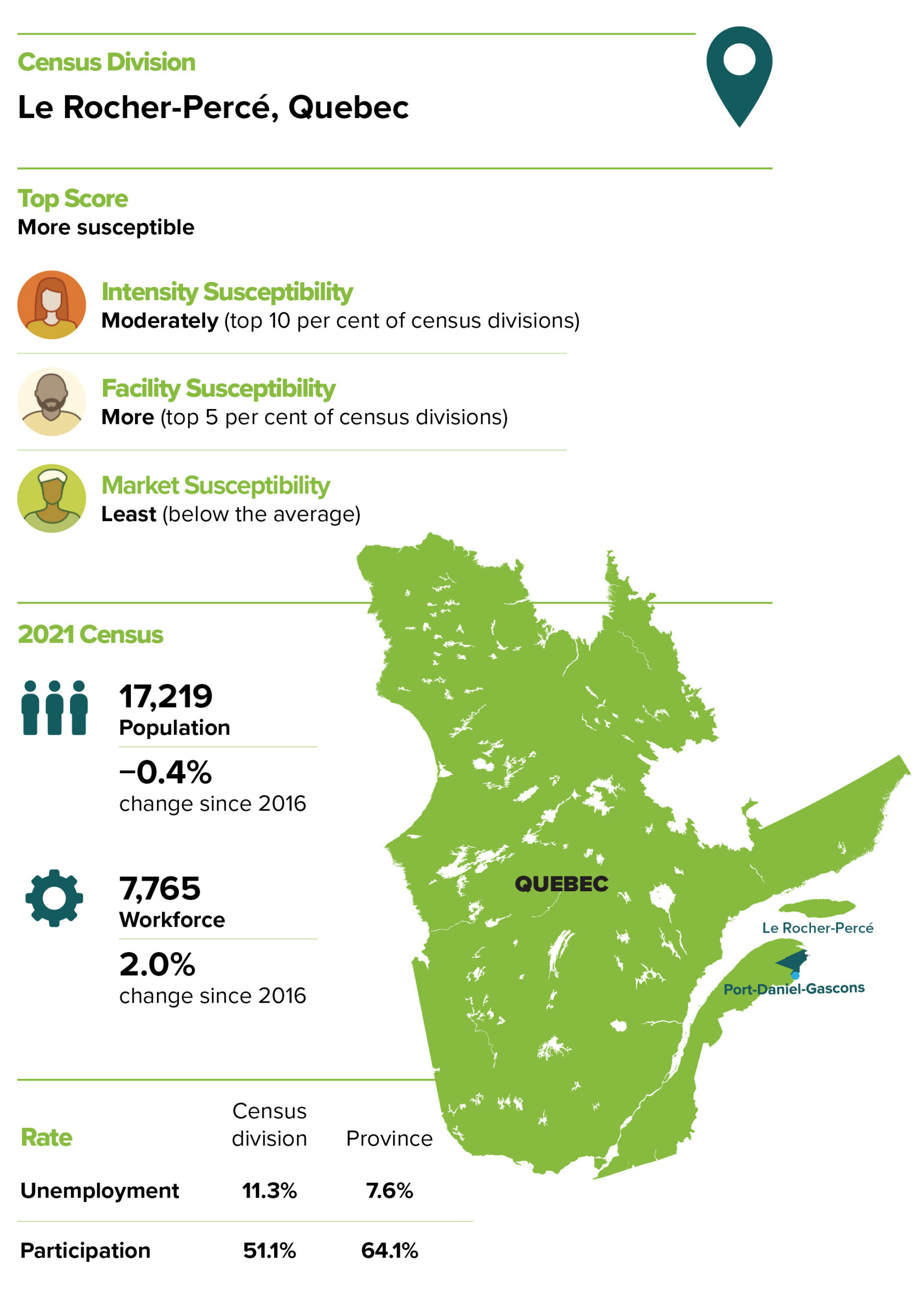
The Institute for Research on Public Policy (IRPP) has developed a methodology for measuring community susceptibility to workforce disruption as global efforts to address climate change expand. Using three indicators, the methodology scores and ranks census divisions across the country. Based on their ranking, each census division is assigned to one of six groups, ranging from “not susceptible” to “most susceptible.”
The three indicators include Facility Susceptibility (emissions from large facilities relative to the size of the community), Intensity Susceptibility (proportion of employment in emissions-intensive sectors), and Market Susceptibility (proportion of employment in globally traded sectors expected to undergo market transformations).
The analysis is available in an interactive map, developed in collaboration with the Community Data Program of the Community Economic Development Network, on the IRPP’s website (irpp.org/community-transformations/map). A detailed description of the methodology used is also available on the website.
To complement the mapping exercise, the IRPP selected 10 communities across the country to profile through a series of interviews with people that live and work in the community. Most of the communities selected are located within the most susceptible census divisions, but others were chosen because of anticipated development or previous experiences. The profiles are meant to cover a diversity of regions of the country and types of economic activity. These snapshots are meant to provide additional insight into the challenges and opportunities the communities face and to reflect the perspectives of residents.
The census division of Rocher-Percé (which corresponds with the regional county municipality of the same name), Quebec, is one of the communities selected. It was chosen because of the McInnis cement plant in Port-Daniel-Gascons, which is the largest single industrial emitter in the province.
The Energy Mix conducted interviews with community members in Port-Daniel-Gascons, the location of the cement plant, and nearby communities across the regional county municipality of Rocher-Percé. The IRPP’s president and CEO, Jennifer Ditchburn, also visited to meet with local community leaders.
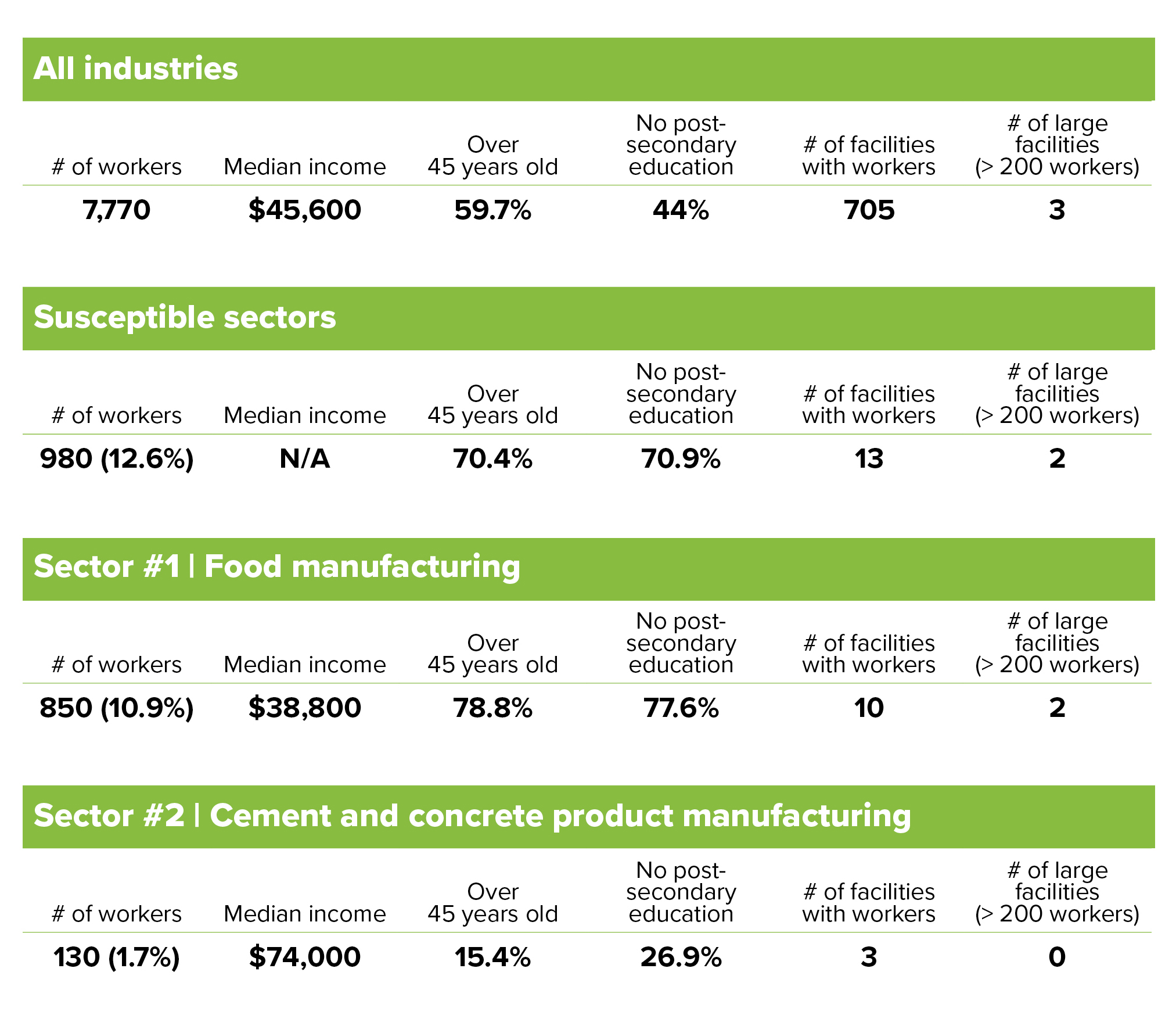
Below, we present a breakdown of the susceptibility analysis for the census division of Rocher-Percé, Quebec. Additional information not used in the analysis such as population change, the unemployment rate and demographic characteristics of workers is derived from the 2021 census. Number of facilities comes from the Statistics Canada’s Business Register from June 2020.
If you have questions about the profile or the analysis, please contact us at
communitytransformations@nullirpp.org.
This Community Profile was published as part of the IRPP’s Community Transformations Project. It was authored by The Energy Mix and the IRPP. The manuscript was copy-edited by Rosanna Tamburri with assistance from Abigail Jackson. Ricardo Chejfec was responsible for the data analysis. Proofreading was by Zofia Laubitz, editorial co-ordination was by Étienne Tremblay, production was by Chantal Létourneau, publication management was by Prasanthi Vasanthakumar and art direction was by Anne Tremblay. Photos are by Cynthia Dupuis Photographe.
The Community Transformations Project was funded in part by The McConnell Foundation and Vancity. Research independence is one of the IRPP’s core values, and the IRPP maintains editorial control over all publications.
A French translation of this text is available under the title La MRC du Rocher-Percé. Une force historique, une vigueur renouvelée.
To cite this document:
Institute for Research on Public Policy. (2026). Rocher-Percé: Historic strength, new muscle in Quebec’s Gaspé region. Institute for Research on Public Policy. https://doi.org/10.26070/yqv6-ad30
We’re grateful to these local contacts for sharing their ideas, experience and time with us: