





Canada is facing a housing affordability crisis that is placing a growing burden on households, particularly lower-income households, for whom housing and energy are already the largest areas of spending. Although the residential sector has reduced its GHG emissions since 2005, decarbonization has not progressed at the pace required to meet Canada’s 2030 and 2050 climate targets. Despite improvements in energy efficiency, population growth and the increase in the average living space per person have increased energy use and cost. The “build more” slogan overlooks three fundamental realities: the existing living space in homes is underutilized, energy regulations are not sufficiently ambitious and available technologies are not being adopted. This paper makes seven recommendations organized into three complementary dimensions: social, structural, and technological and economic dimensions. These recommendations aim to make energy efficiency a critical lever for more affordable housing in the short and long term.
Canada is facing a housing affordability crisis that is placing increasing pressure on households, particularly lower-income households. Housing has become the largest household expense, and its share of the household budget has increased in recent years. At the same time, Canada has committed to reducing its greenhouse gas (GHG) emissions by 40 to 45 per cent below 2005 levels by 2030, with the objective of achieving net-zero emissions by 2050. GHG emissions from the residential sector are declining, but not at the pace required. Growth in the average per capita residential floor area is increasing the amount of energy needed to heat and cool these spaces and slowing the reduction of GHG emissions. In this context, improving the energy efficiency of new buildings is essential, as these buildings will remain in use well beyond the horizon of the net-zero goal.
Energy-efficiency efforts and gains are being made across all provinces. When well targeted, these improvements can help stabilize housing costs over the long term while also reducing emissions. How can energy efficiency and the decarbonization of the residential sector become a lever to contain overall housing costs and improve affordability for everyone, particularly lower-income households, while reducing emissions from the residential sector?
Many solutions exist to decarbonize the residential sector while limiting long-term housing cost pressures. Buildings could become more energy efficient, and their operation and maintenance could be optimized to provide the same or even a higher level of comfort with lower energy consumption. Renewable energy sources could be integrated more effectively, along with available new technologies and energy storage. This could help stabilize energy costs for households, if programs are well designed. The electricity grid must also be decarbonized to reduce emissions indirectly, as homes increasingly rely on electricity. Beyond these well-known sources of emissions, embodied carbon (in construction materials) and refrigerant gases, used for cooling and heating, should also be controlled.
Deploying these solutions will require substantial investment and a wide range of material and human resources. But Canadians’ housing expenditures have already reached unprecedented levels. This context may give the impression that it is difficult to devote additional resources to the decarbonization of the residential sector, especially if households have to finance investments themselves. This is particularly true for lower-income households, who allocate the largest share of their incomes to housing and have very little capacity to absorb additional costs, even when those costs could generate future savings. For this reason, it is essential to design policies and support programs that reduce the net burden on these households so that they too can benefit from energy-efficiency gains.
Governments have not stood idly by in the face of the housing affordability crisis. In 2017, the federal government launched Canada’s National Housing Strategy (NHS), with the objective of increasing the supply of housing units for those who need them most. Since then, however, the affordability indicators presented in this report show little improvement. Housing cost pressures remain high, especially for lower-income households. Recent provincial housing policies, building on the NHS, have primarily focused on building more housing units, particularly affordable units. But they do not change the underlying trends: growing per capita floor area, weak energy regulations and low rates of adoption of available new technologies. These trends increase both the long-term cost of housing and the carbon footprint of the residential sector.
This study makes seven recommendations for solutions that will reduce emissions from the residential sector and improve housing affordability, particularly for lower-income households. The recommendations are organized into three complementary areas with social, structural, and technological and economic dimensions.
Canada’s worsening housing affordability crisis is placing increasing pressure on households, particularly lower-income households for whom housing is already the largest expense and often exceeds affordability thresholds. As rents, mortgages and energy costs rise, a growing number of households find themselves in financial distress or at risk of homelessness.
At the same time, a climate crisis is transforming our natural environment, causing lasting repercussions for infrastructure and energy costs in Canada. At the intersection of these two crises are the buildings we live in. They emit greenhouse gases (GHGs) due to the energy required to construct, operate, heat, cool and demolish them, but they also account for a large share of household spending on housing in the broad sense (both the physical space and the energy required to live well in them).
The central question we set out to answer in this study is this: How can we leverage energy efficiency and the decarbonization of the housing stock to contain overall housing costs and improve affordability for all, and particularly for lower-income households, while responding to the climate emergency? It is possible to devise solutions that make the residential sector net zero in a way that is inclusive for all Canadians and provides them with adequate living space.
I argue that decarbonizing the residential sector and improving the affordability of housing can be achieved simultaneously, provided that we limit the growth of residential floor area per capita, impose more ambitious energy standards, and make better use of technology and electricity pricing.
The paper begins with an energy overview of the residential sector across Canada’s provinces, highlighting key trends in energy efficiency, growth in residential floor area, and GHG emissions. This overview shows how these trends interact with overall household housing costs, including rent and mortgage payments, utilities and energy bills.
Given these trends, I identify six opportunities to decarbonize residential buildings, several of which draw on technological advances that are still underutilized. I examine the extent to which these technologies can, over the medium and long term, help contain, stabilize and reduce long-term housing costs.
I then dig deeper into both household spending and federal and provincial housing policies. I show the growing financial burden associated with housing, especially for lower-income households, and the ways in which current policies are falling short to address the twofold challenge of affordability and decarbonization.
Following this analysis, I make seven recommendations grouped into three complementary areas: a social dimension (which households to prioritize in housing policies and how to use residential space more effectively and efficiently), a structural dimension (how to build and retrofit in ways that reduce long-term operating costs and emissions), and a technological and economic dimension (how to manage energy costs, adapt pricing and support the electricity-grid transition). Together, these recommendations are intended to align housing affordability and climate goals by combining social, structural, technological and economic changes.
Canada has very ambitious GHG emissions reduction targets for 2030 and 2050. These targets stem from the Paris Agreement, which applies to all countries in the world except Iran, Libya, Yemen and the United States of America (UNTC, 2025). Canada aims to reduce emissions by 40 to 45 per cent below 2005 levels by 2030 and achieve net-zero emissions by 2050 (Government of Canada, 2024a). All sectors will need to reduce their emissions, including the building sector, which accounted for 12 per cent of Canada’s emissions in 2023 (ECCC, 2025). The sector comprises two subsectors: the service industry (businesses and institutions) and the residential sector. This paper focuses on the latter, which directly affects Canadians and for which the approach to reducing emissions will have a decisive effect on overall housing costs, especially for lower-income households.
Figure 1 illustrates Canada’s GHG emissions from 1990 to 2023, as well as the trajectory required to reach the lower bound of the 2030 reduction target (a 40 per cent reduction) and the 2050 target. Emissions from the residential sector are highlighted in yellow. They accounted for 6 per cent of Canada’s emissions in 2023 and were slowly declining from 45 million tonnes (Mt) in 2005 to 38 Mt in 2023, a decrease of 7 Mt over 18 years. However, a much larger reduction of 15 Mt over the next seven years would be needed to meet Canada’s 2030 target for this sector.
Energy consumption in Canadian homes accounts for 95 per cent of GHG emissions from the residential sector.1 These emissions come from the combustion of natural gas (47 per cent of energy needs in Canadian homes; see figure 2a) and other hydrocarbons (oil products and propane). As shown in figure 2a, natural gas dominates in Ontario, British Columbia, Alberta and Saskatchewan. Oil products account for a significant portion of energy consumption in the Atlantic provinces, but electricity is predominant there, as it is in Quebec and Manitoba. In all cases, however, space heating accounts for the largest share of end-use energy consumption. On average, 60 per cent of residential energy in Canada is used for space heating (figure 2b), with proportions ranging from 49 per cent in British Columbia to 70 per cent in Prince Edward Island.

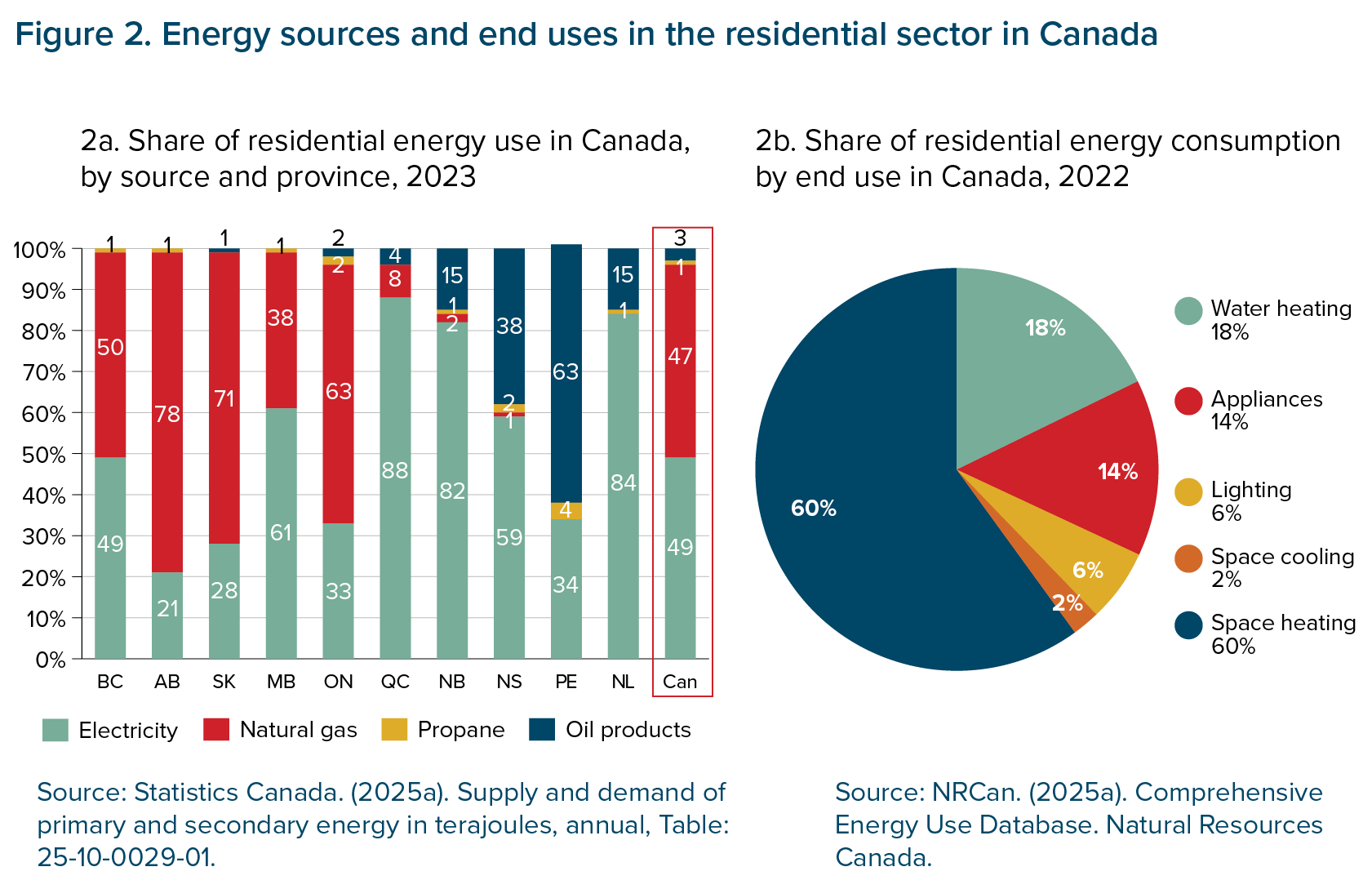
To reduce GHG emissions in the residential sector, less energy-intensive solutions, solutions based on low-carbon energy sources, or others combining the two, will need to be deployed. Since space heating is the largest end use of residential energy consumption, approaches to maintaining a comfortable indoor temperature, while ensuring the associated GHG emissions are as low as possible, will be essential.
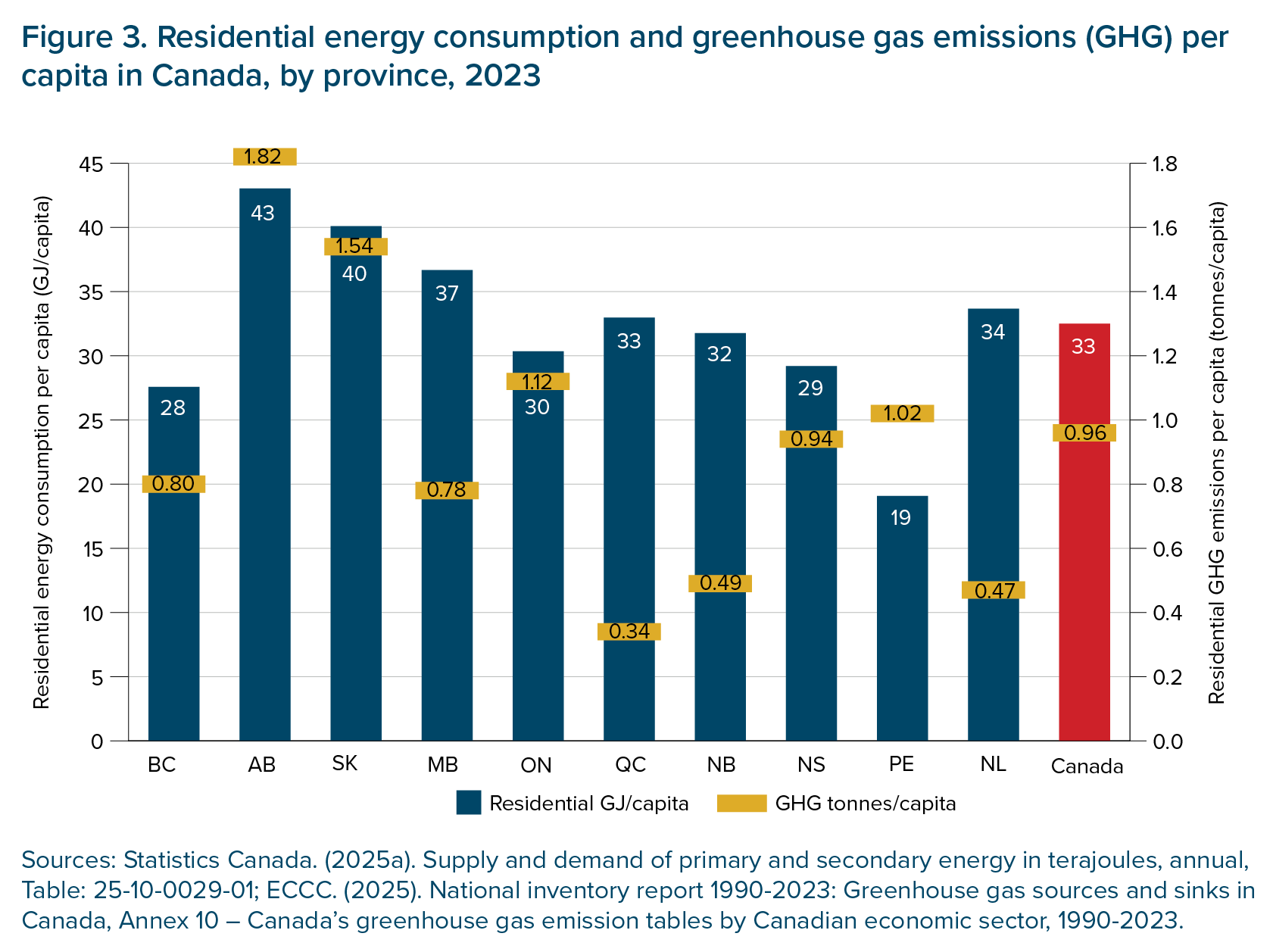
However, the picture is far from uniform across Canada. Provinces have very different levels of per capita energy consumption and GHG emissions in the residential sector.2 In 2023, Alberta had the highest levels of per capita energy consumption and GHG emissions, at 43 gigajoules (GJ) and 1.82 tonnes respectively. Prince Edward Island had the lowest per capita energy consumption in the residential sector, at 19 GJ, and Quebec had the lowest per capita GHG emissions in this sector, at 0.34 tonnes (figure 3).
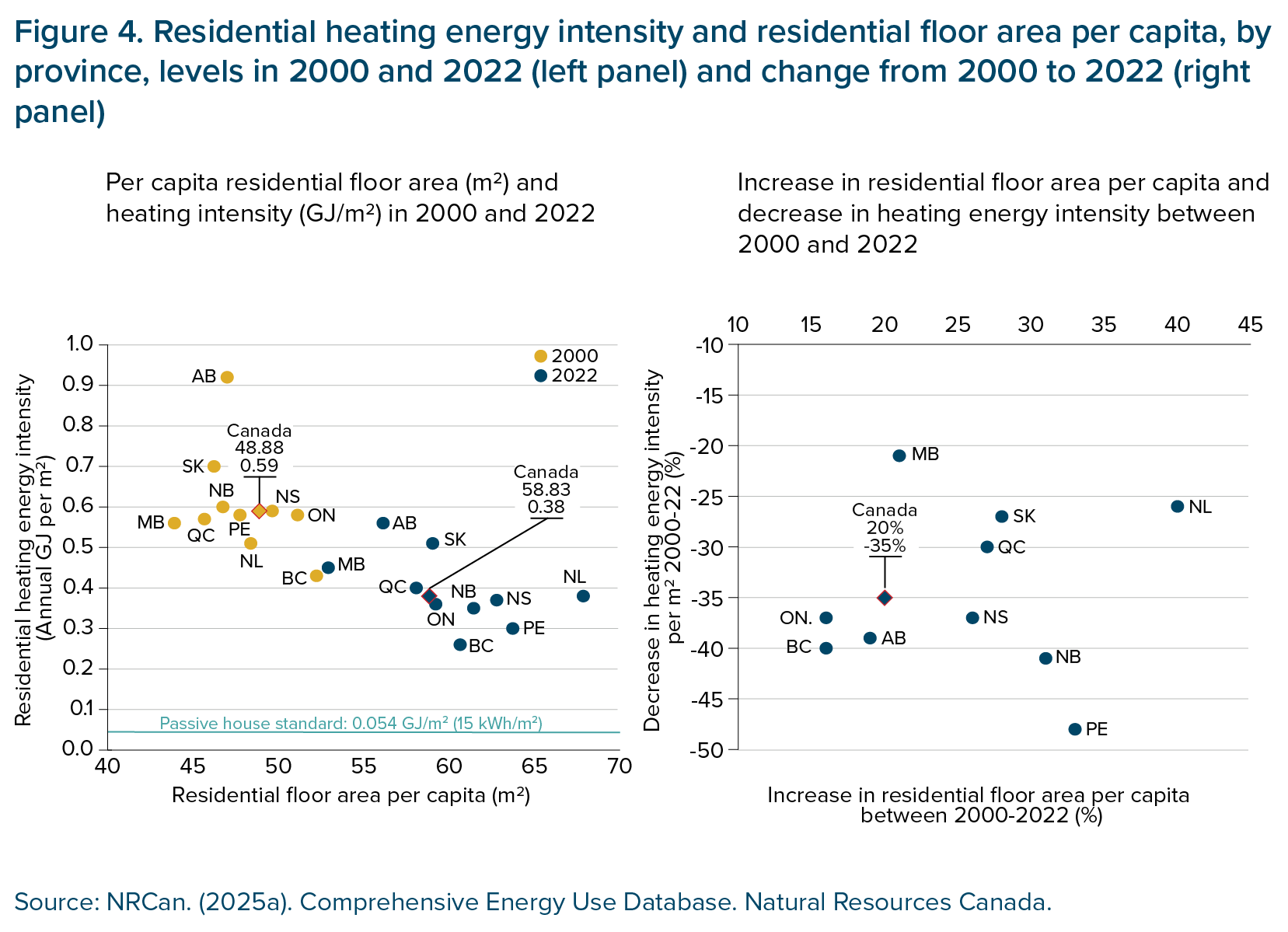
To some extent, climate explains the different levels of energy consumption. British Columbia generally experiences milder winters due to its predominantly oceanic climate, and this may contribute to lower energy consumption. However, energy efficiency also plays a role, and there are substantial variations across provinces in this regard. Prince Edward Island also has an oceanic climate, but its winters are cold and windy. Its lower energy consumption can be explained by sustained energy efficiency efforts and high adoption rates of heat pumps, supported by targeted provincial programs (Canadian Climate Institute, 2024a; Government of Prince Edward Island, 2025). Nova Scotia also has an oceanic climate, but its per capita residential energy consumption is much higher than that of Prince Edward Island. As shown in figure 4, some provinces use more GJ/m² than others, particularly Alberta and Saskatchewan.
Heating energy intensity has improved across Canada, from 0.59 GJ/m² in 2000 to 0.38 GJ/m² in 2022 (a 35 per cent improvement). Manitoba had the least improvement in heating energy intensity (21 per cent) and Prince Edward Island had the greatest (48 per cent). Additional reductions in heating energy intensity are possible. The current passive-house standard is 0.054 GJ/m², which is 79 per cent less than British Columbia’s 2023 heating intensity, the lowest in Canada at 0.26 GJ/m². Passive buildings are already a reality: there are approximately 2,000 in Canada (Passive House Canada, 2025).
Residential floor area, or floor space, also plays a role in energy consumption: the larger it is, the more energy is needed to heat, cool, light, etc. Residential floor area per capita increased by 20 per cent, from an average of less than 49 m² in 2000 to nearly 59 m² in 2022. This trend occurred in all provinces, but not to the same extent. The average residential floor area per capita grew by only 16 per cent in Ontario and British Columbia, compared to 40 per cent in Newfoundland and Labrador and more than 30 per cent in New Brunswick and Prince Edward Island. The additional residential space per capita, combined with a growing population, put an upward pressure on energy consumption.
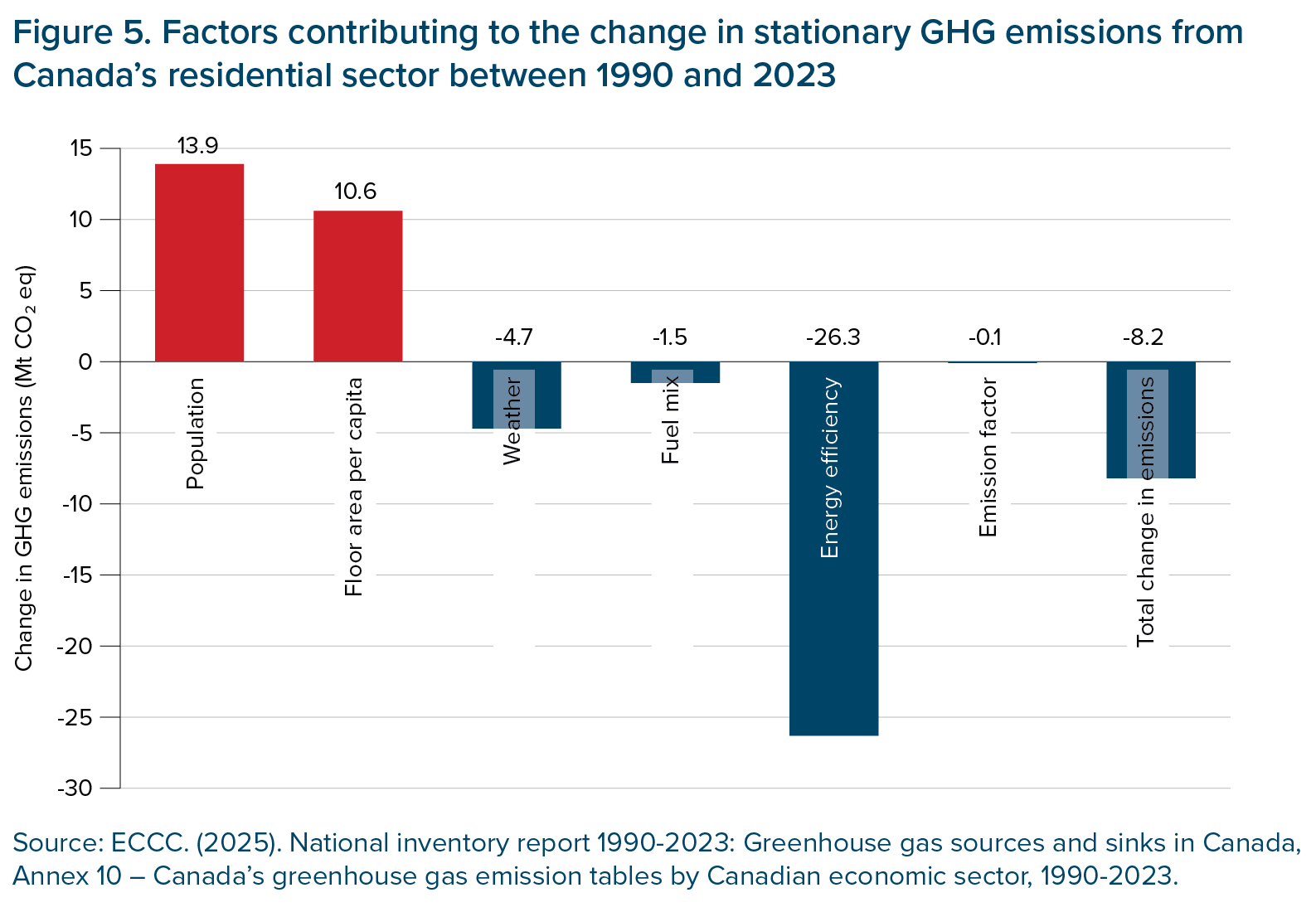
In the residential sector, population growth and the increase in floor space per capita are therefore the two main factors driving emissions, as illustrated in figure 5. Energy efficiency gains, combined with milder weather and cleaner fuels, have nevertheless led to a decline in emissions since 1990.
Although considerable progress has been made in improving energy efficiency in the residential building sector, GHG emissions are not declining at the rate required to meet the 2030 targets. However, there are many opportunities within our reach to accelerate the decarbonization of buildings and, in doing so, reduce long-term housing operating costs, particularly in provinces with the highest per capita energy consumption and emissions.
There are essentially six areas of action for reducing GHG emissions from buildings to net zero (ASHRAE, 2025) while improving their economic performance for households:
Energy efficiency measures and building electrification are structural changes to the building envelope and equipment aimed at improving performance and reducing the need to consume hydrocarbons or energy from other sources. Faster implementation of passive-house standards (figure 4) would be a step in this direction. It would not only reduce energy consumption but also make buildings more resilient to extreme weather events, as they could maintain a comfortable temperature longer (Energy Efficiency Canada, 2025). Electrification can contribute to greater energy efficiency, as electro-technologies are more efficient than conventional combustion technologies (Walter et al., 2024). For households, these measures can lead to lasting reductions in energy costs, provided that the initial investments are coupled with support mechanisms tailored to the financial capacities of the most vulnerable (Affordability Action Council, 2023b).
Improving the operation and maintenance of residential buildings also has the potential to reduce energy consumption significantly, especially when artificial intelligence technologies are used: a reduction of 20 to 50 per cent can be achieved (Jahan et al., 2024). Initiatives to improve operation and maintenance reduce energy consumption by optimizing energy use and reducing the need for equipment replacement, along with the associated costs.
Renewable energy sources are key to providing low-emission energy for residential buildings. Both established and newer technologies are available and increasingly affordable (Wu & Skye, 2021):
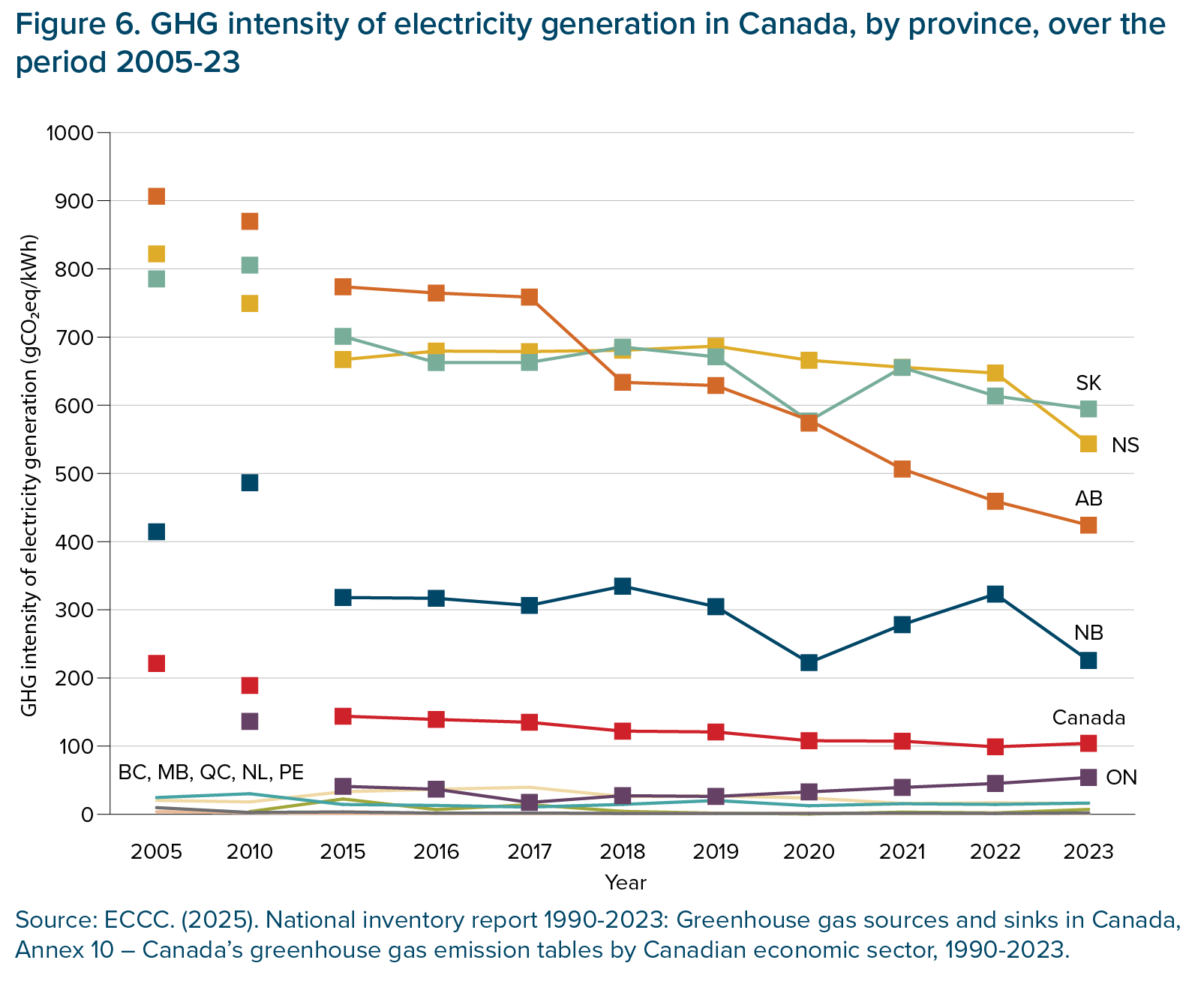
A decarbonized electricity grid and building-grid integration. Since electrification is an effective way to reduce hydrocarbon use and related GHG emissions in the residential sector, electricity generation should be decarbonized. Although there is a general downward trend in GHG intensity in Canada (lower emissions per kWh generated), as illustrated in figure 6, substantial differences exist between provinces. Alberta reduced its electricity GHG intensity by half between 2005 and 2023, from 906 to 424 g/kWh, largely because of the phaseout of coal-fired power plants and their replacement with lower-emission sources (ECCC, 2025). As a result, Saskatchewan was the province with the highest electricity GHG intensity in 2023, at nearly 600 g/kWh. Five provinces have very low electricity GHG intensity, ranging from 1.5 g/kWh in Quebec to 17 g/kWh in British Columbia (Manitoba, Newfoundland and Labrador, and Prince Edward Island are the other three). Further efforts should be made to decarbonize the grid and provide clean (carbon-free) electricity to residential buildings.
Because of the growing use of intermittent energy resources such as wind and solar power, electrical systems are increasingly exposed to variability associated with generation sources whose output cannot be controlled on demand. It is therefore becoming more difficult to meet peak demand, especially in a context of growing total demand. Actively managing demand in buildings to reduce energy consumption will become an increasingly attractive option. Technology can be used to develop “smart” homes and buildings, where heating, cooling and the use of certain appliances and equipment can be adjusted to reflect the situation on the electricity grid. For example, water heaters can be temporarily stopped when there are supply constraints and reactivated when these limitations are eased. Battery storage, especially in buildings, will also be a key tool to match supply and demand.
Embodied carbon. Approximately 75 per cent of the energy used in buildings is consumed during the operations phase (UNEP and Yale Center for Ecosystems + Architecture, 2023). However, the construction stage also requires energy — to produce materials and assemble them — as does the end-of-life stage, when buildings are demolished. This life-cycle perspective is essential to gain a complete understanding of the energy requirements of buildings. Embodied carbon refers to the carbon emissions generated by building construction. The largest contributors to embodied carbon are concrete, steel, brick and aluminum, while glass, wood and copper account for only marginal amounts (UNEP and Yale Center for Ecosystems + Architecture, 2023). To decarbonize the residential building sector, it will therefore be necessary to limit or reduce the use of these materials, produce them with minimal GHG emissions and ensure that they can be reused at the end of a building’s life.
Refrigerants used in heat pumps and heating, ventilation and air conditioning systems generally belong to the hydrofluorocarbon (HFC) family, which have a global warming potential (GWP) greater than 2,000.3 The phaseout of these high-GWP gases is regulated in Canada, with a target of reducing consumption by 85 per cent by 2036 (Government of Canada, 2022). The refrigerant R-32 (difluoromethane, CH2F2), which has a GWP of 675, can advantageously replace the more common refrigerant R-410A, which has a GWP of 2,088 (EPA, 2024). To reduce emissions, it is also important to ensure that these refrigerants are destroyed rather than released into the atmosphere at the end of the product’s life.
Several obstacles, however, limit the use of these six levers. There are various barriers to energy efficiency and decarbonization that are economic, behavioural, organizational and cultural (Langlois-Bertrand et al., 2015). Limited access to capital and to adequate knowledge is a significant obstacle, especially for lower-income households, who warrant particular attention.
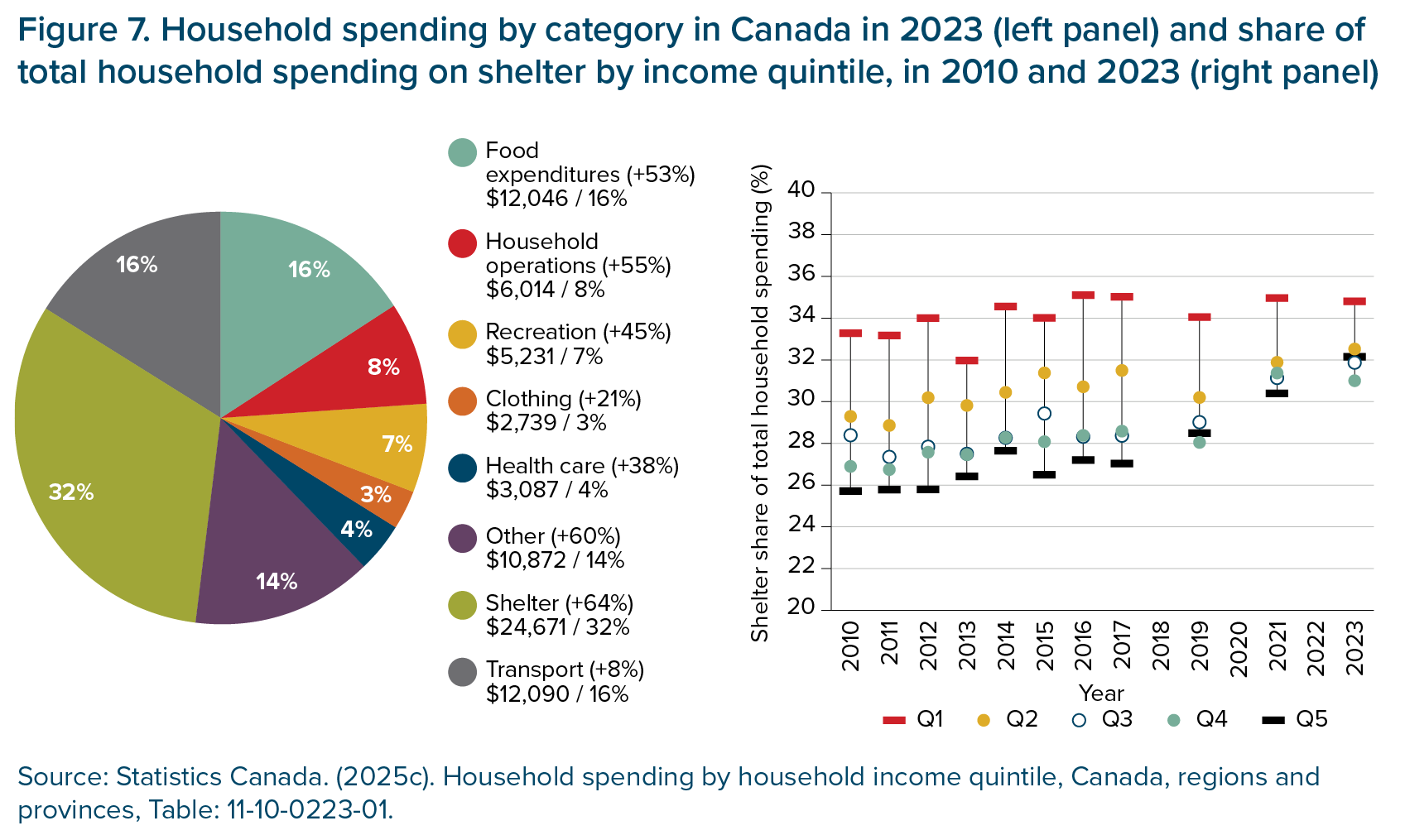
Investing in the decarbonization of residential buildings will be a challenge, as spending on shelter is already the largest expense for Canadian households. As figure 7 (left panel) shows, average household spending on housing in 2023 was $24,671, an amount that had increased by 64 per cent since 2010 and represented 32 per cent of all household expenditures. The increase in spending on shelter was greater than that for food (+53 per cent), transportation (+8 per cent) and any other major spending category during the same period. In this context, it will be difficult for most Canadian households to make additional investments in retrofits or energy efficiency.
This investment challenge becomes even more complex when we consider that not all households devote the same share of their budget (total expenditures) to housing. The share is generally higher for lower-income households than for higher-income households. As shown in figure 7 (right panel), the bottom quintile (Q1), or the 20 per cent of Canadian households with the lowest incomes, spent more than 34 per cent of their budget on housing in 2023, and the second lowest quintile spent about 32 per cent. All five quintiles, from Q1 to Q5, have been spending an increasing share of their budget on shelter since 2010, leaving them with less flexibility to invest in decarbonization initiatives. This is a particularly pressing issue for lower-income households, whose budgets are already more heavily burdened by essential expenses (Affordability Action Council, 2023c). This is a central finding: without public support and financing models tailored to their circumstances, decarbonization policies may remain out of the reach of the households that stand to benefit most from lower energy bills.
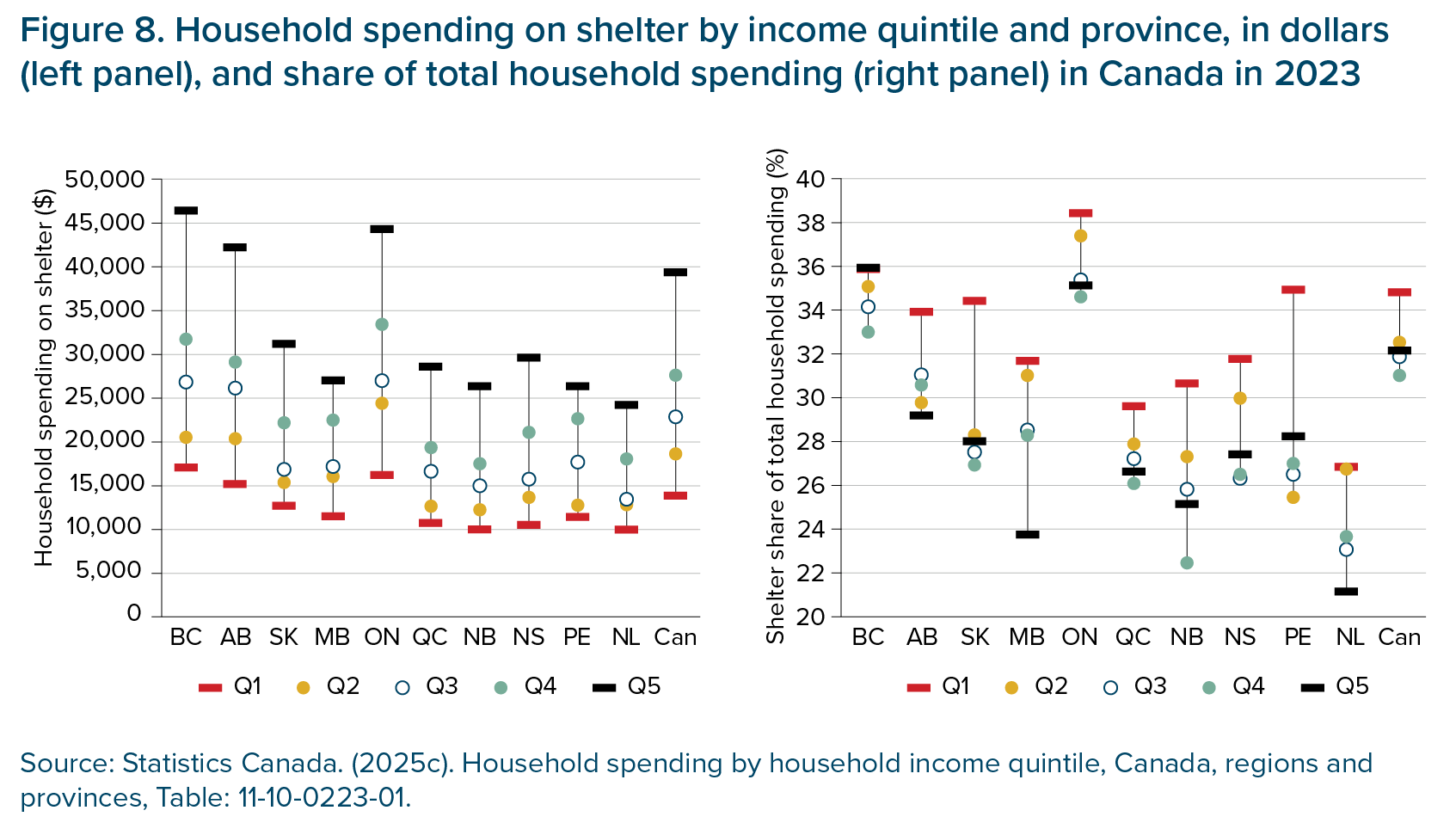
As with energy consumption and energy intensity, spending on shelter varies greatly between provinces. While the bottom quintile (Q1) always spends less in absolute terms (in dollars) on shelter than the other quintiles (see figure 8, left panel), households in this quintile in Quebec and the Atlantic provinces spent approximately $10,000 on housing in 2023, compared to more than $15,000 in British Columbia, Alberta and Ontario. Each of the wealthier quintiles spent more, in absolute terms, on shelter. Households in the top quintile (Q5) spent between $25,000 and $30,000 in Manitoba, Quebec and the Atlantic provinces, but more than $40,000 in British Columbia, Alberta and Ontario. Measured as a share of total spending, however, the situation is reversed in all provinces, but not always uniformly across quintiles. As mentioned earlier, the bottom quintile devotes a larger share of its total spending to shelter than all other quintiles in all provinces. However, the share varies: in Ontario, Q1 spends more than 38 per cent of its budget on shelter, compared with less than 27 per cent in Newfoundland and Labrador. Quebec has the second-lowest proportion of Q1 shelter spending to total budget, at nearly 30 per cent (see figure 8, right panel).
The situation of the highest-income quintile (Q5) across provinces is noteworthy. Although this quintile spends the most on shelter in absolute dollar terms, shelter does not always account for the smallest share of total expenditures among the five income quintiles. In most provinces (except Alberta, Manitoba and Newfoundland and Labrador), Q5 spends a larger share of its total expenditures on shelter than Q4 and sometimes even more than Q3 or Q2. While this observation does not raise social concerns, it could put wealthier households in a position where they do not invest in energy efficiency, since they already spend a lot of money on shelter. This means that those who, in principle, might be in the best financial position to invest and lead the transition may feel uncomfortable committing to additional spending on, or investments in, their homes, given the growing share of their spending already allocated to shelter.
The relatively low share of household spending devoted to energy in the residential sector is another factor that hinders investment in energy efficiency, especially since that share is declining in many cases. Figure 9 (left panel) shows the share of total household spending devoted to electricity for the five quintiles. For the highest-income quintile (Q5), electricity spending ranges from 1.3 per cent in British Columbia to 3.2 per cent in New Brunswick, with a Canadian average of 1.6 per cent. In most provinces, this share has been declining since 2010, as shown in figure 9 (right panel). Although the energy transition and decarbonization are desirable, the share of household spending on energy needs is declining for Q5, as it is for most quintiles, making transition initiatives less attractive. For the lower-income quintiles (Q1 and Q2), the share of electricity spending is higher, ranging from 1.7 per cent in British Columbia to 5.5 per cent in New Brunswick, with a Canadian average of 2.6 per cent for Q1. In many provinces, Q1 has also experienced the smallest decline in the relative share of electricity spending since 2010 (figure 9, right panel). In some cases, such as British Columbia, Alberta and Prince Edward Island, the share of electricity in total spending for Q1 even increased between 2010 and 2023.
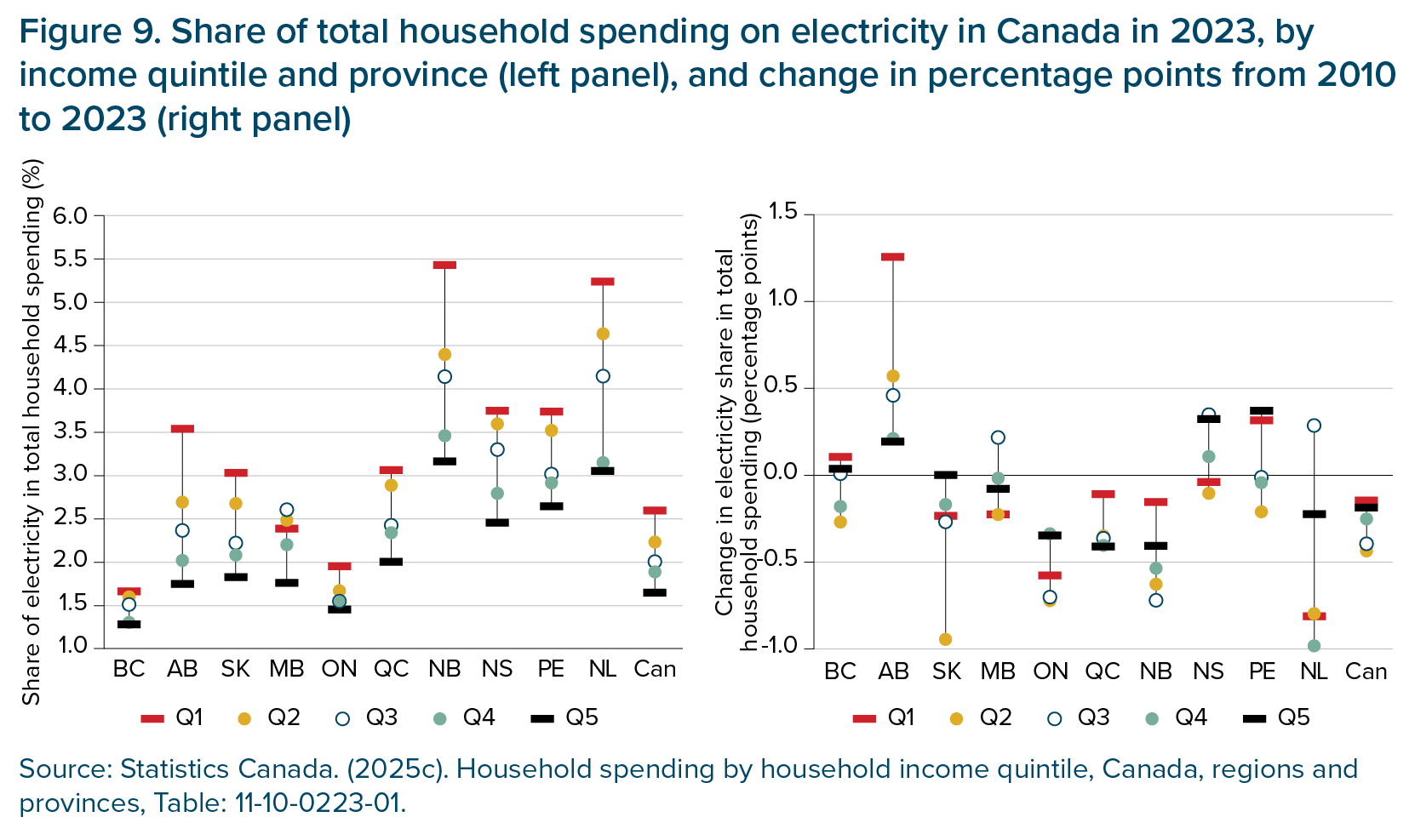
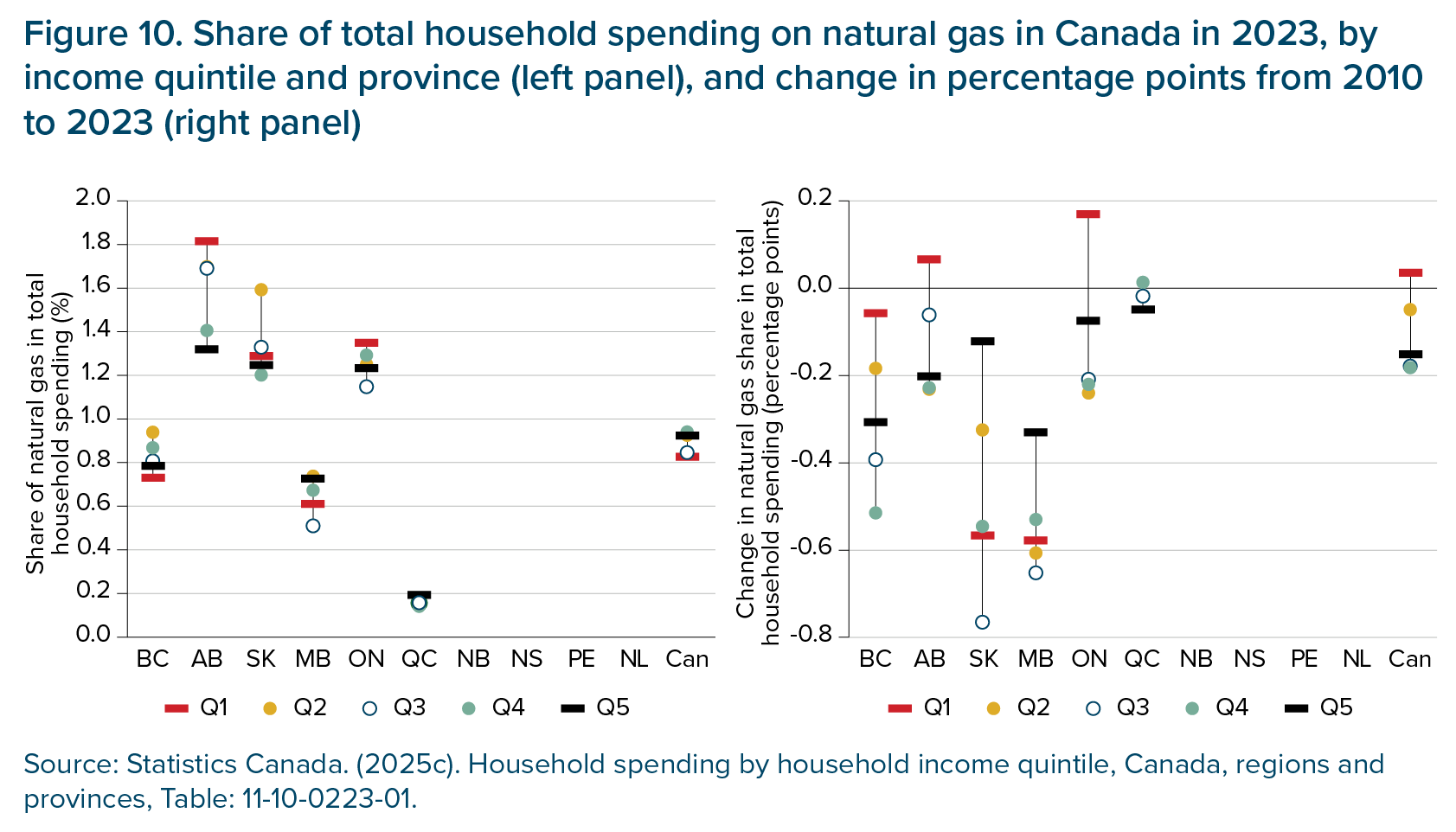
Figure 10 illustrates similar trends for natural gas. Spending on natural gas follows a comparable pattern in Alberta and Ontario, where natural gas is the dominant energy source. In both provinces, the bottom quintile (Q1) spends a larger share of its total budget on natural gas than the other quintiles (figure 10, left panel), and that share has increased since 2010 (figure 10, right panel). Q1 is the only quintile for which natural gas accounted for a larger share of total spending in 2023 than in 2010. Over the same period, relative spending on natural gas for the other quintiles is not only lower but is also declining. In provinces other than Alberta and Ontario, this energy source is often less used, and lower-income households have less access to it. For this reason, the share of their spending devoted to natural gas is often among the lowest in these provinces and is declining for almost all quintiles except Q4 in Quebec.
Across the country, shelter is the largest household expense, and it has increased as a share of total spending. Both of these observations are especially true for Q1, the lowest-income quintile. In this context, because of the growing pressure that housing expenses already place on households, additional investments in residential decarbonization may prove challenging. The decline in energy spending as a share of total spending also contributes to an unfavourable environment for decarbonization. Energy savings may therefore appear less important to households. Even so, Canadians still need to put a roof over their heads and to decarbonize their homes. Housing and energy-efficiency policy therefore matters greatly. Policies should provide incentives to make homes affordable and low-emitting for all Canadians, especially lower-income households.
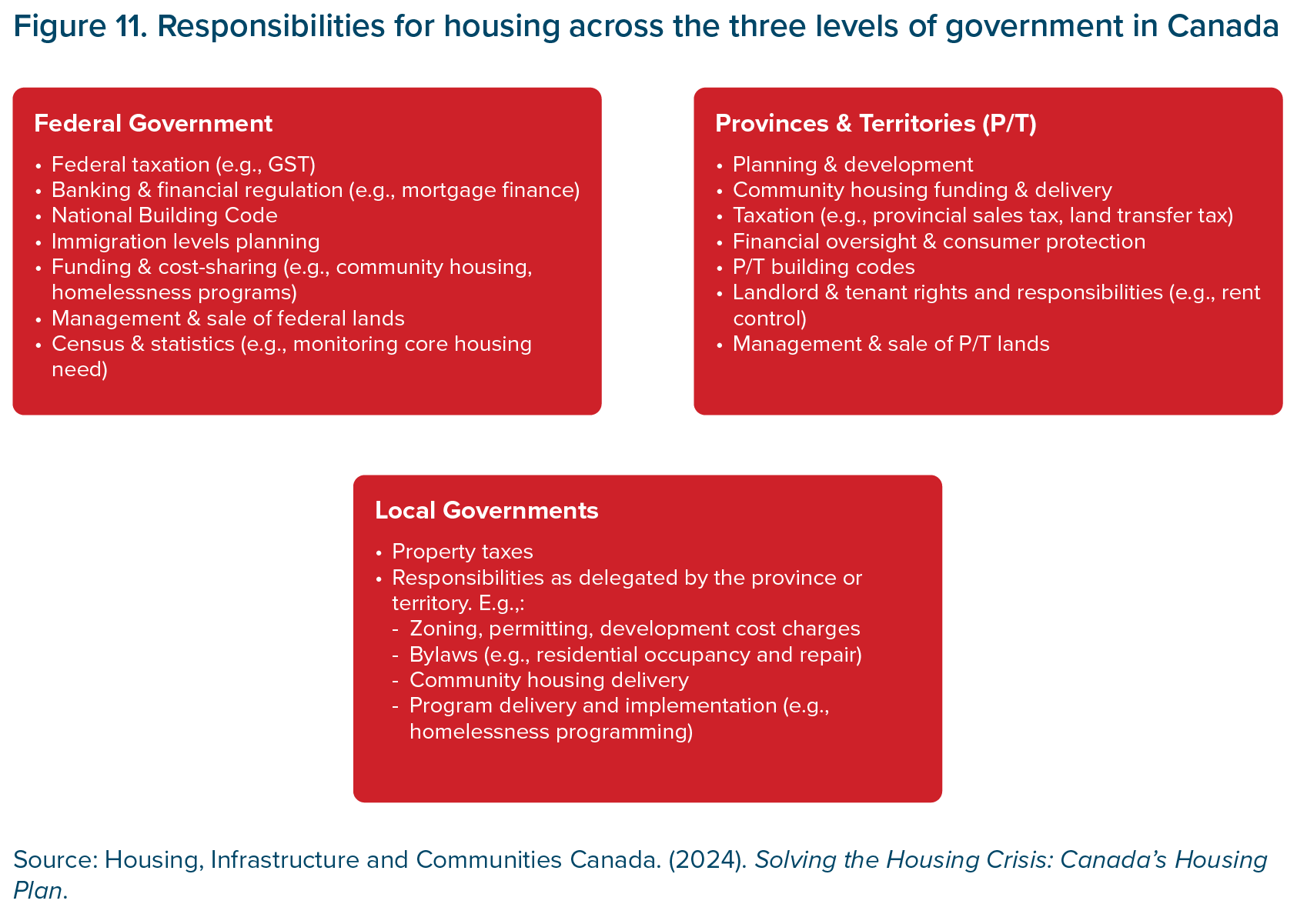
Responsibilities in the housing sector are shared by all three levels of government in Canada. As shown in figure 11, the federal government has many regulatory (financial and building-code related) responsibilities as well as funding responsibilities. The provinces, however, are responsible for planning and developing housing and for adapting the National Building Code. Local governments also exert influence through property taxes, zoning, permits and other responsibilities delegated by provincial governments. This shared governance complicates the implementation of coherent responses that meet the twofold objective of improving housing affordability and rapidly decarbonizing the residential stock. For this reason, it is of critical importance to adopt an integrated approach that mobilizes federal, provincial, territorial and municipal governments, along with community and private-sector partners, to co-ordinate levers for action and avoid fragmented interventions (Affordability Action Council, 2024).
Within this general framework, current housing policy in Canada is largely defined by the National Housing Strategy (NHS). Developed by Housing, Infrastructure and Communities Canada (formerly Infrastructure Canada) and the Department of Families, Children and Social Development, it was launched in 2017 and covers the period 2018-28 (Government of Canada, 2017). Through numerous federal programs and the provincial initiatives that it partially funds, the NHS aims to support action on the following priorities (Government of Canada, 2025):
Funding comes mainly from programs that support the development of new residential units for priority groups, particularly Canada’s most vulnerable populations (CMHC, 2025). There are also funds for rent-assistance programs, which are managed at the provincial level. The Canada Mortgage and Housing Corporation (CMHC) plays a co-ordinating role in implementing the NHS programs. Although sustainability is one of the priorities identified in the NHS, energy efficiency receives little attention in the quarterly progress reports (see, for example, CMHC, 2025).
Despite the NHS, the housing crisis has worsened across the country. Housing costs are rising across the board, as shown in the previous section (see figure 7, for example), and the lowest-income quintile (Q1) has never been in a worse position with respect to housing spending. It was in this context that Canada’s Housing Plan was released in 2024 (Housing, Infrastructure and Communities Canada, 2024). The plan acknowledges “the twin challenges of climate change and energy affordability” in the residential sector, but most of its focus is on (1) “building more homes”; (2) “making it easier to rent or own a home”; and (3) “helping Canadians who cannot afford a home.” In the second category, the Canada Green Buildings Strategy was first announced in 2022 by Environment and Climate Change Canada as part of the 2030 Emissions Reduction Plan (ECCC, 2022). However, it was not published until two years later, in 2024, by Natural Resources Canada (NRCan, 2024). It outlines three priorities:
Despite dedicated programs and a clear intention to transform the building sector to make it greener and more affordable, the Strategy lacks the binding regulations needed to achieve the net-zero emissions goal, notably with regard to upgrading the National Building Code for energy efficiency and implementing building performance standards.4 Without such requirements, new investments risk creating buildings that will be costly to heat and cool, especially for lower-income households. Every new building constructed without aiming for net-zero emissions creates a burden that will need to be addressed in the future, even though it is much more cost-effective to build to net-zero and resilience standards from the outset. Without strict standards, we risk locking inefficiency into the residential building stock for decades to come (Affordability Action Council, 2023a). While the new Build Canada Homes agency promises to catalyze innovative and sustainable building methods, it has placed a greater emphasis on modular, factory-built and prefabricated systems (Government of Canada, 2026).
One major program is the Canada Greener Homes Initiative (NRCan, 2025c), which has offered grants and loans to homeowners since 2021. However, because lower-income households are more often renters than homeowners, supporting the most vulnerable was not central to the program’s design. To place greater focus on lower-income households, the Canada Greener Affordable Homes Program was announced as part of the Canada Green Buildings Strategy, but it has not yet been launched. Its objective is to provide low-and moderate-income homeowners and renters with no-cost retrofits such as insulation and heat pumps (NRCan, 2025d).
Altogether, four different federal departments are involved in housing policy as well as the CMHC and the new Build Canada Homes agency.5 This can lead to co-ordination and alignment issues. If we also take into account the additional responsibilities of provincial and local governments, it is clear that it is difficult to navigate the residential building sector, especially when fundamental, rapid changes are needed, such as those required to address climate change and housing inequality. This complexity in governance calls for stronger federal leadership to co-ordinate and catalyze action. A renewed commitment from Ottawa could serve as a catalyst and mobilize stakeholders at large (Affordability Action Council, 2023a).
Since Ontario, Quebec, British Columbia and Alberta are Canada’s four largest provinces, together accounting for 86 per cent of the country’s population (Statistics Canada, 2025d), it is worth devoting an entire section to review their respective public policies.
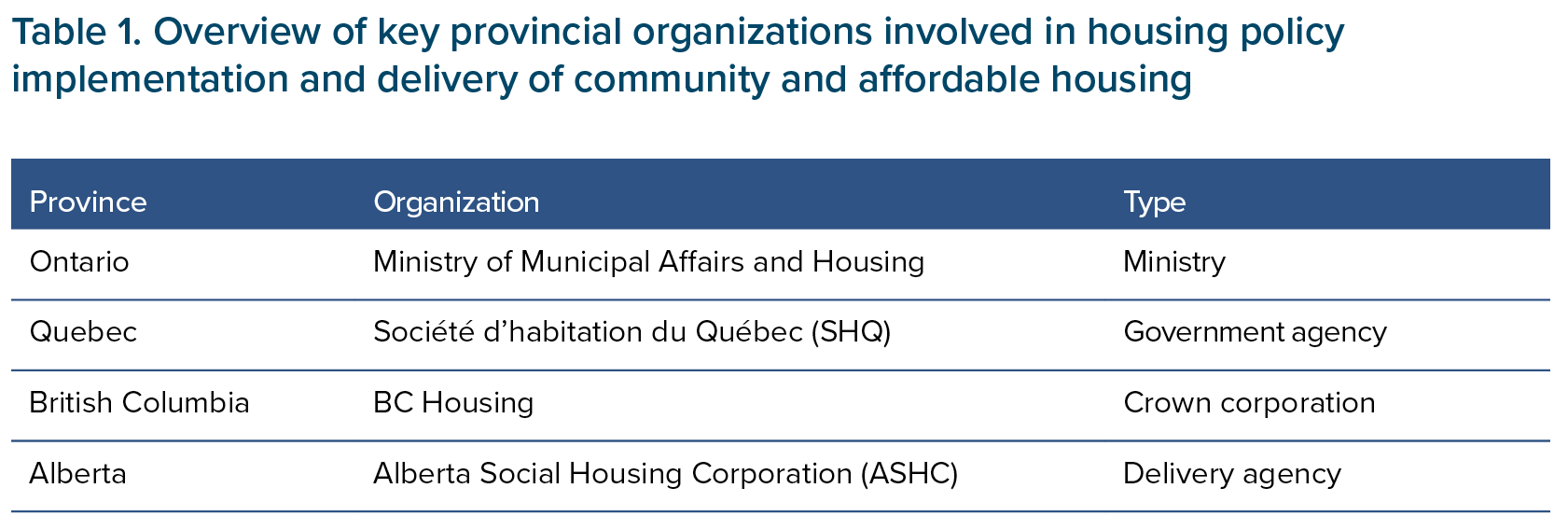
The provinces are responsible for housing planning and development and the management and delivery of community housing. Each province develops and implements its housing policy through a specialized organization, as shown in table 1. These organizations are primarily responsible for program delivery and providing housing. A specific provincial ministry responsible for housing and municipal affairs leads broader housing policy.
In Ontario, housing policy is primarily focused on building more homes, as illustrated by the titles of four recent pieces of legislation (Government of Ontario, 2024):
With a clear emphasis on building more homes, affordability issues are not directly addressed. Ontario has, nevertheless, introduced several targeted programs to ease the burden of energy costs on lower-income households, including the Ontario Electricity Assistance Program monthly credit, emergency assistance through the Low-Income Energy Assistance Program, and no-cost energy-efficiency upgrades through the Energy Affordability Program. However, these measures fall primarily under energy and social policy rather than housing policy as such (Hydro One, 2026; IESO, 2026; OEB, 2026). This supply-side approach is complemented by the Community Housing Renewal Strategy, which aims to facilitate access to affordable housing. Although increasing supply is generally considered a key lever, some analysts argue that Ontario’s housing policy falls short in addressing the root causes of the housing affordability crisis, because it focuses primarily on adding large quantities of residential properties to the market at the expense of better urban planning and environmental performance (Winfield & Stirling, 2025).
Quebec’s approach, set out in the Stratégie québécoise en habitation [Quebec housing strategy] (Quebec, 2024), is similar to Ontario’s in that it emphasizes building more housing units while seeking to make more affordable units available. In both cases, increasing the number of housing units is presented as the main solution. Additional supply should indeed put downward pressure on prices. Like Ontario, Quebec also has several targeted programs designed to reduce household energy costs, including assistance for energy-efficient retrofits (Rénoclimat), subsidies for energy efficiency and home electrification (LogisVert), and measures to decarbonize residential heating, including dual energy (Government of Quebec, 2026; Hydro-Québec, 2022, 2026). Beauregard (2024) notes, however, a shift away from government involvement in favour of the private sector, as the province’s housing policy no longer relies on the government as the driving force to develop affordable housing.
British Columbia is also seeking to build more units under its housing policy, updated in 2023 under the title Homes for People (Smith, 2024). At the same time, the province is taking some innovative steps to protect lower-income households, such as imposing construction targets directly on municipalities rather than relying on provincial objectives for new units of all types. Support for community housing is also provided, along with direct rental assistance through targeted programs such as Shelter Aid for Elderly Renters and the Rental Assistance Program (BC Housing, 2026a, 2026b; Government of British Columbia, 2025a), in addition to one-time crisis assistance measures, offered in particular by the BC Rent Bank (2026). Furthermore, regulations governing short-term rentals are especially strict in British Columbia, and a flipping tax is designed to discourage speculators by taking up to 20 per cent of the profits from the sale of residential properties owned for less than two years. Finally, the province stands out for its demanding energy-efficiency standards for new buildings, notably through the BC Energy Step Code (Government of British Columbia, 2025b).
Alberta’s recent housing policy relies much less on the construction of new units. Its 2025-28 action plan under the National Housing Strategy aims to transform the current approach to affordable housing by relaxing regulations, increasing flexibility and promoting new operating models that allow housing providers to respond more effectively to local needs (Government of Alberta, 2025). Government funding is primarily directed toward social housing and rent supplements.
Beyond the dominant strategy — especially in Ontario and Quebec, but also in British Columbia and Alberta — of building more residential units, these housing policies share another characteristic: depending on the province, energy performance standards are weak or absent, with the notable exception of British Columbia for new buildings. The energy transition and the response to climate change are insufficiently integrated into housing policies and are often treated separately. Furthermore, although these policies place explicit emphasis on affordable housing supply (as required by the federal government to unlock funds), nothing is being done to slow the expansionary trend documented in this study (figure 4): on average, each Canadian occupies more residential floor space every year. This increase in living space per person does not help make housing available to those who do not have homes. From a sustainability perspective, because more space requires more energy, an increase in the average per capita floor area is problematic in the absence of sufficient energy-efficiency gains (provided other factors remain constant). This is particularly the case for single-family homes.
From a social perspective, allocating on average more space per person for those who already have housing can limit availability for those who do not have housing and need it the most. More and more Canadians experience homelessness or are at risk of it while, paradoxically, others occupy, on average, more living space per person. Most recent reforms aim to address the housing supply crisis without tackling its root causes: the growth in residential floor area per capita, inadequate energy standards and the underuse of efficient technologies that could reduce both overall housing costs and GHG emissions.
The analysis in this paper shows that the residential sector lies at the heart of a twofold challenge: the housing affordability crisis, especially for lower-income households, and the urgent need to rapidly reduce GHG emissions from the building sector (Canadian Climate Institute, 2024b, 2024c). Below are seven recommendations, grouped into three complementary areas, to address these challenges: an area with a social dimension, an area with a structural dimension, and an area with a technological and economic dimension. Together, these recommendations aim to align the goals of housing affordability with the decarbonization of the residential sector.
The rising cost of housing, especially for lower-income households, creates a twofold social and economic challenge. First, it puts some individuals and families at risk of not being able to afford adequate housing or of having to cut back on other essentials, such as food, transportation and health care (Affordability Action Council, 2023c). Second, as more people experience homelessness, broader disruptions emerge for society as a whole: public services come under pressure, communities face greater tensions and may feel less safe, and many people are marginalized and are excluded from economic participation (Kantamneni, 2024; Mei & Seo, 2024). For those directly affected, homelessness has immediate and severe impacts on physical and mental health, safety and access to essential services (Government of Canada, 2024b; Hwang, 2001). In other words, unaffordable housing weakens both the households concerned and the entire social fabric.
The goal of the following two recommendations is to address the social challenges created by rising housing costs. They are directly aimed at ensuring that residential space is used and shared more effectively and efficiently and at focusing public resources on affordable housing, especially by prioritizing lower-income households who are most in need and who would benefit most from lower costs.
1. Prioritize affordable housing in the allocation of government resources
Because lower-income households (quintiles Q1 and Q2) are especially affected by rising housing costs and are most exposed to the associated risks including homelessness, government funding should be directed toward construction and retrofits of affordable housing and, where necessary, toward maintaining its long-term Any revenue gained from fiscal innovations (see recommendation 2) should be used to support these affordable-housing measures.
In concrete terms, this means directing public support primarily toward construction of community housing with below-market and geared-to-income rent and retrofits of existing units occupied by households in need. For example, the Affordability Action Council (2023a, 2023b) recommended prioritizing the construction of one million community housing units with income-indexed rents by 2030, which would help close the accumulated gap and improve housing supply for the most disadvantaged members of society. In addition, these new homes should be located near public transit and meet net-zero and climate-resilience standards in order to ensure lasting affordability. The new federal agency, Build Canada Homes (Government of Canada, 2026), whose mandate is to develop affordable and community housing at scale in collaboration with the provinces, territories and non-profit organizations, together with the Affordable Housing Fund (CMHC, 2026), could provide an appropriate mechanism to support such an objective. They could direct a substantial share of their investments toward affordable, energy-efficient housing adapted to future needs and located near public transit. The current policy framework for Build Canada Homes promises to catalyze innovative and sustainable building, with a greater emphasis on modular, factory-built and prefabricated systems (Government of Canada, 2026). However, it does not explicitly target building energy efficiency or GHG emissions reduction, which could limit its contribution to Canada’s climate goals.
2. Encourage a reversal of the trend toward growing per capita residential floor area through fiscal innovations
To limit the increase in per capita residential floor area, provincial governments and municipalities could adjust their property tax regimes and introduce fiscal tools based on the living space occupied per person. These tools could take the form of tax incentives, such as property tax relief when per capita residential floor area is below a certain threshold or, conversely, a form of “solidarity shelter tax” applied when this threshold is exceeded.
As shown in figure 4, the average residential floor area per capita has increased substantially in recent years. For illustrative purposes, the threshold could be set slightly above the Canadian average (e.g., around 60 m² per capita, or approximately 645 sq. ft.), but its exact level should be determined on the basis of local empirical analyses and equity considerations. These tools should be rigorously evaluated before being widely implemented.
Tax incentives
The purpose of tax incentives is to send a price signal that encourages limiting residential floor area per capita while reducing political barriers to implementation. For example, property tax relief could be granted to owners whose homes meet per-occupant or per-room size thresholds, similar to the tax benefits already granted by some municipalities for environmentally beneficial residential developments, such as permeable driveways (City of Ottawa, 2024). Lower development fees could be offered to developers who build units with smaller floor areas per room (which could help reduce space per occupant), following approaches similar to those implemented by some municipalities, including Ottawa, to encourage the construction of affordable housing (CAGBC, 2025).
Solidarity shelter tax
If such a tax were to be implemented, it should be progressive and include exemptions for lower-income households and certain special situations (e.g., people with disabilities) so that it targets primarily households with surplus space without penalizing vulnerable households.
Tax revenues could be allocated to a specific investment fund for affordable housing, which could, among other things, support the measures described in Recommendation 1. These measures could encourage households to move to smaller homes or contribute to the construction of new affordable residential units. Such a tax would be comparable to existing taxes on vacant properties (OECD, 2022) or property taxes based on land area, building area or both used in many countries (Yuan et al., 2009).
These fiscal tools could be complemented by programs that encourage better use of the existing housing stock, such as support for the development of accessory dwellings (secondary dwellings, backyard units) and mechanisms for social matching between under-occupied and over-occupied households — for example, between students and seniors.
Although the energy efficiency of residential units has improved, there is still much more progress to be made. As shown in figure 4, with an average value of 0.38 GJ/m² in 2022, heating intensity across Canada remains well above the technically achievable passive-house standard of 0.054 GJ/m² per year or 15 kWh/m² (Passive House Institute, 2015). This over-consumption translates directly into higher household energy bills. The performance of building envelopes is therefore a structural challenge that society should address, particularly through the following recommendations:
3. Update the National Building Code so that all new buildings comply with passive-house or net-zero energy standards
This recommendation is aimed first at the federal government, which develops the National Building Code, and the provinces and territories, which are responsible for adopting and applying the Code. The energy transition will be slowed if new buildings do not meet the highest possible standards. A growing number of cities and countries, including Oslo, Brussels and Luxembourg, require new buildings to meet passive-house standards (iPHA, 2025). British Columbia likewise aims to permit only net-zero energy new buildings after 2032 (Government of British Columbia, 2017). Other provinces should follow this example. Building codes should set clear trajectories for 2030 and 2050, specify maximum energy consumption levels per m2, and require adequate airtightness, while also providing technical guidance and support mechanisms so that construction costs are not fully passed through to renters. Greater harmonization among provinces and territories is also essential, as uneven adoption of codes limits economies of scale, slows innovation and increases compliance costs for suppliers and builders.
4. Require existing residential buildings to meet ambitious energy performance standards and develop a phased retrofit plan for the existing housing stock
Given the large number of energy-inefficient buildings, ambitious deep-retrofit targets should be set to accelerate the decline in energy consumption, help households reduce their energy bills, and support the energy transition. Governments should plan and support mandatory modernization and energy-efficiency improvements, giving priority to lower-income households in subsidy programs, as recommended by Hoicka and Das (2021), the Affordability Action Council (2023a, 2023b) and Tozer et al. (2023).
The federal government’s new Canada Greener Affordable Homes Program has earmarked $800 million over five years to fund no-cost retrofits through a direct installation model for low- and moderate-income households, including renters. The program will operate in partnership with provinces and territories and represents an important step in the right direction (NRCan, 2025c). Its budget and gradual rollout are a helpful starting point, but they remain insufficient to catch up with the needs of the housing stock; this type of program will need to be expanded and linked to mandatory performance and deep retrofit targets. Retrofitting the rest of the housing stock remains a major challenge and will require building intermediate capacities, such as market development teams who can assist households, co-ordinate stakeholders and sustain a mission-oriented approach, alongside existing programs (Affordability Action Council, 2023b).
Rapid technological advances are paving the way for new solutions, but governments and the public often have a limited understanding of them. Better use of technologies, combined with appropriate price signals, can make energy demand more flexible and help contain costs for both households and power systems (Vanderhoof, 2026). For example, automated energy management systems can reduce consumption without affecting comfort, making homes smarter. Flexibility in consumption and supply can also be enhanced through storage technologies that are becoming increasingly available. In particular, the growing number of EVs in Canada makes substantial storage capacity available near many homes. These batteries remain inaccessible to the electricity grid, however, unless bidirectional charging units are installed. As Jahan et al. (2024) and Tournier and Pineau (2024) have shown, the combination of smart buildings, flexible resources and well-designed economic signals can reduce peak consumption and improve the reliability of decarbonized systems, provided that the devices and equipment are well designed and consumers receive adequate support. The following three recommendations aim to bridge the gap between the technological potential and the actual uptake of those technologies and to ensure that these solutions contribute meaningfully to affordability:
5. Encourage the installation of electric vehicle-to-home (V2H) and vehicle-to-grid (V2G) bidirectional charging technologies
Given the growing EV fleet and the challenges associated with the development of the electricity grid, provinces, utilities and regulators could implement targeted V2H pilot programs, especially in regions with high peak demand. These programs could include supporting the installation of bidirectional charging equipment (V2H or V2G) for EV owners, offering clear financial incentives for feeding power back into the grid or shifting demand, and ensuring a basic level of technical compatibility between charging stations and vehicles. These design elements directly address the technical challenges (e.g., infrastructure complexity, battery management and the need for standardized protocols) and economic challenges identified in the literature on V2G and V2H (Dong & Guo, 2025). For households, these devices would make it possible to charge when electricity is cheaper and to use stored energy during periods of higher rates. This could help lower overall bills, provided that equipment costs remain manageable and participation rules are simple. From a grid perspective, leveraging EV storage capacity could ultimately reduce the need for new peak electricity generation infrastructure, which is consistent with the findings of Tournier and Pineau (2024) on the role of flexible resources in maintaining the reliability of highly decarbonized systems.
6. Equip homes with smart technologies that enable households to become more flexible energy consumers
To help consumers reduce their own electricity and heating costs and to help the electrical grid cope with variations in power generation and demand, smart home equipment such as electronic thermostats, programmable appliances and smart water heaters should be deployed. Research on smart building management shows that significant reductions in energy consumption for certain end uses are possible when systems are properly configured (Jahan et al., 2024). Public programs could, for example, provide cost-free or heavily subsidized devices and equipment, targeting lower-income households and areas where demand peaks are most problematic, while also providing technical support (installation and configuration) to ensure that these technologies actually translate into bill savings. In Quebec, Hydro-Québec’s smart thermostat program illustrates this type of approach: the devices automatically reduce consumption during winter peak periods and can help households save up to 20 per cent on their winter electricity bills (Hydro-Québec, 2025).
However, these technologies do not eliminate the need for deep retrofits of building envelopes. They are most effective when combined with well-insulated, airtight homes. For households facing energy poverty, they should therefore be integrated in deep retrofit programs (Affordability Action Council, 2023b). Even in well-insulated homes, smart home technologies make it possible to align indoor temperatures more closely with actual needs and to shift some demand away from peak periods, thereby helping to reduce energy bills and facilitate the integration of renewable energy into decarbonized electricity systems (Tournier & Pineau, 2024).
7. Make the costs of the electricity grid more visible on electricity bills
Although rate structures and cost recovery mechanisms vary considerably across provinces and territories, especially in the share of fixed charges and historical components built into rates, it is still essential to provide more transparent economic signals. Transparent electricity prices can encourage the adoption of energy efficiency technologies to reduce costs. The pricing challenge is especially difficult since Canadians are accustomed to relatively low energy rates and are therefore reluctant to accept rate reforms. Nevertheless, it is important to send the right signals on electricity consumption, since demand for electricity will continue to grow at the same time as decarbonization progresses. The issue is not only how to cover grid expansion costs but also how to do so equitably, protecting lower-income households and rewarding those who reduce their peak consumption.
Transmission and distribution networks are designed to meet peak demand. Their costs are largely fixed and do not depend on the amount of electricity distributed. They also account for between 20 and 50 per cent of the total cost of electricity for consumers. But these costs are not visible because most consumers pay a volumetric electricity rate (per kWh). The price often does not reflect the fixed infrastructure costs driven by peak demand. Electricity rates should therefore separate energy costs from grid costs, and grid costs should be based on the highest levels of demand of residential consumers, for example through demand blocks or rate components linked to peak usage. This could encourage households to reduce their peak consumption through storage or other flexible devices and equipment.
In this context, rate design must also take into account the interactions between energy carriers. Price signals should remain consistent with electrification goals by encouraging a shift from natural gas to electricity or hybrid options, such as dual-fuel programs, while also rewarding the use of flexible technologies that shift consumption to off-peak periods.
It should be noted, however, that in many contexts, peak demand may be at least as closely correlated with income as it is with total consumption, particularly because higher-income households tend to use energy-intensive equipment during peak periods (Hledik & Greenstein, 2016; Kahn-Lang et al., 2025). Peak pricing can therefore have progressive effects in some cases.
Beyond their redistributive effects, well-designed pricing structures can also give households practical ways to manage their bills, notably by shifting usage to off-peak periods or by charging EVs more efficiently.
Pricing reforms should be coupled with targeted protections for lower-income households so as not to increase their bills disproportionately. Where possible, these protections should take the form of tax instruments or targeted transfers rather than long-term distortions in electricity prices, so that price signals remain aligned with system costs. Another option would be to give lower-income households priority access to demand-side technologies (e.g., smart thermostats, controllable water heaters and storage devices) or to universal service models, thereby reducing their exposure to the potential adverse effects of certain rate structures (see recommendation 6).
Energy-efficiency programs can complement these measures. Without them, reforms could worsen rather than reduce energy poverty. Because electricity demand is imperfectly correlated with income, rates have a limited ability to achieve redistributive objectives, which reinforces the case for targeted fiscal instruments to address equity issues (Levinson & Silva, 2022).
Canada is facing a housing affordability crisis that is placing an increasing burden on households, especially lower-income households, for whom housing and energy are already the main expenses. The share of total spending devoted to housing has increased for all income quintiles and exceeds 30 per cent for households in the lowest quintiles, leaving little room to absorb additional costs, even when these costs are linked to investments that can generate future savings. The housing affordability crisis hits the most vulnerable hardest, and current policies have so far shown little sign of easing the pressure.
At the same time, GHG emissions from Canada’s residential sector have declined since 2005, but decarbonization is progressing too slowly to meet the 2030 and 2050 climate targets. More needs to be done. Although energy efficiency is improving in all provinces, decarbonization is being slowed by population growth and by the increase in the average per capita residential floor area, which raises energy needs and overall housing costs. Without a change in trajectory, climate and housing affordability goals are likely to remain misaligned rather than support one another.
Federal and provincial governments are focused primarily on policies aimed at increasing the housing supply. Canada’s National Housing Strategy helps fund many provincial programs, with a focus on affordability. But the slogan “build more” that almost all governments are repeating largely ignores three key findings for the residential sector: (1) the average residential floor area per capita has increased, meaning that, on average, Canadians have more living space per person than before, which increases both energy demand and overall housing costs; (2) energy regulations are not ambitious enough and keep many Canadians in homes that are inefficient and expensive to heat, cool and maintain; and (3) technologies offer solutions that are still not used enough to reduce overall housing costs and help manage peak demand more efficiently and effectively.
To address the climate crisis, support the most vulnerable Canadians, and make the residential sector more energy efficient and resilient, this paper proposes seven recommendations, grouped into three complementary areas — social, structural, and technological and economic — designed to make the decarbonization of the residential sector a lever for improving housing affordability.
Failure to move in this direction risks prolonging a trajectory where the average per capita residential floor area continues to increase, a large proportion of lower-income households remain in unaffordable housing and cost-effective opportunities to reduce emissions and energy costs remain untapped. Conversely, a concerted approach that acts across the three areas — social (whom to prioritize), structural (how to build and renovate), and technological and economic (which technologies and price signals to use) — and mobilizes all relevant stakeholders (governments, utilities, the community sector and households) can ensure that climate policies for the residential sector contribute directly to more affordable housing, over both the short and long term, even if the specific approach varies across provinces and territories.
1 The remaining 5 per cent comes from refrigerant gases (halocarbons) used in cooling and heating equipment (ECCC, 2025)
2 Canada’s territories are not included in the analysis because of their small populations.
3 Carbon dioxide (CO2) has a reference GWP of 1. The GWP of methane (CH4) is 28 (ECCC, 2025). GWP measures how many times more damaging a specific GHG is than CO2 in terms of global warming. With a GWP of 2,000, one tonne of HFC is 2,000 times more damaging than one tonne of CO2.
4 See Haley (2024) for an in-depth analysis.
5 Housing, Infrastructure and Communities Canada is responsible for the NHS. Employment and Social Devel-opment Canada was and continues to be involved in poverty and welfare issues related to housing. Because it is responsible for the GHG emissions file, Environment and Climate Change Canada has a say in the environ-mental performance of buildings, but Natural Resources Canada is responsible for energy programs and is therefore in charge of most construction initiatives.
Affordability Action Council. (2023a). Affordable housing reboot: Bring back federal leadership.
Policy Brief. Institute for Research on Public Policy.
Affordability Action Council. (2023b) Retrofit reset: Prioritize low-income households. Policy Brief.
Institute for Research on Public Policy.
Affordability Action Council. (2023c). Groceries and essentials benefit: Helping people with low incomes afford everyday necessities. Policy Brief. Institute for Research on Public Policy.
Affordability Action Council. (2024). Making ends meet: A new approach to tackling affordability.
Institute for Research on Public Policy.
American Society of Heating, Refrigerating, and Air Conditioning Engineers (ASHRAE). (2025).
Building decarb 101. ASHRAE. https://www.ashrae.org/about/cebd-building-decarb-101
BC Housing. (2026a). Rental Assistance Program (RAP). BC Housing. https://www.bchousing.org/housing-assistance/rental-assistance-programs/RAP
BC Housing. (2026b). Shelter Aid for Elderly Renters (SAFER). BC Housing. https://www.bchousing.org/housing-assistance/rental-assistance-programs/SAFER
BC Rent Bank. (2026). BC Rent Bank—Stay housed when times get tough. BC Rent Bank. https://bcrentbank.ca
Beauregard, D. (2024). Modèle québécois de politiques sociales: résilience des politiques de logement? [Unpublished master’s thesis in Political Science]. Université du Québec à Montréal.
Canada Green Building Council (CAGBC). (2025). Lower fees, faster builds, greener homes. CAGBC. https://www.cagbc.org/news-resources/cagbc-news/20251208-practical-path-housing/
Canada Mortgage and Housing Corporation (CMHC). (2025). Progress on the National Housing Strategy – March 2025. CMHC. https://housing-infrastructure.canada.ca/housing-logement/ptch-csd/reports-rapports/prog-nhs-march-2025-mars-snl-eng.html
Canada Mortgage and Housing Corporation (CMHC). (2026). Affordable Housing Fund. CMHC. https://www.cmhc-schl.gc.ca/professionals/project-funding-and-mortgage-financing/funding-programs/all-funding-programs/affordable-housing-fund
Canadian Climate Institute. (2024a). Heat pumps are hot in the Maritimes. Canadian Climate Institute. https://climateinstitute.ca/publications/heat-pumps-are-hot-in-the-maritimes/
Canadian Climate Institute. (2024b). Heat exchange: Executive summary. Canadian Climate Institute. https://climateinstitute.ca/wp-content/uploads/2024/06/Heat-Exchange-Executive-Summary-Canadian-Climate-Institute.pdf
Canadian Climate Institute. (2024c). Latest data shows the rapid growth of heat pumps in Canada. Canadian Climate Institute (via 440 Megatonnes). https://440megatonnes.ca/insight/latest-data-shows-rapid-growth-heat-pumps-in-canada/
City of Ottawa. (2024). Rain Ready Ottawa rebates. City of Ottawa. https://ottawa.ca/en/living-ottawa/environment-conservation-and-climate/protecting-ottawas-waterways/rain-ready-ottawa/rain-ready-ottawa-rebates
Dong, S., & Guo, S. (2025). Advancements, challenges, and future trends of vehicle-to-grid technologies: A review. Energy Technology, 13. Article 2500481. https://doi.org/10.1002/ente.202500481
Environment and Climate Change Canada (ECCC). (2022). 2030 Emissions Reduction Plan: Canada’s next steps to clean air and a strong economy. ECCC.
Environment and Climate Change Canada (ECCC). (2025). National inventory report 1990–2023: Greenhouse gas sources and sinks in Canada. Annex 10 – Canada’s GHG Emission Tables by Canadian Economic Sector, 1990-2023. ECCC.
Environmental Protection Agency (EPA). (2024). Technology transitions GWP reference table. EPA. https://www.epa.gov/climate-hfcs-reduction/technology-transitions-gwp-reference-table
Gaucher-Loksts, E., & Pelland, S. (2024). Assessment of the photovoltaic potential of Canada’s building stock. Natural Resources Canada.
Government of Alberta. (2025). Alberta’s action plan for the National Housing Strategy 2025-2028.
Seniors, Community and Social Services.
Government of British Columbia. (2017). BC Energy Step Code — A best practices guide for local governments. Version 1.2. September 15, 2017.
Government of British Columbia. (2025a). Enhanced rental assistance programs support families, seniors. Ministry of Housing and Municipal Affairs. https://news.gov.bc.ca/releases/2025HMA0022-000287
Government of British Columbia. (2025b). BC Energy Step Code. https://www2.gov.bc.ca/gov/content/industry/construction-industry/building-codes-standards/bc-codes/2024-bc-codes/step-codes/energy
Government of Canada. (2017). Canada’s National Housing Strategy – A place to call home.
Government of Canada.
Government of Canada. (2022). Regulatory amendments on hydrofluorocarbons: Frequently asked questions. Government of Canada. https://www.canada.ca/en/environment-climate-change/services/canadian-environmental-protection-act-registry/ozone-regulations-amendments-questions.html
Government of Canada. (2024a). Net-zero emissions by 2050. Government of Canada. https://www.canada.ca/en/services/environment/weather/climatechange/climate-plan/net-zero-emissions-2050.html
Government of Canada. (2024b). Homelessness data snapshot: Mental health, substance use, and homelessness in Canada. Housing, Infrastructure and Communities Canada. https://housing-infrastructure.canada.ca/homelessness-sans-abri/reports-rapports/mental-health-substance-use-sante-mentale-consom-substances-eng.html
Government of Canada. (2025). About the National Housing Strategy. Government of Canada. https://housing-infrastructure.canada.ca/housing-logement/ptch-csd/about-strat-apropos-eng.html
Government of Canada. (2026). Build Canada Homes. Housing, Infrastructure and Communities Canada. https://housing-infrastructure.canada.ca/bch-mc/index-eng.html
Government of Ontario. (2018). Electricity generation using small wind turbines for home or farm use. Factsheet 18-005. Ministry of Agriculture, Food and Rural Affairs. https://files.ontario.ca/omafra-electricity-generation-small-wind-turbines-home-farm-use-18-005-en-24-03-2021.pdf
Government of Ontario. (2024). Ontario’s second action plan under the National Housing Strategy (2022–2025). Ministry of Municipal Affairs and Housing. https://www.ontario.ca/document/ontarios-second-action-plan-under-national-housing-strategy-2022-25
Government of Prince Edward Island. (2025). Energy efficiency information and applications. https://www.princeedwardisland.ca/en/information/environment-energy-and-climate-action/energy-efficiency-information-and-applications
Government of Quebec. (2024). Stratégie québécoise en habitation — Bâtir ensemble pour mieux se loger. Government of Quebec. Ministry of Municipal Affairs and Housing. https://www.quebec.ca/gouvernement/ministeres-organismes/affaires-municipales/publications/strategie-quebecoise-habitation
Government of Quebec. (2026). Rénoclimat financial assistance to improve your home’s energy performance. Government of Quebec. https://www.quebec.ca/en/housing-territory/heating-energy-consumption/financial-assistance-retrofits/renoclimat
Haley, B. (2024). What’s in the Canada green buildings strategy — Delayed green buildings strategy won’t meet net-zero emissions. Energy Efficiency Canada. https://www.efficiencycanada.org/canada-green-buildings-strategy/
Hoicka, C. E., & Das, R. (2021). Ambitious deep energy retrofits of buildings to accelerate the 1.5 °C energy transition in Canada. The Canadian Geographer / Le Géographe canadien, 65(1), 116-127. https://doi.org/10.1111/cag.12637
Hledik, R., & Greenstein, G. (2016). The distributional impacts of residential demand charges. The Electricity Journal, 29(6), 33-41. https://doi.org/10.1016/j.tej.2016.07.002
Housing, Infrastructure and Communities Canada. (2024). Solving the housing crisis: Canada’s Housing Plan. Housing, Infrastructure and Communities Canada. https://housing-infrastructure.canada.ca/housing-logement/housing-plan-logement-eng.html
Hwang, S. W. (2001). Homelessness and health. CMAJ: Canadian Medical Association Journal, 164(2), 229-233.
Hydro One. (2026). Low-Income Energy Assistance Program. Hydro One. https://www.hydroone.com/saving-money-and-energy/residential/financial-assistance/low-income-assistance-program
Hydro-Québec. (2022). Using dual energy to decarbonize heating at the lowest possible cost — Now available for residential customers. Hydro-Québec. https://news.hydroquebec.com/news/press-releases/all-quebec/using-dual-energy-to-decarbonize-heating-at-the-lowest-possible-costnow-available-for-residential-customers.html
Hydro-Québec. (2025). Save this winter: Smart thermostats for $0. Hydro-Québec. https://www.hydroquebec.com/residential/energy-wise/offers-to-save/smart-thermostats-for-zero-dollar.html
Hydro-Québec. (2026). LogisVert Program. Financial assistance for residential customers. Hydro-Québec. https://www.hydroquebec.com/residential/energy-wise/financial-assistance/logisvert/residential.html
Independent Electricity System Operator (IESO). (2026). Frequently asked questions — Affordability Program. IESO. https://saveonenergy.ca/en/For-Your-Home/Energy-Affordability-Program/EAP-FAQs
International Passive House Association (iPHA). (2025). Passive house legislation & funding. iPHA. https://old.passivehouse-international.org/index.php?page_id=501
Jahan, F., Bajwa, A., Ahmed, I., & Siddiqui, N. A. (2024). A systematic literature review on AI-enabled smart building management systems for energy efficiency and sustainability. American Journal of Scholarly Research and Innovation, 3(2), 1-27. https://dx.doi.org/10.2139/ssrn.5191258
Kahn-Lang, J., Zhu, Y., Palmer, K., & Cappers, P. (2025). Different prices for different slices: A meta-analysis of time-based electricity rates. Resources for the Future. https://media.rff.org/documents/WP_25-04_vSszGzz.pdf
Kantamneni, A. (2024). Energy poverty, housing and vulnerability in Canada. Energy Efficiency Canada. Carleton University. https://www.efficiencycanada.org/energy-poverty-report/
Langlois-Bertrand, S., Benhaddadi, M., Jegen, M., & Pineau P.-O. (2015). Political-institutional barriers to energy efficiency. Energy Strategy Reviews, 8, 30-38. https://doi.org/10.1016/j.esr.2015.08.001
Levinson, A., & Silva, E. (2022). The Electric Gini: Income redistribution through energy prices.
American Economic Journal: Economic Policy, 14(2), 341-365. https://doi.org/10.1257/pol.20200543
Mei, X., & Seo, B. K. (2024). The relationships among housing, energy poverty, and health: A scoping review. Energy for Sustainable Development, 83, Article 101568. https://doi.org/10.1016/j.esd.2024.101568
Natural Resources Canada (NRCan). (2024). The Canada Green Buildings Strategy: Transforming Canada’s building sector for a net-zero and resilient future. NRCan. https://natural-resources.canada.ca/energy-efficiency/building-energy-efficiency/canada-green-buildings-strategy-transforming-canada-s-buildings-sector-net-zero-resilient-future
Natural Resources Canada (NRCan). (2025a). Comprehensive energy use database. NRCan. https://oee.nrcan.gc.ca/corporate/statistics/neud/dpa/menus/trends/comprehensive_tables/list.cfm
Natural Resources Canada (NRCan). (2025b). Fuel consumption ratings search tool. NRCan. https://fcr-ccc.nrcan-rncan.gc.ca/en/Search
Natural Resources Canada (NRCan). (2025c). Canada Greener Homes Initiative. NRCan. https://natural-resources.canada.ca/energy-efficiency/home-energy-efficiency/canada-greener-homes-initiative/canada-greener-homes-initiative
Natural Resources Canada (NRCan). (2025d). Canada Greener Homes Affordability Program.
Ontario Energy Board (OEB). (2026). Bill assistance programs. OEB. https://www.oeb.ca/consumer-information-and-protection/bill-assistance-programs
Organisation for Economic Co-operation and Development (OECD). (2022). Housing taxation in OECD countries. OECD Tax Policy Studies, No. 29. OECD Publications. https://www.oecd.org/en/publications/housing-taxation-in-oecd-countries_03dfe007-en.html
Passive House Canada. (2025). Featured projects. Passive House Canada. https://www.passivehousecanada.com/projects/
Passive House Institute. (2015). Criteria for the Passive House, EnerPHit and PHI Low Energy Building Standard. Version 9c, revision 29-09-2015. Passive House Institute. https://www.passivehousecanada.com/wp-content/uploads/2017/02/Passive-House-and-EnerPHit_building_criteria.pdf
Smith, A. (2024). Housing policy in B.C. (No. 1): An overview of provincial policy. University of Toronto School of Cities. https://schoolofcities.utoronto.ca/wp-content/uploads/2025/04/Housing-policy-in-B.C.-No.-1-An-overview-of-provincial-policy.pdf
Statistics Canada. (2025a). Supply and demand of primary and secondary energy in terajoules, annual. Table: 25-10-0029-01. https://www150.statcan.gc.ca/t1/tbl1/en/tv.action?pid=2510002901&request_locale=en
Statistics Canada. (2025b). Supply and demand of primary and secondary energy in natural units. Table: 25-10-0030-01. https://www150.statcan.gc.ca/t1/tbl1/en/tv.action?pid=2510003001&request_locale=en
Statistics Canada. (2025c). Household spending by household income quintile, Canada, regions and provinces. Table: 11-10-0223-01. https://www150.statcan.gc.ca/n1/en/catalogue/1110022301
Statistics Canada. (2025d). Population estimates on July 1, by age and gender. Table: 17-10-0005-01. https://www150.statcan.gc.ca/t1/tbl1/en/tv.action?pid=1710000501&request_locale=en
Tournier, O., & Pineau, P.-O. (2024). Maintaining reliability in a 100% decarbonized power sector: The interrelated role of flexible resources. Energy Policy, 195, Article 114365. https://doi.org/10.1016/j.enpol.2024.114365
Tozer, L., MacRae, H., & Smit, E. (2023). Achieving deep-energy retrofits for households in energy poverty. Buildings and Cities, 4(1), 258-273. https://doi.org/10.5334/bc.304
UNEP and Yale Center for Ecosystems + Architecture. (2023). Building materials and the climate: Constructing a new future. United Nations Environment Programme. https://www.unep.org/resources/report/building-materials-and-climate-constructing-new-future
United Nations Treaty Collection (UNTC). (2025). Chapter XXVII – Environment, 7.d Paris Agreement, Paris, December 12, 2015. UNTC. https://treaties.un.org/pages/ViewDetails.aspx?src=TREATY&mtdsg_no=XXVII-7-d&chapter=27&clang=_en
Vaccaro, A. (2024). Home wind turbines: Do they ever make sense? EnergySage. https://www.energysage.com/about-clean-energy/wind/small-wind-turbines-overview/
Vanderhoof, A. (2026). Too smart to ignore: How flexible demand can help build a cleaner, more cost-effective electricity system. Canadian Climate Institute. https://climateinstitute.ca/wp-content/uploads/2026/01/Too-smart-to-ignore-flexible-demand-electricity-system.pdf
Walker, E., & McDevitt, C. (2025). Best solar batteries for your home in 2025. EnergySage. https://www.energysage.com/energy-storage/best-home-batteries/
Walter, D., Bond, K., Lovins, A., Speelman, L., Gulli, C., & Butler-Sloss, S. (2024). The incredible inefficiency of the fossil energy system. Rocky Mountain Institute. https://rmi.org/the-incredible-inefficiency-of-the-fossil-energy-system/
Winfield, M., & Stirling, M. (2025). The environment, megacity growth, and ineffective policy: Housing policy reform in Ontario. In I. Roberge, H. McKeen-Edwards, & M. Campbell-Verduyn (Eds.), Ineffective policies: Causes and consequences of bad policy choices (pp. 130-153). Bristol University Press.
Wu, W., & Skye, H. M. (2021). Residential net-zero energy buildings: Review and perspective. Renewable and Sustainable Energy Reviews, 142, Article 110859. https://doi.org/10.1016/j.rser.2021.110859
Yuan, B., Connolly, K., & Bell M. E. (2009). A compendium of countries with an area-based property tax. Lincoln Institute of Land Policy. https://www.lincolninst.edu/publications/working-papers/compendium-countries-area-based-property-tax/
This paper was commissioned by the IRPP, with financial support from the Trottier Family Foundation, as part of the IRPP’s role as a research partner of the Affordability Action Council. The paper was published as part of the Toward a More Equitable Canada research program, under the direction of Shaimaa Yassin. Proofreading was by Zofia Laubitz, editorial co-ordination was by Étienne Tremblay, production was by Chantal Létourneau and art direction was by Anne Tremblay.
This text is a translation of Logement plus efficace, logement plus abordable : mettre l’efficacité énergétique au cœur des solutions. It was translated from French by John Detre.
Pierre-Olivier Pineau is a full professor in the Department of Decision Sciences at HEC Montréal and has held the Chair in Energy Sector Management since December 2013. He specializes in energy policy, particularly in the electricity sector and regional integration. He has published numerous articles on the energy sector, most of which explore the links between energy and certain aspects of sustainable development. He regularly appears in the media to analyze current energy issues. He has produced various reports for the government and public agencies. His book L’équilibre énergétique was released in February 2023 and won the 2024 Hubert-Reeves Prize for the best Quebec popular science book. He is a researcher and fellow at Centre interuniversitaire de recherche en analyse des organisations (CIRANO). Before joining HEC Montréal, he was a professor at the University of Victoria (British Columbia) from 2001 to 2006.
To cite this document:
Pineau, P.-O. (2026). More efficient housing, more affordable housing: Putting energy efficiency at the heart of solutions. Institute for Research on Public Policy. https://doi.org/10.26070/b2k4-hd96
The opinions expressed in this paper are those of the author and do not necessarily reflect the views of the IRPP, its Board of Directors or sponsors. Research independence is one of the IRPP’s core values, and the IRPP maintains editorial control over all publications.
IRPP Insight is a refereed series that is published irregularly throughout the year. It provides commentary on time-ly topics in public policy by experts in the field. Each publication is subject to rigorous internal and external peer review for academic soundness and policy relevance.
If you have questions about our publications, please contact irpp@nullirpp.org. If you would like to subscribe to our newsletter, IRPP News, please go to our website, at irpp.org.
Illustration: Elyssa Khoury with assets from iStock.com
ISSN 2291-7748 (Online)