




In a previous commentary, I suggested that the Bank of Canada replace its near-term inflation targeting framework (maintaining two per cent inflation over a horizon of approximately two years) with a macrofinancial stability framework. This new regime would focus on ensuring price stability over a longer-term horizon, allowing policy interest rates to “lean” against financial booms and busts. In this second commentary, I explore how non-monetary instruments, such as macroprudential and regulatory tools, can complement monetary actions in the pursuit of systemic financial stability.
Non-monetary instruments have traditionally focused on the stability of individual financial institutions within the financial sector, rather than broad systemic stability, and on rules to regulate capital markets. In Canada, responsibility for the former rests with the Office of the Superintendent of Financial Institutions (OSFI). Responsibility for the latter rests constitutionally with provincial agencies, although the Supreme Court ruled in 2011 that oversight and management of systemic risks of national concern were matters of federal jurisdiction.
In this commentary, I focus on three questions. First, how can non-monetary policy instruments support systemic financial stability? Second, what indicators might trigger the need for easing or tightening financial conditions — using both monetary and non-monetary instruments? Finally, which federal government agency should be given overall authority in the pursuit of systemic financial stability?
I begin with a brief recap of why near-term inflation targeting can threaten financial stability. I then address the three aforementioned issues in order: how financial regulation can complement monetary policy, which indicators and rules could guide when to tighten or ease, and which agency should be in charge. A further section considers more radical reforms should this framework prove insufficient.
I conclude that there should be a greater connection between financial regulation and monetary policy, both of which should be considered complements rather than substitutes in the pursuit of macrofinancial stability. I recommend that the Bank of Canada be given enhanced authority to direct OSFI to adjust financial regulations if there are clear indications of systemic financial risk that could reach the level of national concern.
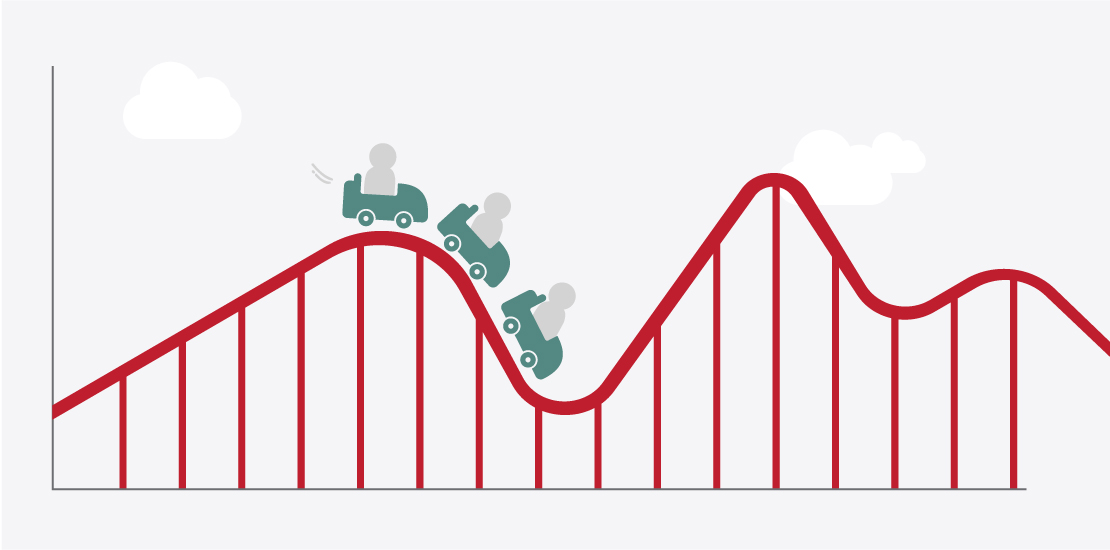
Procyclicality in the financial sector, which occurs when lower interest rates magnify booms and lead to subsequent busts, can have large and costly effects on the real economy. Recall the magnitude and duration of the Great Financial Crisis that began in 2008.
In my first commentary in this IRPP series, I suggest that the framework for monetary policy focused on achieving a near-term inflation target worsens procyclicality. I recommend replacing this framework with one focused on macrofinancial stability. Such a framework would “lean against the wind,” or counter credit excesses associated with lower interest rates, by pursuing monetary tightening well before the end of a boom. In this way, monetary policy would help stabilize the real economy while still achieving longer-term goals for price stability.
Pursuing such a policy would also help preserve the stability of the financial sector. This is crucial because history teaches us that economic downturns accompanied by financial instability are particularly deep and long-lasting and are often followed by heightened political instability.
Prior to the 2008 Great Financial Crisis, many central bankers actively supported financial deregulation. They argued that a more complete financial market would increase the effectiveness of monetary policy. In this complete financial market, one could buy or sell protection against or a stake in every possible future outcome, and each of those trades would have a price. Now the downsides of that deregulatory approach are more evident.
Perhaps even more important, the low interest rates that emerged under inflation targeting altered investor behaviour. With safer investments, such as government bonds, offering low returns, investors instead sought riskier investments with higher yields. It also made them more willing to invest in less liquid assets, such as private credit and private equity, that would tie up their money for longer periods.
These developments have exposed financial institutions to increased liquidity risks (for example, running short of cash) and/or risks of losses large enough to cause insolvency. Closer and more complex linkages among financial institutions have also raised the risk that problems at one institution spread to others, increasing the likelihood of systemic crises.
Canadian banks, supported by an oligopolistic market structure, seem less prone to excessive risk-taking than U.S. banks. Nevertheless, they have become significantly involved in financing those offering non-bank credit and those involved in the AI investment boom. Both the Bank for International Settlements (BIS) and the Financial Stability Board have warned of the possible systemic implications should either of those involvements turn sour.
Canadian pension and insurance funds are another potential source of central bank concern, given the extent of their investments in private credit and Canadian banks’ exposure through lending, sponsorship, warehousing and risk transfer.
Significant investments in private credit and other alternative assets have raised risks for the broader financial system. For example, a lack of information about the quality of loans held in private funds could mean that spikes in defaults cause investors to exit their positions quickly. It could also mean larger and accelerated requests for capital contributions by these funds during times of financial stress. In either case, there could then be spillover effects into public credit markets. Spillovers could spread quickly from other countries to Canada, given the increasingly global nature of private credit. In this regard, the need for the Bank of Canada to formally make available liquidity support to pension funds during the COVID-19 pandemic’s period of acute financial market stress is notable.
Beyond the exposure of financial institutions, persistently low interest rates (especially when adjusted for inflation) have encouraged global asset prices to rise to record levels. With low interest rates, investors place greater value on future income, which encourages them to bid up the prices of stocks, real estate and other assets.
Moreover, the assumed ongoing smooth functioning of global financial markets, not least the market for U.S. Treasuries, has become increasingly questionable. Had central banks replaced the inflation targeting framework earlier with a framework focused on macrofinancial stability, these threats to financial sector stability and their potentially severe macroeconomic effects would likely not have emerged.
Imagine if the focus of monetary policy were to shift from short-term inflation control to avoiding systemic crises over longer periods. By leaning against the wind of credit excesses, monetary policy would affect the behaviour of both borrowers and lenders.
Adopting such a macrofinancial stability framework would be beneficial on its own, but regulatory policies for the financial sector could also play an important, complementary role. These policies are often seen as a substitute, aimed at hiding the worst side effects of a particular monetary stance.
Whereas monetary policy “gets into all the cracks” of the economy and financial markets, prudential policies could be directed to specific, troublesome areas of credit creation. This would reduce the need for higher interest rates that might have undesirable side effects.
Central banks and financial regulators have often been in situations when one policy foot is on the accelerator and the other is on the brake, leading to less than optimal results. Central banks are increasingly aware that lower-for-longer interest rate policies can lead to undesirable side effects and financial distortions. However, instead of questioning the desirability of such monetary policies, they envisage the use of regulatory polices to address these side effects. This was effectively the case in most countries from the time of the Great Financial Crisis until the tightening of monetary policy in 2022 in the wake of the COVID-19 crisis.
Were financial regulations to instead support monetary policy in leaning against the financial cycle, two complementary changes would also have to happen.
So-called microprudential regulatory policies, such as minimum capital requirements or liquidity coverage ratios for financial institutions, would have to focus more on systemic exposures than just the exposures of individual institutions. A focus on systemic exposure could examine whether multiple institutions could be exposed to the same risks at the same time or be connected in ways that allow failure at one to spread and create national concerns. OSFI has already moved in this direction, to a certain extent, with the introduction of system caps on mortgage exposures with specific limits for individual banks.
So-called macroprudential policies like monetary policy would have to be conducted in a more symmetric way over the financial cycle. That is, during periods of rapid credit growth or rising financial risk, relevant regulations could be tightened. During downturns, relevant regulations could be eased to allow financial institutions to absorb losses.
Traditional financial regulation policies have focused primarily on credit risk and liquidity risk as the principal threats to a firm’s solvency. The credit risk problem has been dealt with largely through regulations concerning expected losses and capital requirements. Liquidity risk has been addressed through regulations affecting both liabilities (exposure to withdrawals) and assets (the capacity for liquidation).
The implicit assumption has been that the system as a whole would be healthy if its individual components were healthy. However, the 2008 Great Financial Crisis, the financial market stress at the onset of the COVID-19 pandemic in 2020, the U.K. gilt crisis in 2022 and the failure of Silicon Valley Bank in 2023 show that risks can also arise from shared exposures and connections across financial institutions.
Institution-specific regulations have been relied on since the 1930s, if not earlier, and were tightened considerably after the 2008 crisis. However, they have not yet evolved to adequately address systemic risk.
While microprudential regulatory policies do not generally lean against the wind, in terms of working to limit booms and busts, their strength and application vary with time. Over long periods, these regulations are time-variant because they tend to loosen as memories of the last crisis fade. This tendency can be exacerbated in relatively small countries (like Canada) if bigger partners (like the United States) are already moving to ease regulations. Indeed, OSFI’s decision to reduce the required Domestic Stability Buffer for Canada’s largest banks in June 2026 followed decisions by U.S. regulators to ease capital requirements for American banks. This approach can actively fuel procyclicality.
Over shorter periods, how banks evaluate the riskiness of their assets can also contribute to procyclicality. For example, when banks use time-variant risk weights, based on their own calculations of the risk that borrowers will default, they may tend to favour measures that allow for greater lending. This practice leads to the riskiest loans being made during times when system-wide risk is building.
The problem worsens if banks consciously attempt, as experience suggests they do, to lower risk weights to increase their capacity to lend. The leverage ratio, which relates unweighted assets to capital, was brought in under Basel III international banking standards developed under the Basel Committee on Banking Supervision. They aim to deal with the problems arising from using risk weights to calculate capital requirements.
A macrofinancial stability framework would focus on the links among financial agents and threats to the system as a whole. Advising individual banks to sell risky assets in their own interest becomes unwise if this leads to fire sales that affect the solvency of others. Capital requirements might also be calculated differently — not on the individual institution’s risk profile alone but also the risk that its failure would lead to the failure of others.
Recall, for example, how the 2023 failure of Silicon Valley Bank led immediately to runs on regional banks with similar portfolios. Ultimately, this situation required unprecedented actions by the U.S. Federal Reserve (Fed) to stabilize the situation. Of course, just raising the possibility of system-wide events of this nature implies that capital requirements for banks ought to be higher as a general rule.
Stress tests of individual banks, which seek to determine what happens to bank capital in adverse circumstances, should be extended to include the possible bankruptcies of important counterparties. This might require that stress tests be conducted confidentially, as in Canada, rather than publicly, as in the United States. Similarly, the “too big to fail” problem — when large, interconnected financial institutions are likely to be bailed out to avoid threatening the entire financial system — would rise in the hierarchy of regulatory concerns.
The fact that Swiss authorities preferred to merge Credit Suisse with UBS in 2023, rather than let the former proceed to liquidation, shows the widespread, ongoing relevance of this problem. Moreover, the Swiss solution is now accused of creating a new UBS that has become “too big to save,” as it is now so large that even the government might struggle to rescue the bank should it fail.
As stated above, macroprudential policies can complement monetary policy by being implemented more symmetrically over the financial cycle, helping to mitigate the buildup of unsustainable debt exposures. This implies more leaning during the upswing of the financial cycle to prevent unsustainable increases in debt. Indeed, that was the basic motivation for introducing the counter-cyclical capital buffer under Basel III international banking standards. As well, regulators might pay more attention to the pricing of risk and excessive lending to trendy sectors at the expense of others. The latter includes loans to promising small and medium-sized businesses or sectors with high growth potential.
Moreover, downturns provide an opportunity to ensure that more accumulated debts are actually written off, rather than refinanced. The International Monetary Fund (IMF) suggests that regulatory authorities act more vigorously to prevent evergreening (refinancing or extending troubled loans to delay recognizing losses), especially by undercapitalized banks. More broadly, there are still far too many impediments to the ability to restructure or write off unsustainable debts — whether by private non-financial entities (households and corporations) or by financial institutions, especially large ones.
Evidently, if lending conditions were tighter during upturns in the financial cycle and less easy during downturns, they would be tighter overall. It is legitimate to ask whether this would lead to lower corporate investment than otherwise, particularly in new startups. The head of OSFI stated recently that Canadian banks have $60 billion of capital beyond regulatory requirements but are still loath to lend to small and medium-sized enterprises without collateral. That pattern may be changing, however, with recent announcements from Royal Bank of Canada, Bank of Nova Scotia, Bank of Montreal, Canadian Imperial Bank of Commerce and Toronto-Dominion Bank all committing to invest more in Canadian business growth.
It is also important to note that investment levels are not primarily determined by the ease or tightness of credit conditions. Investment levels in Canada have been low in recent decades in spite of highly accommodative lending conditions for most of this era. A more urgent problem affecting investment levels in Canada might be the inadequate presence of a risk-taking business culture (potential borrowers). Adding to that is the lack of a broad-based, deep domestic angel and venture capital system (potential lenders) through which successful entrepreneurs can both mentor and lend to other aspiring startups.
More attention must also be paid to liquidity risk — the possibility that a bank might not have sufficient cash to cover its short-term obligations. Central banks, confronted with such fears, will be more inclined to provide the needed liquidity, regardless of the underlying solvency of the bank in need. Like many other central banks, during the emergency phase of the COVID-19 pandemic, the Bank of Canada took unprecedented measures to provide liquidity to many markets. This included markets for repos, where financial institutions obtain short-term loans by providing securities as collateral, and Bankers Acceptances, with which Canadian businesses can get short-term financing backed by a bank guarantee.
The bank liquidity issue is, unfortunately, closely linked to an even broader concern. As regulations on banks have tightened in recent decades, lending has shifted to markets and institutions outside the traditional banking system. This includes private credit and private equity. Moreover, whenever these non-bank sources of credit are threatened, the official safety net, especially access to central bank liquidity, has generally widened as well.
In the United States, access to credit from the Fed was extended from banks to bank holding companies in the financial crisis of 2000, when a bubble of investments in Internet startups burst. The Fed safety net was further extended in the Great Financial Crisis of 2008, going beyond institutions to the point that the Fed became the buyer of last resort in many financial markets.
In Canada, the Bank of Canada gave unprecedented support to pension funds during the COVID-19 pandemic, as noted above, and to other “financially sound” financial institutions.
Similarly, support given to the gilts market by the Bank of England after former prime minister Liz Truss’s mini-budget of 2022 was triggered by leveraged pension funds selling gilts in response to margin calls.
Globally, speculation has already begun as to whether the broad-based, large-sized and too often opaque exposures of financial institutions to the AI industry might lead to bail-outs on systemic grounds if anticipated profits fail to materialize.
Such action by the government and regulatory agencies increases moral hazard, directly encouraging imprudent behaviour by banks, non-banks and market sources of credit. Moreover, such imprudent behaviour also contributes indirectly to increased risks to the banks themselves if they have lent extensively (as they have) to these non-bank entities.
Finally, this migration to non-bank sources of credit raises transparency issues, as multilateral institutions and the Bank of Canada have identified. Such concerns stem from the reduced availability of timely data and other information about these non-bank entities. All these developments raise the likelihood of future crises and, potentially, the degree of their severity.
Some treat regulation as the appropriate response to the moral hazard brought on by government safety nets. If current trends continue, that approach invites a further, perhaps never-ending widening of both safety nets and regulation. Bernard Connolly referred to this process in the title of a recent book, You Always Hurt the Ones You Love: Central Banks and the Murder of Capitalism. With this unacceptable end point in clear view, greater efforts are required to rein in the use of official safety nets.
Together with easier monetary policy in the face of both actual and anticipated financial crises, widening the safety net encourages the belief that concerns about financial stability will always outweigh concerns about price stability. Consider how both the Bank of England (albeit temporarily) and the U.S. Fed (continuing to date) have been willing to increase the size of their balance sheets to avoid significant disruptions in financial markets despite earlier promises to reduce them to more appropriate levels.
As such beliefs grow, they also threaten to destabilize previously anchored inflation expectations. This pattern, in which private debt migrates to the balance sheet of governments and is ultimately financed by the central bank, has been seen many times in history.
Further, wider safety nets for banks and non-banks imply possible future claims on the broader public safety net. Together with already dangerous levels of government debt in many countries, they could increase the risks of fiscal dominance over monetary policy. Fiscal dominance occurs when higher interest rates have large effects on government debt service charges. This is due to large debt levels and/or significant shares of short-duration debt that need to be refinanced frequently. That can, in turn, lead to fears of increased recourse by governments to central bank financing, followed by higher inflationary expectations. The result would be an eventual sharp increase in inflation if central banks are unwilling to adequately raise interest rates.
The essence of a macrofinancial monetary policy is that interest rate changes would be guided more by financial developments in the economy than in the past. These financial developments would not just relate to changes on the balance sheets of financial institutions but also to non-financial balance sheets as well as broader conditions in financial markets. Similarly, the macroprudential regulations governing financial institutions would also respond to these broader financial conditions. History clearly indicates that significant economic downturns — such as the balance sheet recession in Japan and the Great Financial Crisis in North America and Europe — quickly lead to the insolvency of borrowers. That, in turn, threatens lenders with insolvency.
Identifying more specific financial data that could be useful predictors of future financial crises remains a work in progress. The IMF has, for some years, suggested a list of Financial Soundness Indicators and actively uses them in conducting Financial Sector Assessment Programs. Other researchers like Claudio Borio and Philip Lowe at the Bank for International Settlements have focused on more highly aggregated data, such as credit growth relative to trend and exaggerated asset prices, including property. Today, with the digitalization of data sources well advanced, we have more microdata and computer power allowing the simulation of agent-based models. Such models can more easily capture the interaction of agents, the possibilities of multiple bankruptcies and the likelihood of highly non-linear outcomes. These tools need to be more widely used.
Another important issue is whether macroprudential regulatory policies or, indeed, monetary policy under a macrofinancial policy framework should be guided by discretion or rules. Discretionary responses require a high degree of knowledge of emerging dangers and how they might be mitigated. Some experts recommend a rule-based approach in which specific actions are taken in response to changes in the growth of credit and/or asset prices relative to trend. They suggest that the knowledge required for discretionary action is lacking. A rule-based approach effectively takes out insurance against unexpected bad outcomes.
Perhaps a practical compromise would be augmenting the Taylor rule, a formula used by central banks to guide interest rate decisions. An augmented rule could use a longer horizon and include financial variables, as discussed below. The framework could also incorporate opt-out procedures in unusual cases when more flexibility is desirable.
This brings me to the third question: Which federal agency should have overall authority in pursuing systemic financial stability?
If both central banks and regulatory agencies are jointly given a new task, the independence of each is threatened. This may not be a bad thing, assuming their mandates from governments are clear and ways can be found to make them singly and jointly accountable to governments for their stewardship. What is clear is that both agencies will have to co-operate much more closely than in the past on systemic financial issues.
What is not clear is how that co-operative work should be governed at the national level. Looking across countries, a wide variety of formal and informal arrangements exists between governments, central banks and offices charged with regulating the behaviour of financial institutions and financial markets. The only consideration that unites them is that each domestic regime seems to have evolved as a product of historical circumstances specific to that country. In short, current arrangements often seem to have no logical rationale.
Perhaps the most central, practical question for Canada is whether the regulatory function for financial institutions should be in a separate agency, such as OSFI, or incorporated into the central bank.
Some difficulties inherent in making such governance changes can be seen in the recent U.K. experience. There, regulatory oversight of banks had traditionally been a function of the Bank of England. However, in 2001, that responsibility was transferred to the new Financial Services Authority (FSA) to consolidate all the prudential regulators of financial institutions. Issues related to consumer protection were consolidated in a new Financial Conduct Authority. Only a dozen years later, in 2013, the FSA was dissolved and its functions transferred back to the Prudential Regulatory Authority within the Bank of England.
Apparently, the consolidation within the central bank reflected growing concerns in the aftermath of the Great Financial Crisis. These concerns centred on systemic financial fragility and the need for much closer co-operation between the monetary and prudential authorities when regulating financial institutions.
While this is true in Canada as well, it cannot be forgotten that procyclicality is not the only problem regulators face in trying to preserve financial stability. Other problems include cybersecurity, the impact of technological advances like AI and quantum computing, and the effects of climate change that may lead to demands for finance to support adaptation and mitigation activities.
In suggesting changes to improve the regulatory response to the procyclicality problem, these other critical functions of financial regulation should not be compromised. Together with the danger of supervisors being accorded second-class status in a merged organization, these would seem to be compelling arguments against merging OSFI and the Bank of Canada.
How then might the two agencies co-operate in the pursuit of financial stability? Which agency should be given the ultimate responsibility for making policy decisions in pursuit of a stable financial system?
One approach to providing an answer is to specify criteria for good public policies. First, we have the should test. What policies should be followed to meet agreed-on objectives? Second, we have the could test. Does the agency have the legislated powers to do what it should do? Finally, we have the would test. Does the agency have the will, given how often it may face resistance, to do what it should and could do? Assessing the capacity of institutions to meet the should and would tests provides some guidance on where power (the could criterion) should be allocated.
The should test would give central banks the primary role in setting policy instruments, both monetary and macroprudential, to lean against the financial cycle. They are generally further advanced in thinking about systemic dangers and broader macroeconomic objectives. Similarly, the would test would also support the primacy of central bank decision-makers. They have a longer tradition, using central bank jargon, of taking away the punch bowl when the party is really getting going. Further, they might be less likely to be captured by powerful financial interests opposed to such macroprudential tightening, though such capture always remains a dangerous possibility.
Of course, central banks would have to be supported in this macrofinancial endeavour by a clearer, legislated mandate. This might be part of the Bank of Canada’s 2026 renewal mandate. The Bank would have to take care to avoid culturally dominating its regulatory partners and, thus, lose their important insights. Regulators would also require new powers through legislation, as well as instructions on how they should interact with the central bank in the use of macroprudential instruments otherwise under their control.
These relationships might also differ between periods of tightening (crisis prevention) and easing (crisis management). In effect, it would be business as usual for OSFI except for periods when it would act under a specific directive from the Bank of Canada. These would be, presumably, both time-specific and transparent. The mandate of the current Financial Institution Supervision Committee, in which the Bank of Canada participates, might be amended to this end.
A further problem facing Canada in the pursuit of systemic financial stability is that the oversight of financial markets is divided over a number of provincial authorities. There is no single point of federal authority. Because financial markets play an ever-increasing role in providing finance, relative to banks in particular, this is a crucial shortcoming. The Bank of Canada’s renewal mandate might attempt to fill this void, consistent with the Supreme Court’s ruling of 2011 that underscored the federal role in financial stability of national concern.
It cannot be denied that the introduction of a macrofinancial stability framework, even with appropriate institutional realignments, might fail to adequately reduce the economic costs of procyclicality. In this case, still more radical solutions might be suggested, preferably in an order corresponding to how easy the proposed solution is to implement.
Domestic changes would normally meet strong opposition from those who benefit from the status quo. Yet, overall, they would likely be less difficult to implement than changes involving the international monetary system. These domestic changes are considered first.
As a first step, changing the excessive risk-taking of domestic lenders, through more self-discipline and market discipline, would be desirable. Fines and sanctions levied on the individuals responsible, not their firms, would be helpful. So too would strict limitations on share buybacks, particularly with money raised by cutting real investment or issuing debt. Attempting to make borrowers, especially consumers, more aware of the risks associated with high indebtedness and leverage would be a worthy but difficult cause.
Changing the structure of domestic financial systems would be significantly more difficult given the industry interests at stake, but it could provide significant benefits. Major changes in recent decades stem from factors including globalization, financialization and consolidation. Changes arising from each factor could be rolled back through domestic legislation if the costs were thought to outweigh the benefits.
For example, a system made up primarily of large banks might, on the one hand, suffer from oligopolistic practices but, on the other, be systemically more stable. Ring-fencing individual financial sectors would not only help prevent the spread of financial turmoil across sectors, but also prevent the inadvertent extension of public safety nets. An example of ring-fencing is the 1933 U.S. Glass Steagall Act, which separated commercial and investment banking.
All domestic efforts to deal with the problem of procyclicality will also be threatened by an inconvenient fact: many forces supporting procyclicality come from outside domestic borders and domestic control. Since the breakdown of the Bretton Woods system in 1971, we have had an international monetary “non-system” in which there are no formal rules directed to preserving international stability. Absent explicit and clear rules that limit the size of its international debts, and benefitting from the U.S. dollar as the global reserve currency, the United States has for decades felt free to boost domestic spending through monetary stimulation.
The resulting capital inflows to other countries, particularly emerging markets, then stimulated procyclical forces in those places as well. Some countries, mostly emerging market economies, used capital controls and macroprudential controls to help deal with these spillover problems. However, most developed economies, again free of international constraints on the accumulation of foreign assets, resisted upward pressures on their currencies by lowering interest rates along with the United States.
Against this international backdrop, solely domestic efforts to control procyclicality have been, and sadly will be, severely compromised. Given current geopolitical tensions, this international situation seems unlikely to change soon.
This commentary set out to answer three questions.
First, can non-monetary instruments support systemic financial stability? Yes, with two conditions: microprudential rules focus on shared exposures and interconnections rather than on individual institutions alone, and macroprudential policy is applied symmetrically over the financial cycle, tightening during booms and easing during busts.
Second, what indicators and rules might trigger the need for easing or tightening financial conditions? These might include credit growth and asset prices relative to trend and/or data series included in the IMF’s Financial Soundness Indicators. More research is needed on this question, perhaps using agent-based models in addition to more traditional research approaches. Once identified, such indicators might be introduced into an augmented Taylor rule with opt-out procedures for unusual cases.
Third, which federal government agency should have overall authority in pursuit of systemic financial stability? Here, the Bank of Canada is better placed than OSFI to lead on systemic financial stability. It should be given a clearer, legislated mandate to do so, without merging the two agencies.
The 2026 Bank of Canada mandate review provides an opportunity to start to address some of the issues that contribute to procyclicality. This may be achieved by shifting to an approach where monetary policy and financial regulations are viewed as complements rather than substitutes. Furthermore, giving the Bank of Canada a greater role in guiding OSFI — when established indicators and enhanced monitoring raise concerns about national financial stability — would help improve overall macrofinancial stability in Canada.
My paper addresses the appropriate policy response when financial excesses have built up and financial difficulties have materialized. It explores changes in financial structure (marketization, globalization and consolidation) and documents the rise in the number and variety of episodes of financial instability. It then examines the rationale for government intervention (such as the use of safety net instruments) to reduce the costs of such financial instability. The application of a number of such instruments has been on the rise, and the balance among them is changing.
My paper links evolving policy responses with underlying changes in financial structure and assesses the use and merits of safety net instruments when financial difficulties occur. I conclude that sensible policies designed to contain the damage arising from financial instability can have less desirable longer-term consequences.
Both the real and financial aspects of how the global economy functions have changed profoundly in recent decades. So too has the conduct of monetary policy, with its concentration on price stability. In this paper, I explore these structural changes and offer some suggestions to improve the framework for preserving monetary and financial stability.
One possibility I suggest is a new macrofinancial stabilization framework to insure against systemic financial imbalances. Such a framework would be based on two main principles. First, a more symmetric policy response to the expansionary and contractionary phases of the financial cycle is desirable. Implicit in this would be a greater policy focus on longer-term outcomes of policy decisions. Second, greater co-operation between all government agencies involved would be essential. National monetary policy would have to react more aggressively to domestic financial imbalances by adopting a framework of augmented inflation targeting. Domestic regulatory authorities should adopt a macroprudential regulatory framework that puts more emphasis on the health of the financial system as a whole, rather than the state of individual institutions. This framework for containing financial imbalances would ideally have both a domestic and an international dimension.
The extraordinary efforts by central banks and governments during the Great Financial Crisis of 2008 succeeded in stabilizing the situation and restoring more or less normal financial conditions. Yet, looking ahead, we must accept that financial stability, like price stability, is not sufficient to ensure macroeconomic stability. To improve the framework for the conduct of monetary and fiscal policies, it is essential actions are taken — in particular to ensure more symmetric actions over the course of the cycle and to pursue structural reforms to foster sustainable growth.
In my view, attention to systemic risk included in the reforms proposed to date has been welcome. But these reforms, by no means, go far enough. The continuing distinction between different kinds of risk, when the essence of a systemic crisis is how one form of risk morphs into another, indicates that a truly fundamental rethink about systemic risk remains to be carried out. There has also been a marked reluctance to date to tackle the “too big to fail” problem, which are the issues of size, complexity and interconnectedness generally believed to increase the risk of systemic failures.
Central banks, regulators and treasuries must in future interact much more closely, both to help avoid and to manage financial crises. First, policy can “lean against the wind” more conscientiously, possibly using both monetary tools and macroprudential instruments. Second, we should rethink how actively we use safety net instruments (including ultra-low interest rates) in downturns. It could be that little downturns are actually beneficial not least because they clear out the underbrush of debt and help prevent bigger downturns later. And third, we should make adequate preparations beforehand to better manage financial crises when the inevitable does occur.
Macroprudential policies are financial regulations directed to ensure the systemic stability of the financial sector. Time-varying macroprudential instruments would lean against the buildup of excessive credit and debt over the financial cycle. Cross-sectional macroprudential instruments focus on reducing the dangers arising from too-big-to-fail financial institutions and other interdependencies in the financial system. As originally conceived by the Bank for International Settlements, macroprudential instruments were to be used as complements to a monetary policy designed to reduce procyclicality in the financial system and thus avoid systemic instability. It was a belt-and-braces approach.
In practice, monetary policy has not been directed to systemic stability but solely to near-term inflation control. In effect, financial regulators have been left with sole responsibility for countering the financial cycle (time-varying instruments) and for systemic stability (cross-sectional instruments) more broadly. This is unfortunate, as the former is very hard to do — when to act and with what instruments? — and the latter has serious shortcomings. No country, for example, has yet dealt adequately with the too-big-to-fail problem. Worse, if time-varying regulatory policies can be tightened as a substitute for necessary monetary tightening, this could actually raise the danger of boom-bust cycles. In short, macroprudential policy has its limits.
Since the Great Financial Crisis, tighter international standards (Basel rules) have led to significant reforms to the domestic regulations affecting banks. Their design was intended to ensure that financial institutions can still carry out their basic functions even in economic downturns and, not least, that they do not aggravate downturns by restricting the supply of credit.
My paper argues that regulators have paid inadequate attention to moderating the growth of credit during upturns in which the seeds of subsequent downturns are sown. In short, financial regulators should share more fully in the implementation of a macrofinancial stability framework. This would be designed to lean against reinforcing cyclical excesses in both directions (procyclicality) and reduce systemic risks in the financial system.
I consider the very limited extent to which macroprudential (time-varying) regulations have, in fact, been introduced since the Great Financial Crisis. In part, this reflects the general disinclination to adopt the macrofinancial framework. However, it also reflects some very real practical problems. While many countries have set up special bodies (incorporating central banks, regulators and others) to monitor indicators of systemic instability and recommend policy action, these oversight bodies generally do not have legislative power to force policy change. Moreover, it is not easy to determine when systemic risks have risen enough to warrant action and what precise policy changes should be recommended as a consequence. The answers to these sorts of questions will rely on universal analytical insights and the country- or region-specific characteristics of each regulatory domain.
My paper then considers shortcomings in microprudential (non-time-varying) regulatory changes to reduce systemic risk post-Great Financial Crisis. The proposed changes affecting global systemically important banks (G-SIBs) have clearly improved their capital ratios, lessening the chance of default. Nevertheless, resolution procedures have not advanced to the point that such banks must no longer be treated as too big to fail. Similarly, efforts to reduce systemic instability by reducing interbank dependencies and promoting the use of central clearing facilities have revealed downsides as well as anticipated upsides. One such downside, seen especially in the United States, is the belief that systemic crises are now no longer possible and that questions of crisis management are no longer of great interest. Finally, the concentration of regulatory oversight of and measures on banks has led to a significant migration of lending to private markets and other non-bank financial institutions. There is now much less transparency about where risks lie, making the assessment of systemic vulnerabilities more challenging.
Mindful of shortcomings in these initiatives to reduce procyclicality and systemic exposures, the paper makes a number of suggestions on how this objective might still be achieved. Ranked in the order of their difficulty of implementation, they range from proposals to change the incentives of financial market participants to the introduction of a regime of “narrow money.” In such a regime, commercial banks would lose their current right (along with the central bank) to create money out of nothing by simply writing up both sides of their balance sheets when making loans. Presumably and unfortunately, another financial crisis will likely be required to trigger another round of policy action.
This commentary was written by William R. White. The manuscript was edited by Sandra Cordon and proofread by Paul Carlucci. Editorial co-ordination was by Prasanthi Vasanthakumar, and production was by Chantal Létourneau.
William (Bill) White was Deputy Governor of the Bank of Canada (1988 to 1994) and then became the Economic Adviser to the Bank for International Settlements in Basel (1994 to 2008). He served as the Chairman of the Economic and Development Review Committee of the OECD in Paris (2009 to 2018). He was also a member of the Issing Committee (2008-2012), advising the German Chancellor on G20 issues, and sat on the Advisory Board of INET and the Cato Institute (Washington) among others. He is currently a Senior Fellow at the C. D. Howe Institute in Toronto. He is also on the Advisory Board of the Council on Economic Policies (Zurich), OMFIF (London) and MNI-Contact (London). Mr. White’s research interests focus on issues pertaining to monetary and financial stability. His website is www.williamwhite.ca.
The author would like to thank Jamey Hubbs, James K. Stewart and Mark Zelmer for their reviews and helpful comments.
To cite this document:
White, W. R. (2026). Improving macrofinancial stability in Canada. Institute for Research on Public Policy. https://doi.org/10.26070/7778-z388