
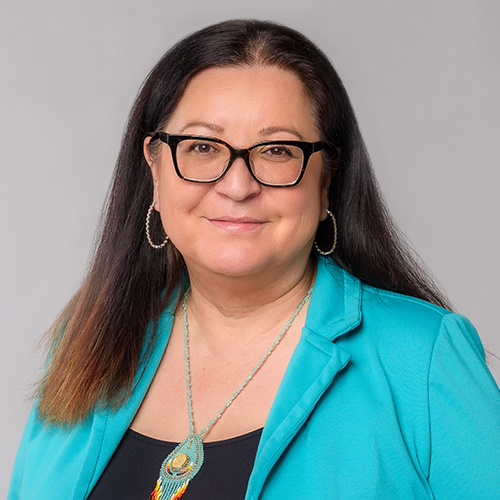





Early in my public service career, I was a director of health and social services in the Kitigan Zibi Anishinabeg community. I vividly recall sitting late at night trying to complete multiple federal reporting requirements for what were then dozens of separate Indian and Northern Affairs Canada and Health Canada programs. I remember feeling overwhelmed, stressed and teary-eyed — not because accountability was unimportant, but because so much energy was being directed toward satisfying fragmented administrative requirements rather than responding to my Algonquin First Nation community’s urgent needs.
Even in the late 1980s, it was clear to me that many local leaders and front-line staff were spending considerable time and effort navigating federal systems instead of building long-term community capacity and achieving tangible outcomes. While reporting practices and co-ordination mechanisms have evolved over the years, this broader dynamic remains familiar to many First Nations governments today.
This memo reflects upon the challenges of developing state capacity within the context of First Nations-Crown relations. The system is designed primarily around transactional accountability and siloed administration rather than long-term relational governance and community capability. Relational governance prioritizes trust and long-term relationships as the basis for achieving outcomes. Rather than focusing on mere compliance, it recognizes that durable results emerge from relationships.
What does “state capacity” mean and how is it applied in a First Nation context? State capacity refers to a government’s ability to translate decisions and obligations into real outcomes for the people it serves. Public institutions and public servants carry much of this responsibility. Indigenous governance capacity is not just being able to administer funded programs. It is the capacity to govern — that is, to set priorities, mobilize resources, make decisions and achieve outcomes determined by the Nation. First Nations governance systems are often misunderstood because they are frequently measured against Western municipal or parliamentary models, despite many Nations grounding governance in distinct democratic traditions such as kinship accountability, consensus-building, relational obligations and collective stewardship.
One thing is certain: if Canada hopes to advance major projects while upholding meaningful consultation and strong partnerships with First Nations, strong Indigenous governance capacity must be recognized as an essential part of Canadian state capacity.
Federal and provincial systems operate through hundreds of separate programs, reporting structures, mandates, authorities and funding streams. While governments are organized administratively through distinct departments and responsibilities, First Nations communities experience social, economic, health, infrastructure, education, housing and governance challenges as deeply interconnected realities. A single community priority may require co-ordinated engagement with multiple federal and provincial departments, each operating through separate accountability structures, timelines and reporting requirements. The burden of navigating fragmented Crown systems is often transferred onto First Nations governments themselves.
Over time, fragmented systems reinforce reactive administration and hamper long-term governance. Significant local leadership and administrative capacity is often consumed responding to immediate reporting requirements, funding uncertainties and interdepartmental processes, leaving less institutional space for strategic planning, prevention and community-driven priorities.
I have first-hand experience working within siloed departments, with their overlapping mandates, proposal-driven funding, short-term contribution agreements and limited horizontal accountability. Many of the most effective initiatives I witnessed emerged when governments and partners created intentional co-ordination tables anchored by trusted public servants or departments capable of sustaining relationships, aligning actors and maintaining focus on shared outcomes across institutional boundaries.
Several cities in Canada have established pooled funding approaches that bring together federal, provincial, municipal and Indigenous players, including Vancouver’s Urban Indigenous Peoples’ Advisory Committee (City of Vancouver, n.d.) and the Winnipeg Boldness Project (Winnipeg Boldness Project, n.d.). These approaches recognize that complex challenges cannot be addressed effectively through program silos alone.
The federal government’s continued reliance on short-term and unpredictable funding arrangements — including one-year top-ups, proposal-driven processes and delayed funding confirmations — remains a significant barrier to strengthening First Nations governance capacity. Essential programming in areas such as mental health, language revitalization, child and family services, and education can be subject to one-year funding. While these approaches are linked to annual budget cycles and accountability requirements, they create considerable instability for First Nations governments attempting to plan and implement long-term community priorities.
Communities are frequently required to develop multi-year solutions using funding structures designed around short-term fiscal and political timelines. This makes it difficult to recruit and retain skilled staff, sustain programs, invest in prevention, and undertake meaningful long-term planning — in other words, short-term, unpredictable funding leads to less capacity. Predictable and flexible multi-year funding arrangements create stronger conditions for planning, co-ordination, workforce stability and improved community outcomes. These elements are key to improving accountability and to continuously building capacity rather than constantly trying to replace it.
At the same time, there have been important and promising shifts in how the Government of Canada funds First Nations governments in recent years. The New Fiscal Relationship grant, administered by Indigenous Services Canada, offers First Nations an optional funding mechanism that covers 28 different programs and services (Indigenous Services Canada, 2026). Under this model, First Nations have the flexibility to design and deliver services to meet community priorities and can allocate their funding to address changing circumstances. The grants also include an escalator to account for population growth and inflation. As of the 2025-26 fiscal year, 191 First Nations had signed on to the model (Indigenous Services Canada, 2026). It represents a move away from “block funding” tied to short cycles.
Indigenous Services Canada’s Community Development Wrap-Around Initiative used a whole-of-government approach to support First Nations in implementing their community-identified priorities (Indigenous Services Canada, 2023). The Initiative established tables for each community that brought together funding partners, technical experts and community service delivery employees in an integrated manner, rather than requiring the First Nation to navigate multiple, disconnected programs and approaches. In one example I am familiar with, a community received funding for mental wellness, and local leadership determined those resources were best invested in land-based programs, counselling and youth workers.
Indigenous Services Canada reported that in 2024-25, $30.5 million in funding was directed at 53 projects, including 31 First Nations organizations, nine Inuit organizations, four Métis organizations and nine urban Indigenous organizations. A year earlier, 100 per cent of recipients reported that their project had improved community safety and well-being (Indigenous Services Canada, 2025).
Such reforms provide important lessons for how funding relationships can better support long-term planning, local priority-setting and accountability to citizens.
Federal accountability mechanisms play an important role in ensuring transparency and stewardship of public resources. However, within First Nations-federal relationships, accountability structures have been designed primarily around federal reporting, compliance requirements and administrative processes rather than community-defined priorities and outcomes.
First Nations governments find themselves devoting substantial time and administrative capacity responding to federal requirements rather than engaging directly with citizens on local priorities. Endless applications, reporting requirements and externally defined performance indicators often fail to reflect the realities, values and long-term objectives of individual communities. In some cases, these systems measure administrative compliance more effectively than they measure long-term community well-being and prevention-focused outcomes.
First Nations governments are democratic governing entities accountable to their citizens, although their governance traditions and accountability structures may differ from Western municipal or parliamentary models. Many First Nations governance systems emphasize consensus-building, relational accountability, collective responsibility and long-term stewardship. Indigenous success depends less on transactional program delivery and more on continuity, trust, local legitimacy, leadership stability, integrated systems, internal moral authority and community capability.
Approaches that provide greater flexibility, longer-term planning horizons and community-driven outcomes can strengthen both accountability and governance effectiveness. Accountability to federal partners and to First Nations citizens should not be viewed as competing objectives, but rather as complementary responsibilities within modern Treaty and governance relationships. Accountability and flexibility should not be viewed as contradictory objectives.
Efforts to strengthen First Nations governance capacity through more flexible and long-term funding arrangements may raise concerns regarding financial accountability, governance readiness and consistency of service delivery. Some may argue that strong federal oversight mechanisms remain necessary given the federal government’s Treaty, fiduciary and financial responsibilities. These considerations are important. Effective accountability systems are essential to maintaining public trust and ensuring resources achieve intended outcomes.
Stable institutions are built through continuity, experience and long-term planning. First Nations communities are diverse, with varying governance structures, capacities and priorities. Reform efforts should focus on balancing appropriate public accountability with greater flexibility, predictability and community-driven governance approaches that support long-term institutional development and stronger community outcomes.
Strengthening Canada’s ability to meet Treaty obligations and improve outcomes in First Nations communities will require moving beyond short-term and transactional administrative approaches toward long-term investments in governance and relational state capacity.
Stable long-term funding allows First Nations governments to undertake meaningful long-term planning activities, retain skilled staff, invest in prevention-focused approaches and strengthen institutional continuity. Multi-year funding decisions and agreements would reduce the need for repeated proposal-driven processes and annual funding uncertainty while maintaining appropriate accountability measures and transparency requirements.
The federal government already has a model for this with the New Fiscal Relationship grant. The government should accelerate the expansion of the grant to more First Nations communities, additional program areas and ultimately other First Nations-led organizations. This would include more tribal councils and well-established Indigenous organizations such as the First Nations Financial Management Board and the First Nations Finance Authority.
The model can also be adapted to better support communities with limited governance capacity or those facing crisis situations. Indigenous Services Canada’s Community Development Wrap-Around Initiative provides a model for how the federal government can support First Nations in developing community plans, help nurture governance structures and generally provide an injection of stability. A community plan can be funded for five to 10 years, providing more predictability while aligning reporting requirements with each community’s governance capacity.
In general, greater emphasis should be placed on supporting community-defined priorities and locally driven outcomes. Funding and service delivery models should give communities more flexibility to set priorities and tailor federal programs to local realities, rather than depending heavily on rigid, standardized approaches designed externally.
Better co-ordination among federal departments would decrease the administrative burden on First Nations and increase their governance capacity. The impact would be even greater if they co-ordinated more with provincial and territorial partners. For instance, a First Nation community would be able to connect with the federal government through one “window” based on the priorities and needs articulated in its community plan. This approach would require governments to develop the horizontal capacity necessary to organize support around community-defined priorities.
The federal system often lacks the capacity to work in this integrated way. Sometimes, innovative individual public servants will help connect the dots between programs across government to help a community. But most of the time, the onus falls on First Nations to deal with multiple different departments and agencies. The federal government should develop a digital, AI-enabled initiative or platform that would identify Indigenous funding programs across the public service, and in the future include provincial initiatives. Indigenous Service Canada’s funding service officers, who work directly with First Nations across the country, would in turn be equipped to respond more efficiently and accurately to requests and opportunities.
The federal government should develop an action plan to grow both First Nations governance capacity and its own capacity to build effective Treaty and governance relationships. It would be required to report to Parliament annually on its progress.
The action plan would outline investments to strengthen the governance and institutional capacity of First Nations elected officials and public services. This includes support for governance development, financial management systems, community-led planning capacity, policy expertise, data and information systems, and Indigenous-led institutions.
Investments should strengthen existing organizations such as the First Nations Financial Management Board, the First Nations Information Governance Centre and other regional and nation-based institutions that provide governance, fiscal and technical support to First Nations. Strong governance capacity is built over time through stable relationships, continuity and sustained investment. Despite the central role of governance, investments in core First Nation governance capacity remain limited.
Strong Treaty relationships and effective long-term outcomes depend not only on First Nations’ capacity, but also on the ability of governments to work collaboratively, consistently and relationally across institutional boundaries. Some initiatives the federal government should pursue in this area include:
The challenges discussed in this memo point to the need for more relational models of governance and state capacity within First Nations-federal relationships. Relational state capacity recognizes that strong outcomes are not achieved through transactional administration alone. They are built through stable relationships, shared problem-solving, co-ordinated institutions, local legitimacy (trust and confidence community members place in their leaders, decisions and services) and governments’ ability to work collaboratively across systems and jurisdictions over time.
Efforts to improve funding stability, reduce fragmentation, support community-defined priorities and strengthen co-ordination mechanisms are therefore not simply administrative reforms. They represent important steps toward building more durable, responsive and relational approaches to governance capable of supporting stronger outcomes and more effective Treaty relationships in the long term. The future of Canadian state capacity will not be determined solely by the strength of central institutions, but by the country’s ability to build durable, relational and shared governing capability with Indigenous peoples.
City of Vancouver. (n.d.). Urban Indigenous Peoples’ Advisory Committee.
https://vancouver.ca/your-government/urban-indigenous-peoples-advisory-committee.aspx
Indigenous Services Canada. (2023). 2023-24 Details on transfer payment programs. Government of Canada. https://www.isc.gc.ca/eng/1666289845948/1666289864359
Indigenous Services Canada. (2025). 2024-25 Details on transfer payment programs. Government of Canada. https://www.sac-isc.gc.ca/eng/1752155909653/1752155974370
Indigenous Services Canada. (2026, January 9). New Fiscal Relationship grant. Government of Canada. https://www.sac-isc.gc.ca/eng/1527080791657/1527080813525
Winnipeg Boldness Project. (n.d.). Making things better for families in Point Douglas.
https://www.winnipegboldness.ca/
This memo was commissioned as part of Capacity for Change: Designing a Public Service Built to Deliver, an IRPP research project that aims to provide solutions to barriers to state capacity through research-backed recommendations from leading experts. The publication was developed under the direction of IRPP President and CEO Jennifer Ditchburn and Professor Jennifer Robson, Director of Carleton University’s School of Political Management. It was copy-edited by Maya Lach-Aidelbaum, proofread by Zofia Laubitz, editorial co-ordination was by Étienne Tremblay and production was by Chantal Létourneau.
Gina Wilson is an Algonquin from Kitigan Zibi Anishinabeg and a distinguished public- sector executive with more than 40 years of experience in public administration and public policy. She has held senior leadership positions across Indigenous organizations and the Government of Canada, including serving as Deputy Minister of Indigenous Services Canada and Women & Gender Equality as well as Chief Executive Officer of the Assembly of First Nations and Director in her own community. Wilson has dedicated her career to strengthening Indigenous-government relations, advancing reconciliation and improving the effectiveness of public institutions. Her work has focused on service delivery, leadership development, governance and building the institutional capacity needed to support strong Indigenous communities and responsive public-sector organizations. She currently provides strategic advice to Indigenous and public-sector leaders on leadership, organizational effectiveness, policy transformation and improving outcomes for communities.
This project was made possible in part thanks to support from the Max Bell Foundation and the Metcalf Foundation. The IRPP is an independent think tank, and retains control over the scope, methodology, conclusions and recommendations of our work.
A French translation of this text is available under the title Partager la gouvernance pour de meilleurs résultats : Renforcer la capacité de l’État dans les relations entre les Premières Nations et Ottawa.
To cite this document:
Wilson, G. (2026). Shared governance, stronger outcomes: Developing state capacity in First Nations-federal relations. Institute for Research on Public Policy. https://doi.org/10.26070/4dmj-0g41