

COVID-19 has been one of the largest disruptions in the Canadian labour market in the country’s history. Not only were some sectors like tourism nearly decimated, the economy as a whole took a hit – making it extraordinarily difficult for laid-off Canadians to find jobs that they could easily transfer their skills to.
Retraining workers who have lost their jobs so that they can successfully transition into a new field has been an elusive goal for governments. This is partly because skills retraining is a difficult to sector to navigate for policy-makers, but also because studies have shown mixed results in the benefits and drawbacks of this training, which has shaken the public’s confidence in whether or not it’s an economically viable solution.
But given the pandemic’s toll on our labour market, it is time for governments to start taking a serious look at skills training, and to develop a functional system so that workers can find not just any job, but the right job for them.
Kelly Pasolli, along with Karen Myers and Simon Harding of Blueprint, conducted a study for the IRPP that examined previous research on skills training to find what worked and what didn’t. Through this research, they found two promising systems that Canadian workers could benefit from.
For this episode of the Policy Options Podcast, we speak with Kelly Pasolli about these systems, and what Canadian governments need to do to successfully retrain under- or unemployed workers for the post-pandemic future.
These treaties are constitutionally recognized agreements that lay out the relationship between Indigenous Peoples and Canada, where Yukon is a leader in treaty-making. Out of the 14 Indigenous groups that live in the territory, 11 hold signed treaties with the government.
But there is a disconnect between the generation of leaders who originally negotiated these treaties, and the youth, young people between 16 and 30, who are now taking the reins of governance. These individuals did not grow up under the Indian Act, and were not there to witness the negotiations in person, making it difficult to understand what that process really means.
Our guests for this episode of the podcast are Gabrielle A. Slowey and Geri-Lee Buyck.
Gabrielle A. Slowey is a professor in the Department of Politics the director of the Robarts Centre for Canadian Studies at York University, and has worked with Indigenous groups in Yukon to train youth to negotiate and implement treaties. Her new paper, published by the IRPP’s Centre of Excellence on the Canadian Federation, describes her work with communities to develop a treaty negotiation simulation, where young people can learn from the elders and experts who negotiated the original treaties.
Geri-Lee Buyck is an Indigenous youth from the Na-Cho Nyuk Dun First Nation. Buyck is a first-year student at Vancouver Island University, and took part in one of these simulations.
COVID-19 has put many Canadians out of jobs. But even after the pandemic ends, there’s no indication the labour market will go back to the way it was. Automation, climate change, and the rise of gig work will all have very real consequences for the nature of work.
In light of these disruptions, giving job seekers and employers the support they need is more important than ever. Today on the podcast, we’re joined by the authors of an IRPP paper that’s looking at one piece of the puzzle: how to help people get the skills they need to succeed in the jobs of tomorrow.
Tony Bonen leads the Labour Market Information Council’s team of economists and data scientists, delivering high-quality labour market information to stakeholders and decision-makers. Matthias Oschinski is an economist specializing in inclusive growth, well-being and climate change at the University of Toronto’s Munk School of Global Affairs and Public Policy.
Read more in Mapping Canada’s Training Ecosystem: Much Needed and Long Overdue.
Help us get to know you! Fill out our podcast listener survey here.
Download for free. New episodes every other Wednesday. Tweet your questions and comments to @IRPP or @jbugiel.
COVID-19 has tested Canada’s intergovernmental system. With the stakes as high as they are, it’s crucial that all levels of government continue to meet, communicate, and try to work together. To make that process a little easier, this week’s podcast has lessons for policymakers on successful cooperation in the face of complex intergovernmental challenges.
Charles Breton, executive director of our new Centre of Excellence on the Canadian Federation, moderates a discussion between Mireille Paquet, Robert Schertzer, and Roxanna Benoit. Mireille and Robert, who are associate professors of political science at Concordia University and the University of Toronto respectively, share findings from their recently released study with the Centre of Excellence, Irregular Border Crossings and Asylum Seekers in Canada: A Complex Intergovernmental Problem. Meanwhile, Roxanna brings insights on intergovernmental collaboration, drawing on her experience in the public service, including as Alberta’s former deputy minister of International and Intergovernmental Relations. This discussion was originally recorded as a webinar by the Institute of Public Administration of Canada for its recent conference.
Download for free. New episodes every other Wednesday. Tweet your questions and comments to @IRPP or @charlesbreton.
Working-age singles are more likely than most to be living in deep poverty, with incomes that fall well short of what’s required to meet basic needs. So why are they so often overlooked in our poverty reduction plans? And what does this diverse group of Canadians require to support them in moving out of poverty?
Today on the podcast, we cover all that and more as we discuss a recent IRPP report: Canada’s Forgotten Poor? Putting Singles Living in Deep Poverty on the Policy Radar. We’re joined first by Colin Busby, a research director at the IRPP. He walks us through this inaugural report from his new program on The Social Safety Net for Working-Age Adults.
On the second half of the podcast, Sherri Torjman joins us to share some policy recommendations from her commentary on that report. Sherri is a social policy consultant and policy associate with the Maytree Foundation. She’s vice-chair of the Disability Advisory Committee, which provides advice to the Minister of National Revenue. She was vice-president of the Caledon Institute of Social Policy from 1992 to 2017.


Download for free. New episodes every other Wednesday. Tweet your questions and comments to @IRPP or @jbugiel.
Photo: Shutterstock.com, by Sam Wordley.
La semaine dernière, l’IRPP a inauguré officiellement son Centre d’excellence sur la fédération canadienne. Nous marquons cet événement par un balado bilingue animé par le directeur du Centre, Charles Breton.
Charles s’est joint à l’IRPP en 2019. Il a été auparavant directeur de la recherche à Vox Pop Labs, où il a dirigé la conception d’outils de recherche innovants sur l’opinion publique, tel que la Boussole électorale. Titulaire d’un doctorat en science politique de l’Université de la Colombie-Britannique, il a été recherchiste et journaliste pour des émissions d’affaires publiques à Radio-Canada avant d’entreprendre un parcours universitaire.
Charles s’entretient avec Jörg Broschek, Stéphanie Chouinard et Alain Noël, trois experts des politiques publiques qui ont écrit des essais pour la série de lancement du Centre. Se fondant sur leurs textes, ils examinent le discours du Trône de la semaine dernière et ses répercussions sur le fédéralisme canadien.
Pour accéder directement à la discussion en français, allez à la marque de 25 minutes.
Le téléchargement est gratuit. Nous produisons de nouveaux balados un mercredi sur deux. Si vous avez des questions et des commentaires, envoyez des tweets à @IRPP ou @charlesbreton.
A new Parliament is fast approaching, and the Trudeau government’s COVID plans will soon be put to the test. We don’t yet know what’s in next week’s Speech from the Throne, but we do know one major change the government’s introducing: the transition away from the Canada Emergency Response Benefit and toward Employment Insurance and a trio of new benefit programs.
With six months of the pandemic behind us, now’s the time to stop and reflect on the federal response so far. Have the support programs done their job? Are the proposed changes in the public interest? And what can we learn from the labour market effects of past crises as we retool our response to the current one?
This week on the podcast, two labour economists help us figure it all out. First, we have Mikal Skuterud, an associate professor in economics at the University of Waterloo who’s also affiliated with the Canadian Labour Economics Forum. He gives us the rundown on the new federal benefits and EI changes, and explains how economic insights can help make sense of pandemic-era policy.
Next, René Morissette, research manager in the Social Analysis and Modelling Division of Statistics Canada, joins us to share insights from his June IRPP study, Turbulence or Steady Course? Permanent Layoffs in Canada, 1978-2016.
Download for free. New episodes every other Wednesday. Tweet your questions and comments to @IRPP or @jbugiel.
It seems like every day, we’re seeing new changes that COVID-19 is bringing to the world of work. Firms are choosing to automate and digitize, and they’re turning increasingly to remote and casual work. Policy-makers have helped people and businesses through the early days of the crisis. But now it’s time to meet the future of work head on.
Today on the podcast, we have Natalia Mishagina, research director of the IRPP’s new program on The Future of Skills and Adult Learning. She’ll be building on a recent IRPP study by Statistics Canada’s Marc Frenette and Kristyn Frank to talk about who’s at risk of seeing their jobs transformed by automation.
Next, we’re bringing on Sunil Johal to discuss how policy-makers should meet the labour market challenges accelerated by COVID-19. Sunil serves as a fellow to the Public Policy Forum and the Brookfield Institute. From 2012 to 2019 he was policy director at the University of Toronto’s Mowat Centre, and in 2019, he was named chair of the Expert Panel on Modern Labour Standards by the federal Minister of Labour.
Download for free. New episodes every other Wednesday. Tweet your questions and comments to @IRPP or @jbugiel.
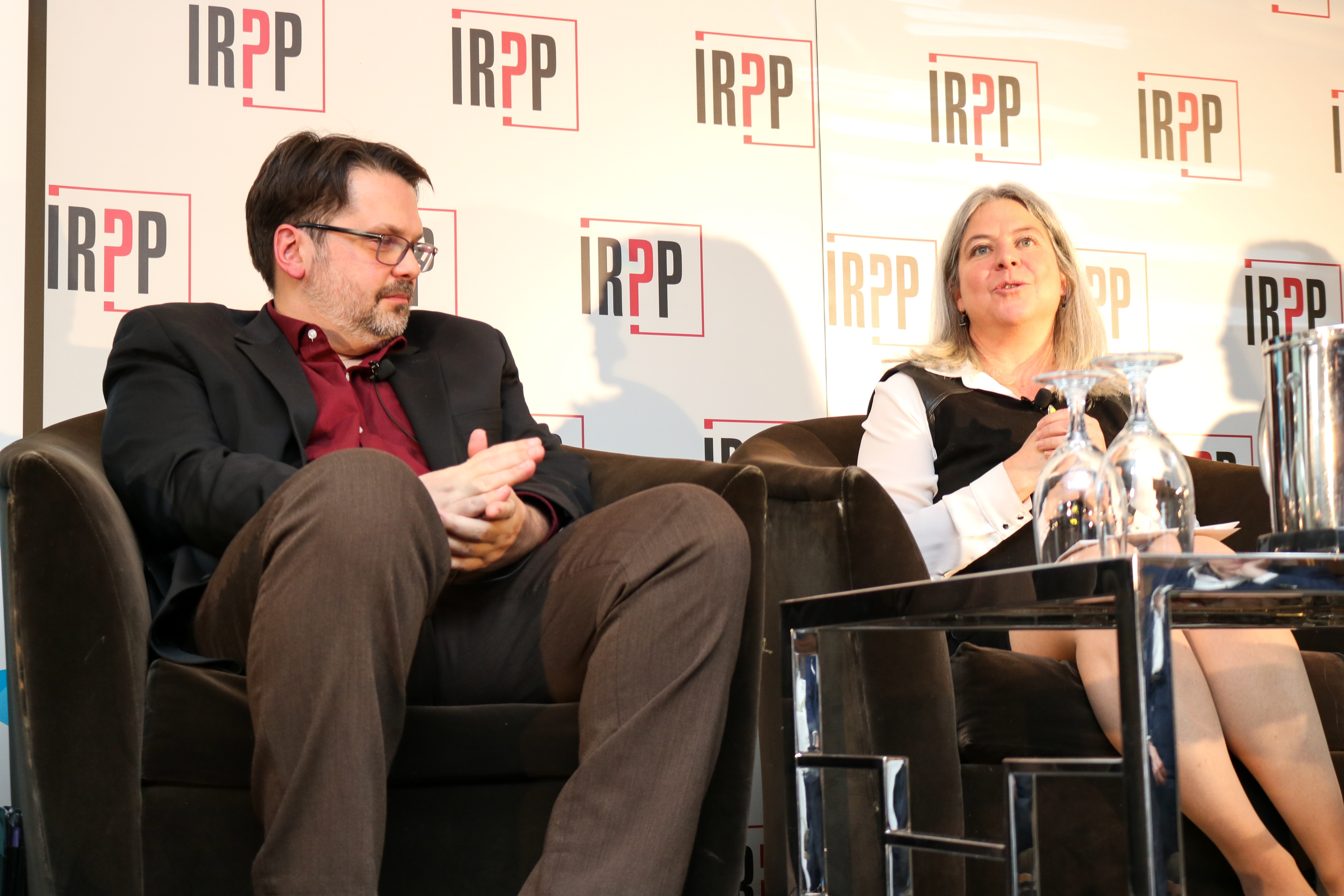
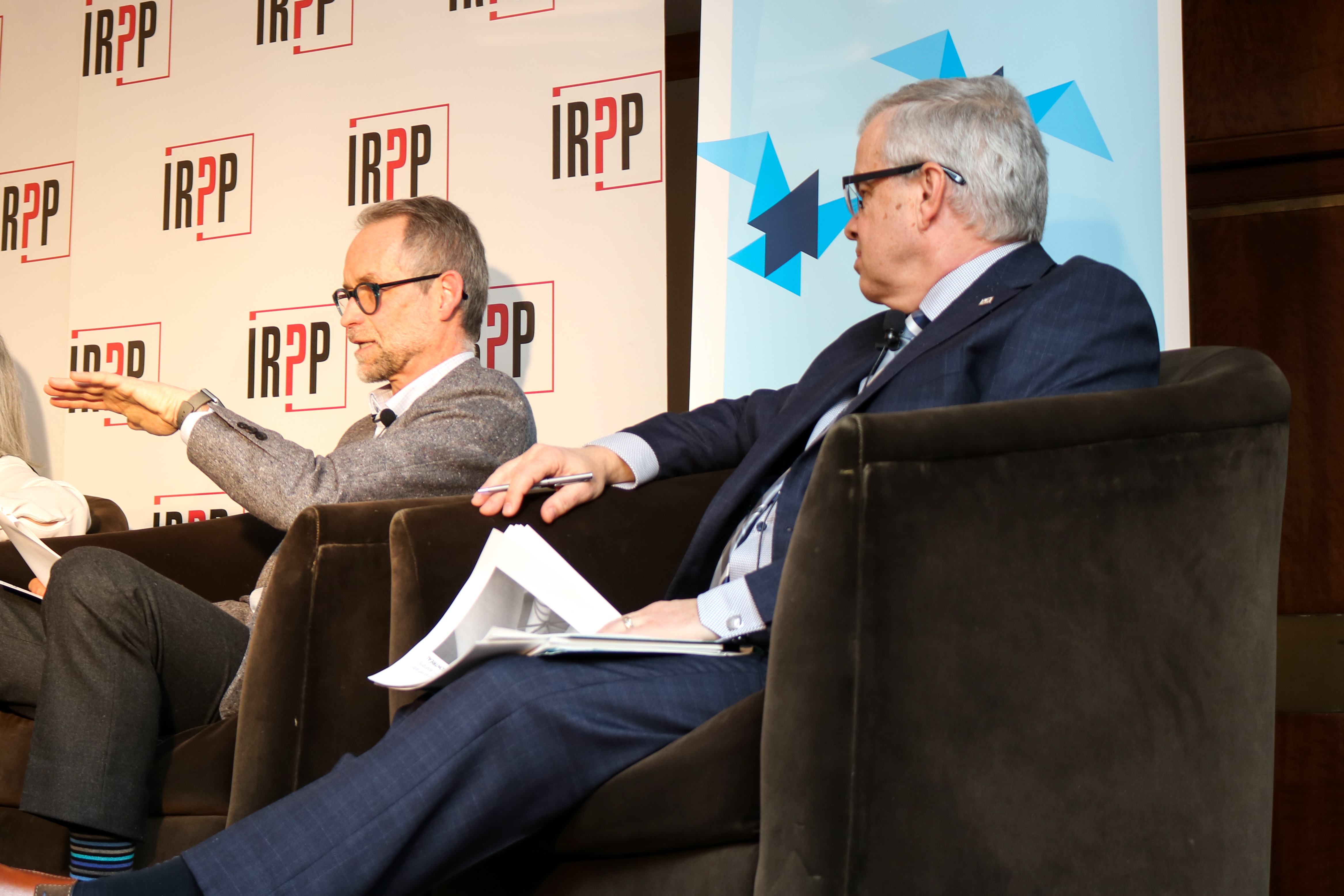
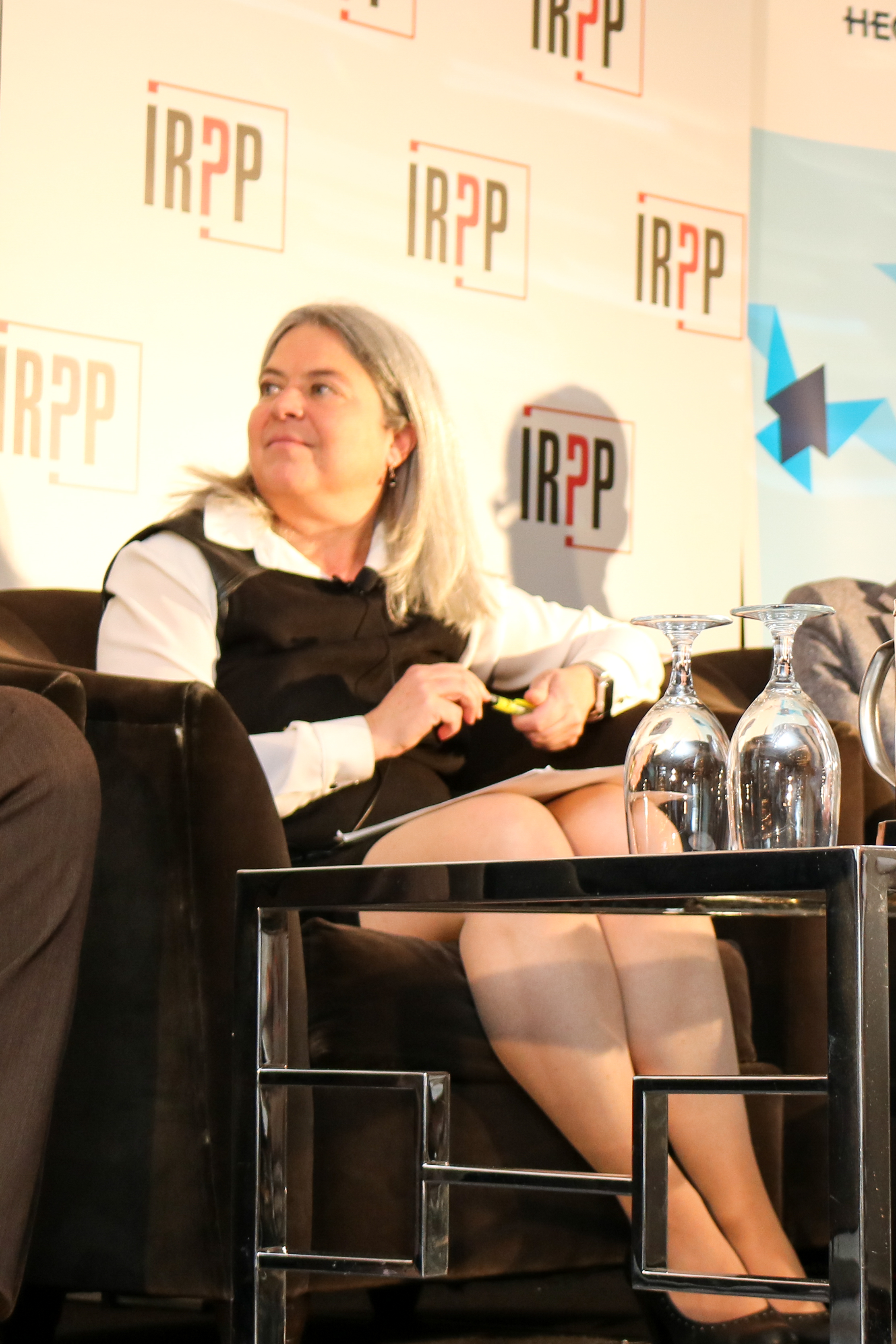
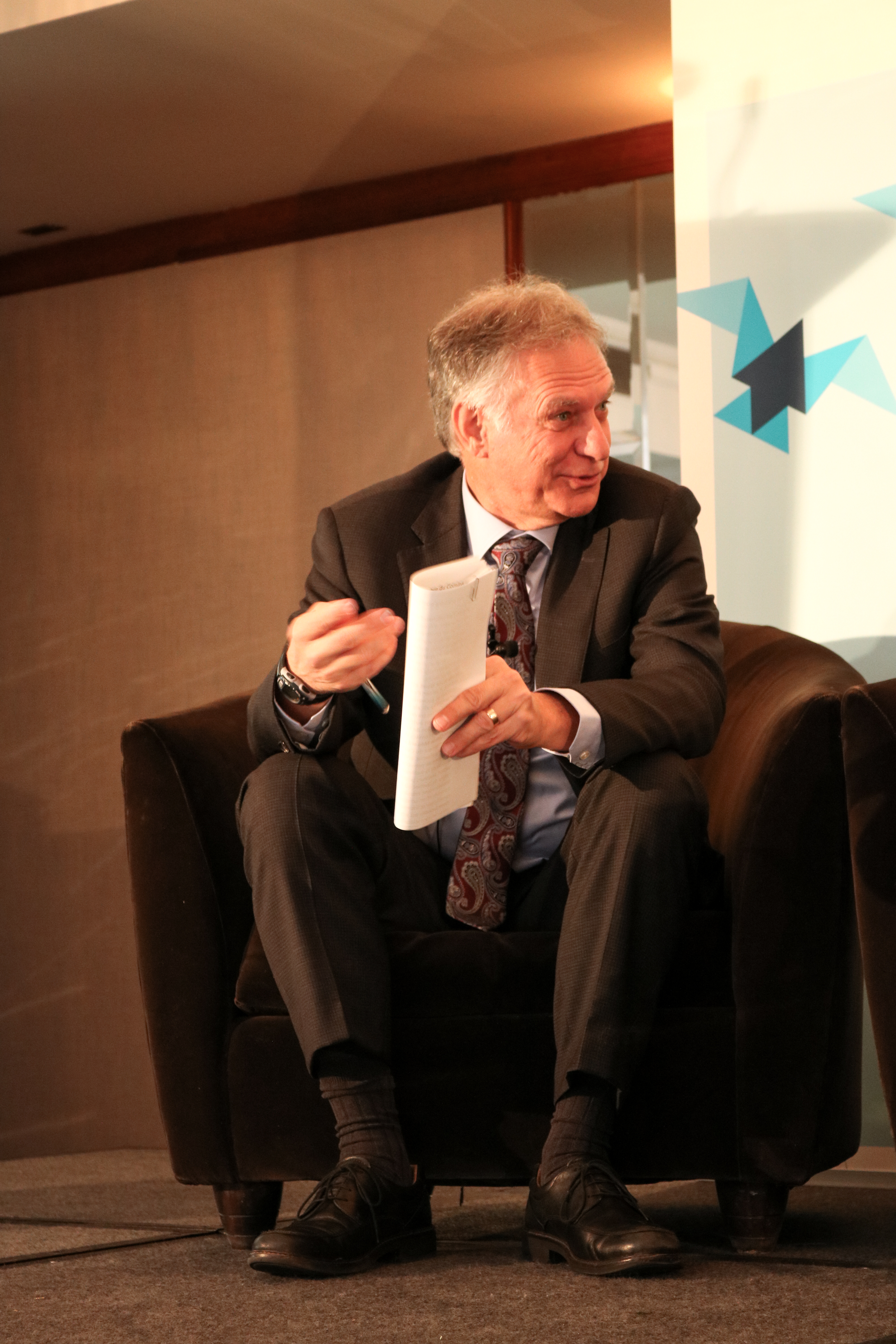
Faut-il hausser l’âge d’admissibilité au Régime des rentes du Québec et au Régime de pensions du Canada ? Cette question a été débattue lors de ce déjeuner-causerie organisé en partenariat avec l’Institut sur la retraite et l’épargne de HEC Montréal (IRE).
Le directeur de l’IRE Pierre-Carl Michaud a présenté sa nouvelle analyse des intentions et des comportements des futurs retraités. René Beaudry (cofondateur et associé principal chez Normandin Beaudry), Jean-Claude Ménard (ancien actuaire en chef du gouvernement du Canada) et Marie-Josée Naud (conseillère syndicale au service de l’éducation à la FTQ) ont discuté des conclusions de l’analyse dans un débat modéré par Bernard Morency (professeur associé à l’IRE).
Audio
Présentation